Storieta
English
Sign up

About this book

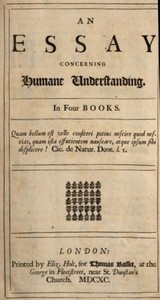
This work is John Locke’s An Essay Concerning Humane Understanding, the first volume of his 1690 treatise on the nature and limits of human knowledge. The opening pages present a lengthy dedication to an unnamed patron, followed by a candid “Epistle to the Reader” in which Locke explains how a casual conversation among friends sparked his inquiry into the capacities of the mind. He frames the essay as a modest attempt to clarify his own thoughts, warning that the text may contain repetitions and digressions born of its piecemeal composition. The author repeatedly stresses that the book’s merit must be judged by the reader’s own experience, not by any pre‑existing reputation, and that its purpose is to aid those who have not yet mastered the subject rather than to impress scholars already steeped in philosophy.

Locke writes in the measured, ornate prose of late‑17th‑century England, blending personal humility with confident argument. His style is conversational yet rigorous, often addressing the reader directly and employing extended analogies, such as comparing the pursuit of truth to a hunt. Readers who enjoy reflective, historically grounded explorations of epistemology, or who are curious about the early modern foundations of modern philosophy, will find this volume rewarding. It especially appeals to those who appreciate a text that openly acknowledges its own drafting process while striving for clarity across a range of intellectual abilities.

Opening lines

OF WILTS, AND OF SOUTH WALES. MY LORD, This Treatise, which is grown up under your lordship’s eye, and has ventured into the world by your order, does now, by a natural kind of right, come to your lordship for that protection which you several years since promised it. It is not that I think any name, how great soever, set at the beginning of a book, will be able to cover the faults that are to be found in it. Things in print must stand and fall by their own worth, or the reader’s fancy. But there being nothing more to be desired for truth than a fair unprejudiced hearing, nobody is more likely to procure me that than your lordship, who are allowed to have got so intimate an acquaintance with her, in her more retired recesses.

Keep reading free · start reading with no account

New illustrated classics

A new classic, drawn, in your inbox.

Once or twice a month: the latest books to get full character casts, scene art, and free comic editions. No account needed.