_"Late explorers say they have found some nations that have no God; but I have not read of any that had no music." "Music means harmony, harmony means love, love means--God."_--SIDNEY LANIER.
"Music is love in search of a word," said the same poet-musician. He was born full of the music and the love, and so was enabled to find and transmit to the world the undying word.
One cannot be a true poet, it seems to me, without at least an abiding love and sympathetic appreciation of the finest in music, or a great musician without a love of poetry and a responsiveness to its witchery. The two arts are interdependent and well nigh inseparable. A great musician may compose a song without words, but sooner or later there will be born a poet-soul who, hearing the song, will be irresistibly impelled to supply the words. On the other hand, many of the greatest musical compositions we have were inspired, like most of MacDowell's, by some poet's lines, a single figure, sentence or stanza furnishing the theme of oratorio, cantata, opera or ballad. Schubert's genius could be fired at any time, even under the most adverse conditions, by a beautiful poem, and many writers have received the inspiration for their masterpieces under the influence of music.
In some compositions combining both words and music, one will be very much the inferior of the other, and the thoughtful student or listener can but regret the discrepancy. Perhaps the words will be imposing and the musical setting trivial, or the music rich and full of color, but the words meaningless and inadequate. MacDowell's songs are satisfying. In his work he reminds one very forcibly of Sidney Lanier, whose genius was perfectly balanced. His music was full of poetry and his poetry ran over with music. His was an harmonious nature and no amount of external discord could cause him to lose his keynote. Applying his own beautiful words to himself:
"His song was only living aloud, His work a singing with his hands."
Lanier played beautifully upon a silver flute, which he lovingly describes as "a petal on a harmony." He was a member of the Peabody Symphony orchestra of Baltimore, and Asger Hamerik, his director for six years, says of him: "In his hands the flute no longer remained a mere material instrument, but was transformed into a voice that set heavenly harmonies into vibration. Its tones developed colors, warmth and a low sweetness of unspeakable poetry. His conception of music was not reached by an analytic study of note by note, but was intuitive and spontaneous, like a woman's reason." In 1878 he played a flute concerto at a symphony concert, and the director said of him: "His tall, handsome, manly presence, his flute breathing noble sorrows, noble joys, the orchestra softly responding. The audience was spellbound. Such distinction, such refinement! He stood the master, the genius."
In studying MacDowell, one is reminded at every turn of this dual genius. Like Lanier, his message is being better understood every year, and now that he is gone, "fulfillment is dropping on a come-true dream."
MacDowell had great advantages over Lanier in his early life in freedom from financial worry. In his youth he was privileged to travel and search until he found his own real masters, in the Frankfort Conservatory, where he studied piano with Heymann and composition with Raff. At Weimar he met Liszt, who recognized his ability and accorded him such unstinted praise that he was invited to play his first piano suite before the Allgemeiner Deutscher Musik-Verein at its nineteenth annual convention, held at Zurich in July, 1882. Both the composition and his rendition of it won enthusiastic appreciation and applause.
Lanier had a hard, brave struggle to maintain his ideals in the face of a continually thwarting fate that would have caused many a man, stronger physically than he, to become discouraged, despairing. Ill health, poverty and lack of appreciation of his life work had not the power to destroy his optimism. He bravely waged an unequal combat with the three, when many a man would have fallen on his own sword to end the bitter struggle with either one of them. From out the gloom he sang thus:
"The dark hath many dear avails, The dark distils divinest dews; The dark is rich with nightingales, With dreams and with the heavenly Muse."
Just at the awakening of public appreciation of his work and recognition of his right to rank as America's greatest composer of music, MacDowell died to the world of men through a mental collapse brought on by over-work, and for two years, forgetting that there was such a thing as music, the great tone-poet dwelt in a soundless world. Sorrow for such a fate at the zenith of a career of so much promise was world-wide, and many hoped that he would emerge from the dark, after a time, with his genius enriched by long subjective communion with the "heavenly Muse"; but he had dwelt too long in the abstract world of sound and had heard the music of the spheres until earth tones became fainter and fainter and finally ceased altogether.
Then, after having admitted his greatness during those two shadowed years, when the hand of death rang down the curtain on his earth-drama, his contemporaries began to examine more critically into the why and wherefore of the decision that accorded him leadership.
A well-known critic calls him the American Grieg, but while applauding the fanciful style of the Norwegian, one often hears MacDowell accused of being merely capricious. But what is caprice?
Bishop Trench reminds us in his famous treatise that the word is derived from capra, "a goat," and represents, in a picturesque manner, a mental movement as unaccountable, as little to be calculated on beforehand, as the springs and bounds of that whimsical animal.
The work of MacDowell certainly has the characteristic vigor and vividness, the unstudied activity, the unexpected leaps and springs that the derivation of the word "caprice" suggests. And, if one cares for mysticism, it is interesting to know that according to the teachings of the ancient science of astrology, which is having a considerable revival at present, the composer is entitled to unconventional methods and an unusual combination of qualities, as he was born on the cusp between the zodiacal signs of Sagittarius and Capricornus. The latter sign produces people who will work well independently, but are very restless when under orders or hampered by rules and regulations. They love freedom, are fine entertainers, have little self-esteem, are inclined to be either on the heights or in the depths, are excellent musicians and lovers of harmony and beauty. They are often victims of over-work because of the determination to make a brilliant success of what they undertake and of their lack of judgment in regard to their powers of endurance. Sagittarius people are characterized by directness of speech and act. They are of varied talents, very musical and turn naturally to the spiritual side of life. They belong to the prophetic realm and see wonderful visions, but are no idle dreamers, being always mentally and physically active. Whatever there may be in the science of astrology, one who is familiar with the life and character of Edward MacDowell cannot fail to be impressed by the correctness of this delineation, so far as it goes.
But his style of composition is not, to my mind, capricious. It is the result of many interesting influences of heredity, culture and individual temperament and application. When he went to Paris, at fifteen, he was a pupil of Marmontel in piano and of Savard in theory and composition; but young as he was, the French school did not satisfy him. He heard Nicholas Rubinstein play while in Paris, and became fired with enthusiasm by his style and impressed with the idea that in Germany he would find his own. His father was of Quaker extraction and had decided artistic ability, but his pious parents would not permit him to indulge even the thought of cultivating or pursuing so trivial a calling. Edward inherited his father's talent, and while in the French capital, during a period of despondency over his slow progress with the language, he made a caricature of the teacher of his French class on a leaf of his exercise book. In some way it fell under the tutor's eye, and it was of such excellence that it aroused new interest in the gifted hoy instead of indignation. The teacher showed it to one of the leading artists in Paris, who implored young MacDowell to leave off music and study art, assuring him that he had unusual ability. But the lad also had a well-developed discriminative faculty. He had chosen his ideal and could not he persuaded to forsake it, preferring tone-pictures to those made with brushes and palette.
Besides the Quaker strain, with its tendency toward dignity, simplicity and openness to the leadings of spirit, he owes to his Celtic lineage the mystic, poetic, dashing, unsophisticated vein that might be easily mistaken for caprice, and to his American birth is due, no doubt, many of the more solid, practical characteristics that combined to produce the proper balance.
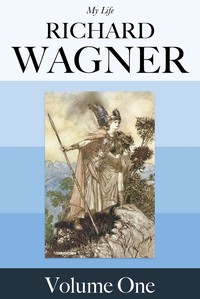
Naturally, he was deeply influenced by his foreign teachers and also by his favorites among the great masters whose works he studied. He is said to have adored Wagner, with Tschaikowsky and Grieg for lesser musical loves. To what extent he drew upon Wagner no one can say, but that he did so, either unconsciously or with that imitation that is sincerest flattery is very evident. Many passages suggest Wagner, and one can easily imagine the ardent young American worshiping the great German master, as he in turn had adored Beethoven.
Liszt used to say: "I only value people by what they are to Wagner." There is no estimating the value of Wagner to those who came after him. He was not satisfied, we are told, with either the melody of the Italians or the rhetorical excesses of the French. The music of Beethoven was his ideal, and the dramas of Shakespeare, whose work, to his mind, compared with the early Greek plays, was like a scene in nature in comparison with a piece of architecture. Mme. de Staël called beautiful architecture "frozen music." It was just this architectural, frozen, congealed condition that Wagner wished to overcome, without running into any frivolities. He was in every sense a living, breathing man, and his work is pervaded by this virile, life-like quality. In his first youthful attempt at drama, forty-two persons perished in the development of the plot and most of them had to be brought back as ghosts to enable him to complete the piece. Now, however, one is haunted by the faithfulness to life of his creations, not by the ghosts of his slaughtered victims, and an aspiring young composer who adored him could not help imbibing some of his power.
Wagner thought that the musician should write his own lines in opera or song, and conceived and mastered a new form, taking poetry into music just as Sidney Lanier took music into poetry in his "Science of English Verse." Wagner also thought that because of the exactness of musical science, a composer became practically the actor of each of his parts, while the dramatic author could never be sure what meaning would be read into his lines.