Public-domain ebook
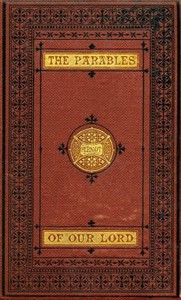
The Parables of Our Lord
Language: en12,008 downloads on Project Gutenberg
Subjects
Public-domain ebook sourced from Project Gutenberg #21328.
Public-domain ebook
Language: en12,008 downloads on Project Gutenberg
Subjects
Public-domain ebook sourced from Project Gutenberg #21328.
The work titled The Parables of Our Lord by William Arnot is a theological exposition that treats the familiar sayings of Jesus as a series of paired illustrations, each contrasting the kingdom of heaven’s struggle against its foes with its eventual triumph. The opening passage sets the tone by describing the first two parables as battles where adversaries attempt to choke the nascent kingdom, while the next two depict the kingdom’s unstoppable growth, likening it to a sunrise that dispels gathering clouds. Arnot then moves from this broad overview into a detailed analysis of the mustard‑seed parable, drawing on biblical quotation, contemporary observations of the plant, and historical examples to argue that the kingdom expands from the smallest beginnings to a glorious consummation.
Arnot writes in a nineteenth‑century evangelical style, employing a blend of scriptural citation, natural‑history commentary, and moral exhortation. His language is earnest and expansive, aimed at readers who appreciate rigorous biblical interpretation coupled with vivid analogies drawn from everyday life. Those interested in historic Christian scholarship, devotional study, or the interplay between scripture and natural observation will find this volume a rewarding, if densely argued, companion.
The opening · free to read
THE MUSTARD-SEED, AND THE LEAVEN.
In the first two parables the kingdom of heaven is represented in conflict with its enemies; in the next two it stands alone, putting forth its inherent life and power. There we learn the strength of its adversaries, and here we learn its own. There we saw the efforts made to check the progress of the kingdom; and here we see the progress which, in spite of these efforts, the kingdom makes. There the combat is exhibited, and here the victory. Devils and men, conscious conspirators or unconscious tools, did their utmost, as explained in the first pair of parables, to strangle the kingdom in its infancy, or to overpower it at a later stage; but the kingdom, as we learn from the second pair, shakes its assailants off, emerges unhurt from the strife, and goes forward from strength to strength, until it has subdued and absorbed all the world. I have seen clouds gathering at dawn on the eastern horizon, with dark visage and a multitudinous threatening array, as if they had bound themselves by a great oath either to prevent the sun from rising or afterwards to quench his light; but through them, beyond them, above them, slowly, steadily, majestically rose the sun, nor quivered from his path, nor halted in his progress, until by the power of his mid-day light he had utterly driven those clouds away, so that not a shred of their tumultuous assemblage could any more be seen on the clear blue sky. Such and so impotent in Christ's hands are the adversaries of Christ's kingdom, although they seem formidable to men of little faith: such and so glorious will be the final victory of the King, although even his true subjects may fret and fear over his incomprehensible delay. The coming of the kingdom is like the morning, as slow, but as sure. As smoke is driven before the wind, so shall the Redeemer in the day of his power drive away all those adversaries, whether within his people or without, that now impiously say, "We will not have this man to reign over us." Christ's disciples are on the winning side, whatever may be the present aspect of the world. "He that believeth shall not make haste."
The two parables which now claim our attention, although closely allied, are not in meaning and application precisely identical. Both show the progress of the kingdom from a small beginning to a glorious consummation; and both indicate that this growth, as to cause, is due to its own inherent unquenchable life, and as to manner, is silent, secret, unobserved. Thus far these two are in the main coincident; but besides teaching the same lesson in different forms, they teach also different lessons. The parable of the mustard-seed exhibits the kingdom in its own independent existence, inherent life, and irresistible power; the parable of the leaven exhibits the kingdom in contact with the world, gradually overcoming and assimilating and absorbing that world into itself. Both alike show that the kingdom increases from small to great; the first points to the essential, and the second to the instrumental cause of that increase: in the mustard-seed we see it growing great because of its own omnipotent vitality; in the leaven we see it growing great because it uses up all its adversaries as the material of its own enlargement.
III.
THE MUSTARD-SEED.
"Another parable put he forth unto them, saying, The kingdom of heaven is like to a grain of mustard-seed, which a man took, and sowed in his field: which indeed is the least of all seeds: but when it is grown, it is the greatest among herbs, and becometh a tree, so that the birds of the air come and lodge in the branches thereof."--MATT. xiii. 31, 32.
We are familiar with the mustard-plant both in a wild and in a cultivated state in our own country. Although not the smallest, it is by no means the largest of our herbs. On this point it is necessary to recall and keep in mind the fact that when a given plant is indigenous in a southern climate, the corresponding species or variety that may be found in more northerly latitudes is generally of a comparatively diminutive size. I have seen a mahogany-plant cultivated in a flower-pot, the best representative that could be obtained here of those forest patriarchs in tropical America which constitute the mahogany of commerce. The diminutive proportions of our mustard-plant prove nothing regarding the magnitude of the herb which bears the corresponding name in Syria. We know, in point of fact, that it grows there to a great size at the present day. "I have seen it," says Dr. Thomson, "on the rich plain of Akkar as tall as the horse and his rider."[17] Irby and Mangles found a tree growing in great abundance near the Dead Sea possessing many of the properties of mustard, which they suppose must be the mustard of the parable; but this suggestion seems incompatible with the main scope of the representation, for its turning-point lies in this, that a culinary herb became great like a tree. That a forest tree should be large enough to afford shelter to the birds, is nothing wonderful; the parable is hinged on the fact that the garden herb ([Greek: lachanon]) became a tree ([Greek: dendron]).
[17] The Land and the Book, p. 64.
But in this case an investigation exact and minute into the natural history of the plant is by no means necessary to the appreciation and explanation of the parable. It is not needful to determine what amount of credit is due to the witness who declared that he had seen a man climbing into the branches of a mustard-plant, or how far the fact, if real, was uncommon and exceptional. This plant obviously was chosen by the Lord, not on account of its absolute magnitude, but because it was, and was recognised to be, a striking instance of increase from very small to very great. It seems to have been in Palestine, at that time, the smallest seed from which so large a plant was known to grow. There were, perhaps, smaller seeds, but the plants which sprung from them were not so great; and there were greater plants, but the seeds from which they sprung were not so small.
But the circumstance that most clearly exhibits and indicates the appropriateness of the choice, is the fact that the magnitude of the mustard-plant, in connection with the minuteness of its seed, was employed at that day among the Jews as a proverbial similitude, to indicate that great results may spring from causes that are apparently diminutive, but secretly powerful. The expression, "If ye had faith as a grain of mustard-seed," employed by the Lord on another occasion, is sufficient to show that both the conception and its use were familiar to his audience.
The spiritual lesson of the parable diverges into two lines, distinct but harmonious. By the kingdom of heaven, as it is represented in the growth of the mustard-plant, we may understand either saving truth living and growing great in the world, or saving truth living and growing great in an individual human heart. In both, its progress from small beginnings to great issues is like the growth of a gigantic herb from the imperceptible germ that was dropped among the clods in spring.
I. The kingdom of heaven in the world is like a mustard-seed sown in the ground, both in the smallness of its beginning and the greatness of its increase. The first promise, given at the gate of Eden, contained the Gospel as a seed contains the tree. It fell among Adam's descendants as a mustard-seed falls between the furrows, and lay long unnoticed there. With the Lord, in the development of his kingdom, a thousand years are as one day in the growth of vegetation. A man who in his childhood observed the seed cast into the ground, may live long and die old before the plants have reached maturity; but the seed of the kingdom has not lost its life, the God of the covenant has not forgotten his own. At the appointed time he will visit his husbandry, and fill his bosom with its fruits.
Never to human eye did the seed seem smaller than at the coming of Christ. The infant in the manger at Bethlehem is like a mustard-seed--an atom scarcely perceptible in the hand, and lost to view when it falls into the earth. Yet there lay the seed of eternal life--thence sprang the stem on which all the saved of mankind shall grow as branches. Israel was feeble among the nations--a little child writhing in the grasp of imperial Rome; Judea and Galilee, with the heathenish Samaria between, constituted his beat throughout the brief period of his public ministry. The range was short in its utmost length, narrow in its utmost breadth. In a map of the world of ordinary size, the spot that indicates Palestine can scarcely be seen; yet from that spot radiated a power which is at this day actually paramount. The Christ who seemed so small both in private life at Nazareth and in the public judgment-hall of Pilate at Jerusalem, is greatest now both in heaven and in earth. Christendom and Christianity are both supreme, each in its own place and according to its own kind. This world already belongs to Christian nations, and the next to Christian men. So great has the religion of Jesus grown, that its body overshadows the earth, and its spirit reaches heaven.
As the leaves and branches of a tree tend to assume the form and proportions of the tree itself, so subordinate parts in the development of God's kingdom follow more or less closely the law of the whole kingdom--a progress secret, slow, and sure, from a diminutive beginning to an unexpected and amazing greatness. Take, for example, the history of Moses, which is a vigorous branch shooting out from the mustard-tree under the ancient dispensation. The branch, a part of the tree, is, like the tree itself, small at first and great at last. A poor Hebrew slave-mother, counting her own "a goodly child," as every true mother will to the end of time, strove, by a strange mixture of ingenuity and desperation, to preserve him from the cruel executioners of Pharaoh. When she could no longer hide him in the house, she laid him in a wicker basket, and set it afloat in an eddy of the Nile. How small the seed seemed that day! A slave's man-child, one of many thousands destined by their jealous owners to destruction, cast by his own mother into the river, that he might not fall into the more dreaded hands of man--how small that germ was, and yet how great it grew! From heaven the word had gone forth, "Destroy it not, for a blessing is in it." On the mighty stream, and the cruel men who frequented it, the Maker of them both had laid the command, Touch not mine anointed, and do my prophet no harm. From that small seed, accordingly, sprang the greatest tree that grew in those old days upon the earth. Moses, the terror of Pharaoh, the scourge of Egypt, the leader of the Exodus, the lawgiver of Israel--Moses in his manhood was to the foundling infant what the towering tree is to the imperceptible seed from which it springs.
The operation of the same law may be observed in later ages. In the Popish convent at Erfurt a studious young monk sits alone in his cell, earnestly examining an ancient record. The student is Luther, and the book the Bible. He has read many books before, but his reading had never made him wretched till now. In other books he saw other people; but in this book for the first time he saw himself. His own sin, when conscience was quickened and enlightened to discern it, became a burden heavier than he could bear. For a time he was in a horror of great darkness; but when at last he found "the righteousness which is of God by faith," he grew hopeful, happy, and strong. Here is a living seed, but it is very small an awakened, exercised, conscientious, believing monk, is an imperceptible atom which superstitious multitudes, and despotic princes, and a persecuting priesthood will overlay and smother, as the heavy furrow covers the microscopic mustard-seed. But the living seed burst, and sprang, and pierced through all these coverings. How great it grew and how far it spread history tells to-day. We have cause to thank God for the greatness of the Reformation, and to rebuke ourselves for its smallness. Through the grace of God it made rapid progress at the first, and by the passions of men it was arrested before its work was done;--not arrested, but impeded; it is growing still, and growing more vigorously in our own day than it has done in any generation since its youth.
The book keeps going
Reading is free forever. Sign up and watch scenes appear while you read.



Scenes Storieta drew for other classics.
New illustrated classics
Once or twice a month: the latest books to get full character casts, scene art, and free comic editions. No account needed.