Public-domain ebook
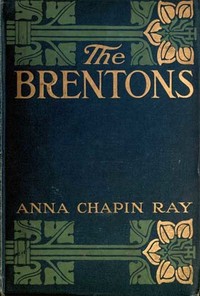
The Brentons
Language: en5,487 downloads on Project Gutenberg
Subjects
In: Novels·American Literature
Public-domain ebook sourced from Project Gutenberg #21763.
Public-domain ebook
Language: en5,487 downloads on Project Gutenberg
Subjects
In: Novels·American Literature
Public-domain ebook sourced from Project Gutenberg #21763.
The Brentons is a domestic drama that opens on a winter morning in a modest household, where nineteen‑year‑old Scott Brenton returns home from college to find his mother preparing a simple breakfast of sausages and gravy. The scene is framed by the lingering echo of a professor’s encouragement and the weight of his mother’s expectations, setting up a tension between youthful ambition and filial duty. Through a series of careful observations, Scott’s restless enthusiasm, his mother’s quiet pride, and the lingering memory of a village marriage that ended in tragedy, the narrative establishes a world where personal aspirations clash with a community’s moral and religious legacy. The opening passage weaves together the everyday (the clatter of a kitchen, the taste of sausage) with the larger questions of vocation, identity, and the inherited sense of propriety that will drive the characters forward.
Written in a richly descriptive, early‑twentieth‑century prose style, the novel balances introspective dialogue with a slightly formal, almost sermon‑like rhythm that reflects its New England setting. The voice is thoughtful yet grounded, offering a glimpse into the inner lives of a mother and son bound by duty and divergent hopes. Readers who enjoy character‑driven stories that explore the interplay of personal ambition and family tradition, especially those with an interest in period domestic settings and the subtle moral dilemmas of small‑town life, will find this work engaging.
The opening · free to read
And, as it chanced, the door of her room had been left slightly open. Scott Brenton, young and alert and full of enthusiasms which his years of grinding work and economy had been powerless to down, came leaping up the steps just then. The front door had been left unlocked for him. He closed it noiselessly behind him, and then started to run up the stairs. The murmur of his mother's voice checked him, stayed his step a moment, and then changed its pace. He went on up the stairs quite soberly, thoughtful, his face a little overcast.
It was now the middle of the Christmas holidays of his junior year. The day he had left college for the short vacation, his chemistry professor had sent for him and had said things to him about his last term's work and about his examination papers at the end of the term. The things were courteous as concerned the past; to Scott Brenton's mind, they were dazzling as concerned the future. The dazzle had endured until his mother's words had fallen on his ears. Then it had eclipsed itself, leaving him to wonder whether, after all, it had not been the ignis fatuus of self-elation, and not the steady glow of truth. Scott Brenton was not much more given to introspection, at that epoch of his life, than is any other healthy youngster of nineteen. None the less, he slept curiously little, that night.
Next morning, while he dressed, he kept his teeth shut cornerwise, a habit he had when he was making up his mind to any noxious undertaking. Then he went downstairs, to find his mother smiling contentedly to herself, while she added the finishing touches to the breakfast. It was sausage, that morning, Scott Brenton always remembered afterwards. They had been chosen out of deference to his boyish appetite. He never tasted them again, if he could help it. They seemed to have added to their already strange assortment of flavours a tang of bitterness that bore the seeds of spiritual indigestion.
His mother looked up to greet him with an eagerness from which she vainly sought to banish pride. He was her only child, her all; and he was sufficiently good to look upon, clever enough to pass muster in a crowd. To her adoring eyes, however, he was a mingling of an Adonis with a Socrates. And she herself, by encouragement and admonition and self-denying toil, had helped to make him what he was. Small wonder that her pride in him could never be completely downed! Nevertheless,--
"Have a good time, last night?" she asked him tamely.
But she missed a certain young enthusiasm from his accent, as he answered,--
"Fine!"
"Catie there?" she asked again, with the crisp elision of one whose life has been too strenuous to waste itself in the more leisurely forms of speech.
"Yes. Is breakfast ready?"
She nodded, as she speared the sizzling sausages one by one and transferred them to a platter. Then, while she poured off a little of the fat by way of gravy, she put yet another question.
"Look pretty?" she said.
Her son felt no difficulty in applying the question to Catie, the proper object, rather than to the sausages on which his mother's gaze was bent.
"About as usual," he said temperately.
His mother laughed out suddenly. The laugh brought back to her face a faint resemblance to the girl who, as the pretty daughter of old Parson Wheeler, had been the acknowledged belle of all the small community. Later on, all the small community had been jarred to its social foundations by the discovery that Betty Wheeler, child of a long, long line of parsons, was going to marry Birge Brenton who had come to "clerk it" in the village store. She did marry him, and, a little later on, and most obligingly for all concerned, he died. Few people mourned him. His wife, though, was among the few. She had a conscience of Puritan extraction, and the keenest possible sense of what was seemly.
Scott, at the time, was ten days old; therefore he did not share her mourning. Indeed, he was too busy trying to adjust himself to things in general and pins in particular to have much energy or time left over to spare for thinking about other people. Already, the trail of Mrs. Brenton's reading ancestors had led her to the naming her child Walter Scott. Her sense of decorum caused her to wonder vaguely, after her husband died, whether it would not be proper to change the baby's name to Birge. Her wonderings, though, merely served to render her uneasy; they bore no fruit in action. The associations with the name were not of the sort she cared to emphasize, and the boy was allowed to keep his more impressive label.
As time went on, though, he rebelled against the childish Wally and insisted on the Scott, but prefixed by the blank initial whose significance, he fondly hoped, would permanently remain a mystery. A month, however, after he had entered college, he was known as Ivanhoe to all the class who knew anything about him at all; and, in the catalogue published in his sophomore year, he was registered quite curtly as Scott Brenton. Never again in all his lifetime did the incriminating W reappear.
If his mother felt regretful for the change, she was far too wise to show it. Indeed, it is quite likely that she felt no regrets at all. By the time that Scott came to his 'teens, Mrs. Brenton was doing her level and conscientious best to conceal from him the demoralizing fact of her belief that he could do almost no wrong, and she clung to the modifying almost with a passionate fervour born of her clerical ancestry and her consequent belief in the inherent viciousness of unconverted man. Moreover, her inherited notions of conversion included spiritual writhings and physical night-sweats and penitential tears by way of its accomplishment. According to the creed of all the Parson Wheelers since the Puritan migration, one became a Christian rather violently, and not by leisurely unfolding. It had been to her the greatest of all reliefs since the unconfessed one born of her husband's premature removal, when the young Walter Scott had got himself converted by means of an itinerant revivalist. From that time on, her gaze had been fixed unfalteringly upon the hour when he should assume the mantle of his clerical grandparents; and she inclined to look upon his other talents as being so many manifestations of diabolic ingenuity.
And now, these Christmas holidays, the diabolism seemed to her to be rampant; it effervesced through all Scott's being like the mysterious things he brewed within his test-tubes. Not that Mrs. Brenton would have known a test-tube by sight, however. She only had gleaned from her son's talk the fact that they existed and held fizzy compounds which would kill you, if you drank them. Perhaps her analogy was all the better for her lack of specific knowledge. In any case, she saw and feared the effervescence. The sausages and the white bowl of hot fat gravy were so much carefully considered bait to lure her son back into the paths of orthodox uprightness. While they were being swallowed--slowly, by reason of their mussiness--she had certain things she wished to say to him.
To her extreme surprise, Scott said them first to her.
"Mother," he said, a little bit imperiously considering his age; "no matter now about Catie. I want to talk to you about--"
"About?" she queried nervously, while he hesitated under what obviously was a pretext of picking out the brownest sausage.
"About--myself."
Her nervousness increased.
"Take some more gravy, Scott," she urged him hurriedly. "You'd better dip it on your bread as soon as you can; it gets cold so soon, these winter mornings."
But he ignored the spoon she offered him. When he spoke, it was with a curious hesitation.
"Mother, did I tell you what Professor Mansfield said?"
"Yes."
"Weren't you glad--just a very little?" His tone was boyish in its pleading.
Mrs. Brenton's answer was evasive.
"Of course, Scott. I am always glad, when your teachers speak well of you," she said.
"Yes; but think of it," he urged impatiently. "I hate to brag, mother; but do you take in all he meant: that he saw no reason, if I kept on, that I should not make a record as a chemist?"
While he spoke, his gray eyes were fixed on her imploringly. Under some conditions and in some connections, she would have been swift to read in them the text of his unspoken prayer; but not now. Her ancestral tendencies forbade: those and the doubts which centred in her son's other heritage, less orthodox and far, far less under the domination of the spiritual. Now and then the boy looked like his father, astoundingly like, and disturbingly. This was one of the times.
Across his young enthusiasm, her answer fell like a wet linen sheet.
"But are you going to keep on?"
He tried to regain his former accent.
"That is what I want to decide, right now," he said as buoyantly as he was able. "Of course, it isn't just what I started out to do; but he seemed to feel it was my chance, and you and I, both of us, have been used to taking any chance that came. What do you think I'd better do?"
For a moment, she worked fussily at the twisted wire leg of the tile that held the coffee pot. Her eyes were still upon the wire, when at last she answered.
"You must do as you think right, my son."
"But what do you really think, yourself?" he urged her.
This time, she lifted her eyes until they rested full upon his own.
The book keeps going
Reading is free forever. Sign up and watch scenes appear while you read.



Scenes Storieta drew for other classics.
New illustrated classics
Once or twice a month: the latest books to get full character casts, scene art, and free comic editions. No account needed.