The opening · free to read
PHILADELPHIA: PORTER & COATES.
To MY YOUNG FRIENDS, HENRY AND EUGENE, THIS VOLUME IS AFFECTIONATELY DEDICATED
PREFACE.
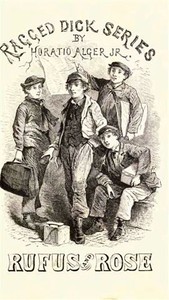
In presenting to the public the last volume of the "RAGGED DICK SERIES," the author desires to return his thanks for the generous reception accorded, both by the press and the public, to these stories of street life. Several of the characters are drawn from life, and nearly all of the incidents are of actual occurrence. Indeed, the materials have been found so abundant that invention has played but a subordinate part.
The principal object proposed, in the preparation of these volumes, has been to show that the large class of street boys--numbering thousands in New York alone--furnishes material out of which good citizens may be made, if the right influences are brought to bear upon them. In every case, therefore, the author has led his hero, step by step, from vagabondage to a position of respectability; and, in so doing, has incurred the charge, in some quarters, of exaggeration. It can easily be shown, however, that he has fallen short of the truth, rather than exceeded it. In proof, the following extract from an article in a New York daily paper is submitted:--
"As a class, the newsboys of New York are worthy of more than common attention. The requirements of the trade naturally tend to develop activity both of mind and body, and, in looking over some historical facts, we find that many of our most conspicuous public men have commenced their careers as newsboys. Many of the principal offices of our city government and our chief police courts testify to the truth of this assertion. From the West we learn that many of the most enterprising journalists spring from the same stock."
Not long since, while on a western journey, the Superintendent of the Lodging House in Park Place found one of his boys filling the position of District Attorney in a western State, another settled as a clergyman, and still others prosperous and even wealthy business men. These facts are full of encouragement for those who are laboring to redeem and elevate the street boy, and train him up to fill a respectable position in society.
Though the six volumes already issued complete his original purpose, the author finds that he has by no means exhausted his subject, and is induced to announce a second series, devoted to still other phases of street life. This will shortly be commenced, under the general name of the
"TATTERED TOM SERIES." New York, November 1, 1870.
The book keeps going
Keep reading, and see it illustrated
Reading is free forever. Sign up and watch scenes appear while you read.
Scenes Storieta drew for other classics.