Public-domain ebook
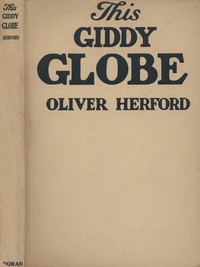
This Giddy Globe
Language: en3,898 downloads on Project Gutenberg
Subjects
In: Humour
Public-domain ebook sourced from Project Gutenberg #26053.
Public-domain ebook
Language: en3,898 downloads on Project Gutenberg
Subjects
In: Humour
Public-domain ebook sourced from Project Gutenberg #26053.
This work is a whimsical, mock‑geography that treats the planet as a comic character rather than a scientific subject. It opens with a tongue‑in‑cheek comparison of a Talmudic butterfly’s hubris to a critic’s disdain for the world’s “flimsy” construction, then launches into a series of satirical “chapters” that riff on everything from Moses’s first geography to modern scientific jargon. The author piles absurd illustrations, faux‑questions, and self‑referential digressions on top of playful definitions, oblate spheroid, “upper crust,” and “imaginary toe”, to keep the reader aware that the text is a parody of both scholarly tomes and contemporary debates about gender, politics, and the nature of knowledge.
The voice is exuberantly Victorian, echoing the wit of Oliver Herford’s era with a rapid, almost breathless cadence that mixes high‑brow allusion and low‑brow silliness. Its style is dense with puns, mock‑serious footnotes, and occasional interruptions that mimic a reader’s commentary, creating a lively, conversational tone. Readers who enjoy satirical essays, clever wordplay, and a lighthearted critique of scientific pretension, especially those fond of 19th‑century humor and the occasional literary in‑joke, will find this book an entertaining diversion.
The opening · free to read
Like the foolish Butterfly in the Talmud, who (to impress Mrs. Butterfly) stamped his tiny foot upon the dome of King Solomon's Temple, our Critic might have declared the World "Too flimsy in construction." He would certainly have found fault with the Solar System and the Plumbing--the absence of heat in Winter when there is the greater need of it and the paucity of moisture in the desert places where it never rains.
The comicality of the Ape family might have provoked a reluctant smile, but much more likely a lecture on the impropriety of descending to caricature in a serious work.
THE YEAR I 1st Sunday 1st Wednesday 1st Monday 1st Thursday 1st Tuesday 1st Friday]
At best, our Critic would have pronounced the freshly made World the work of a beginner, conceding perhaps that he "showed promise" and "might go far," and if he wished to be very impressive indeed, he would pretend that he had penetrated the veil of Anonymity and hint darkly that he detected evident traces of a Feminine Touch!
In that, however, our Critic would only have been anticipating, for is there not at this very moment on the press a Suffrage edition (for women only) of the Rubaiyat, in which one verse is amended to read thus--
The ball no question makes of Ayes or Nos, But right or left, as strikes the Player goes, And SHE who tossed it down into the field, SHE knows about it all, SHE knows, SHE knows!
This is for you, and you only. We have concealed it between chapters one and two so that it will not meet any eye but yours.
We have a confession to make--it would be useless to attempt concealment--we have the Digression habit.
We have tried every known remedy but we fear it is incurable.
All we ask, Gentle Reader, is that when we stray too far you will favour us with a gentle reminder.
When the acrobatic reader has fetched his breath and looks back at the fearsome list of Geographers he has skipped--Strabo, Anaximander, Hecatoeus, Demoeritus, Eudoxus, Ephorus, Dicoearchus, Erastothenes, Polybius, Posidonius and Charles F. King,--he may well be thankful to find he has fallen upon his feet.
The Geographer's task is endless.
The Planet he endeavours to portray is perpetually changing its appearance. After thousands and thousands of years, it is no nearer completion than it was in the beginning.
The Sea with its white teeth bites the edges of the continents into new shapes, as a child bites the edges of a biscuit. The glaciers file away the mountains into valleys and plains. Beneath the ocean busy insects are building the foundations of new continents and, under the earth, Fiery Demons are ready at all times to burst forth and help to destroy the old ones.
It really begins to look as if this Planet would never be finished.
In the first chapter of his geography, Moses tells us there were only two people in the world.
Today we are preparing to put up the "standing room only" notice. In another thousand years, for aught we know, the earth may be going round dark and tenantless and bearing the sign "To Let." What does it matter to us? What are we but microscopic weevils in the mouldy crust of earth? Sufficient unto the day is the weevil thereof.
Men of Science, who delight in applying harsh terms to things that cannot talk back, have called this Giddy Globe an Oblate Spheroid.
Francis Bacon called it a Bubble; Shakespeare, an Oyster; Rossetti, a Midge; and W. S. Gilbert addresses it familiarly as a Ball--
Roll on, thou ball, roll on! Through pathless realms of Space Roll on! What though I'm in a sorry case? What though I cannot meet my bills? What though I suffer toothache's ills? What though I swallow countless pills? Never you mind Roll on! (It rolls on.)
But these people belong to a privileged class that is encouraged (even paid) to distort the language, and they must not be taken too literally.
The Giddy Globe is really quite large, not to say obese.
Her waist measurement is no less than twenty-five thousand miles. In the hope of reducing it, the earth takes unceasing and violent exercise, but though she spins round on one toe at the rate of a thousand miles an hour every day, and round the sun once a year, she does not succeed in taking off a single mile or keeping even comfortably warm all over.
No wonder the globe is giddy!
State briefly the electromagnetical constituents of the Aurora Borealis, and explain their relation to the Hertzian Waves.
Define the difference between the Hertzian Wave and the Marcel Wave.
What is the Earth for? Nobody knows. Some say the Earth was made to supply the wants of Man, but as Man is part and parcel of the Earth herself, dust of her dust, mould of her mould, it does not answer the question.
Owing to the high price of living the cow was partially eaten by the author before the photograph could be taken.]
To be sure the Earth produces the Tobacco Plant, and many other things that we classify among the needs of Man, including the "Friendly Cow"--
She walks among the flowers sweet And chews and chews and chews, And turns them into friendly meat, And pleasant boots and shoes.
But the "Friendly Cow" may in her secret heart regard the classification as anything but friendly. For all we know, in the hidden scheme of Creation, the Cow may herself be the subject for ultimate evolution into the Perfect Being, and Man (to reverse Darwin), descending through the Ape to ever lower planes, only a discarded experiment.
And the Tobacco Plant? In the course of time there may be no Tobacco Plant.
Should the American People be again tempted to wage a World War for Freedom, they may find on their return that the Tobacco Plants have gone to join the Grape Vines of California!
Our only hope will then be that smoking is permitted in Hea----*
* The Author is digressing. The Reader.
The book keeps going
Reading is free forever. Sign up and watch scenes appear while you read.



Scenes Storieta drew for other classics.
New illustrated classics
Once or twice a month: the latest books to get full character casts, scene art, and free comic editions. No account needed.