Public-domain ebook
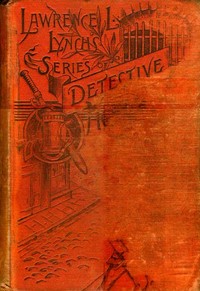
Madeline Payne, the Detective's Daughter
Language: en9,195 downloads on Project Gutenberg
Subjects
In: Romance·Crime, Thrillers and Mystery·Novels
Public-domain ebook sourced from Project Gutenberg #26482.
Public-domain ebook
Language: en9,195 downloads on Project Gutenberg
Subjects
In: Romance·Crime, Thrillers and Mystery·Novels
Public-domain ebook sourced from Project Gutenberg #26482.
Lawrence L. Lynch’s “Madeline Payne, the Detective’s Daughter” is a detective‑mystery story that thrusts its heroine into a web of intrigue from the very first page. The opening scene finds Madeline in a dimly lit room, plotting a covert message to be delivered by a reluctant servant named Henry. She manipulates the servant’s sense of loyalty, secures a locked writing case, and drafts a desperate plea to a doctor named Clarence Vaughan, all while waiting anxiously for a reply. The tension builds as the minutes tick by, culminating in a confrontational encounter with the menacing Lucian Davlin, whose smug presence threatens to upend Madeline’s plans. The narrative’s focus on secret letters, covert alliances, and a battle of wits between a determined young woman and a powerful adversary signals a classic whodunit framework centered on cunning and suspense.
The prose reflects the ornate, dialogue‑heavy style of late‑19th‑century American fiction, with long sentences and a melodramatic tone that captures the era’s fascination with social intrigue and moral ambiguity. Readers who enjoy intricate plotting, period language, and a heroine who blends intelligence with daring will find this work engaging. Fans of early detective tales, especially those that emphasize psychological maneuvering over outright action, will appreciate Lynch’s blend of atmospheric description and strategic dialogue.
The opening · free to read
Must see you immediately. Come by first train; am waiting at your quarters.
CORA.
Madeline went back to the lighter, larger room, and seating herself, looked about her. Again the words of Olive rung in her ears.
"Cora!" she ejaculated. "He obeyed her summons, and brought me with him. And she was here only last night--and where has she gone? This must be the 'notorious,' the 'handsome.' Ah, Lucian Davlin, this is well; this nerves me for the worst! I shall not falter now. This is the first link in the chain that shall yet make your life a burden."
She crossed the room and touched the bell.
"Now for the first real step," said Madeline, grimly.
The door opened and the dark face of Henry appeared, bowing on the threshold.
"Come in, Henry, and close the door," said Madeline, pleasantly. "I want you to do me a favor, if you will."
Henry came in, and stood waiting her order.
"Will you carry a note for me, Henry, and bring me back an answer? I want you to take it, because I feel as if I could trust you. You look like one who would be faithful to those who were kind to you."
"Thank you, lady; indeed I would," said the man, in grateful tones.
Madeline was quick to see the advantage to be gained by possessing the regard and confidence of this man, who must, necessarily, know so much that it was desirable to learn of the life and habits of him, between whom and herself must be waged a war to the very death.
She reasoned rapidly, and as rapidly arrived at her conclusions. The first of those was, that Lucian Davlin, by his intolerance and unkindness, had fitted a tool to her hand, and she, therefore, as a preliminary step, must propitiate and win the confidence of this same tool left by his master within her reach.
"And will you carry my letter, Henry, and return with an answer as soon as you can? You will find the person at this hour without any trouble."
"Master ordered me to attend to your wants," replied the man, in a somewhat surly tone.
She understood this somber inflection, and said: "He 'ordered' you? Yes, I see; is your master always as hard to please as to-day, Henry? He certainly was a little unkind."
"He's always the same, madame," said the man, gloomily. Her words brought vividly before his mind's eye the many instances of his master's unkindness.
"I'm sorry he is not kind to you," said the girl, hypocritically. "And I don't want you to carry this letter because he ordered you. I want you to do it to oblige me, Henry, and it will make me always your friend."
Ah, Henry, one resentful gleam from your eyes, as you stood behind the chair of your tyrant, has given to this slight girl the clue by which to sway you to her will. She was smiling upon him, and the man replied, in gratitude:
"I'll do anything for you, madame."
"Thank you, Henry. I was sure I could trust you. Will you get me some writing material, please?"
Henry crossed to the handsome davenport, and found it locked. But when taking this precaution, Davlin overlooked the fact that Cora's last gift--a little affair intended for the convenience of travelers, being a combined dressing case and writing desk, the dividing compartment of which contained an excellent cabinet photograph of the lady herself, so enshrined as to be the first thing to greet the eyes of whosoever should open the little receptacle--was still accessible.
Failing to open the davenport, Henry turned to this; and pressing upon the spring lock, exposed to the view of Madeline, standing near, the pictured face of Cora. Spite of his grievances, the sense of his duty was strong upon him, and he put himself between the girl and the object of her interest. Not so quickly but that she saw, and understood the movement. Stepping to his side, she put out her hand, saying:
"What an exquisite picture--Madame Cora, is it not, Henry?"
She was looking him full in the eyes, and he answered, staring in astonishment the while: "Yes, miss."
"She is very handsome," mused the girl, as if to herself: "left just before my arrival, I think?" she added, at a venture.
Again her eyes searched his face, and again he gave a surprised assent.
"Do you like her, Henry?" questioned she, intent on her purpose.
"She is just like him," he said, jerking his head grimly, while his voice took again a resentful tone. "She thinks a man who is black has no feelings."
He placed pen, ink and paper on the table as he answered, and then looked to her inquiringly.
"You may wait here while I write, if you will," she said, and took up the pen.
She had brought away from the G---- House, the two cards of her would-be friends, and she now consulted them before she asked.
"No. 52 ---- street; is that far, Henry?"
"It's a five minutes' walk," he answered. "I can go and come in twenty minutes, allowing time for an answer."
"Very good," she said, abruptly, and wrote rapidly:
Clarence Vaughan.
No. 52 ---- street.
SIR--Having no other friend at hand, I take you at your word. I need your aid, to rescue me from the power of a bad man. Will you meet me, with a carriage, at the south corner of this block, in one hour, and take me to Mrs. Girard, who has offered me a shelter? You know the danger I wish to escape. Aid me "_in the name of your mother_."
MADELINE "WEIR."
This is what she penned, and looking up she asked: "What is the number of this place, Henry?"
The book keeps going
Reading is free forever. Sign up and watch scenes appear while you read.



Scenes Storieta drew for other classics.
New illustrated classics
Once or twice a month: the latest books to get full character casts, scene art, and free comic editions. No account needed.