
Public-domain ebook
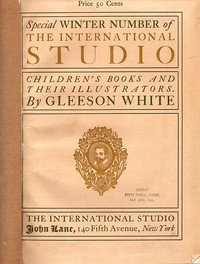
Children's Books and Their Illustrators
Language: en4,573 downloads on Project Gutenberg
Subjects
In: Children & Young Adult Reading·Art
Public-domain ebook sourced from Project Gutenberg #27112.
Public-domain ebook
Language: en4,573 downloads on Project Gutenberg
Subjects
In: Children & Young Adult Reading·Art
Public-domain ebook sourced from Project Gutenberg #27112.
The work is a scholarly survey of children’s literature and its picture‑makers, opening with a series of contemporary newspaper endorsements that position Mrs. Burnett’s imaginative storytelling alongside the celebrated illustrations of Reginald B. Birch. White then presents a catalogue of recent editions, “Little Lord Fauntleroy,” “Two Little Pilgrims’ Progress,” and other beloved titles, each described with details of format, price, and the artists who supplied full‑page plates. From there the author launches into a reflective essay that treats the evolution of the picture‑book as both a cultural artifact and a visual art form, citing historic exemplars from the eighteenth‑century chap‑books to the modern productions of Crane, Caldecott, and Greenaway. The opening pages thus combine market‑type listings with a literary‑critical discussion, offering a panoramic view of how text and image have long partnered to shape youthful imagination.
Written in a measured, slightly reverent prose of the late‑nineteenth‑century trade press, the book balances factual reporting with the author’s own literary musings. Its tone is that of an informed enthusiast addressing both scholars and collectors, peppered with quotations from periodicals and references to earlier bibliographies. Readers who enjoy the history of publishing, the aesthetics of illustration, or the cultural context of classic children’s stories will find it rewarding; it especially appeals to librarians, educators, and art historians interested in the interplay between narrative and picture in the formative years of reading.
The opening · free to read
It would be a bitter year for the boys if Mr. Henty were to fail them with a fresh assortment of his enthralling tales of adventure, for, as the London Academy has said, in this kind of story telling, "he stands in the very first rank." "With Frederick the Great" is a tale of the Seven Years' War, and has twelve full-page illustrations by Wal. Paget; "A March on London" details some stirring scenes of the times when Wat Tyler's motley crew took possession of that city, and the illustrations are drawn by W. A. Margetson, while Wal. Paget has supplied the pictures for "With Moore at Corunna," in which the boy hero serves through the Peninsular War. (Each 12mo, $1.50.)
=Will Shakespeare's Little Lad by Imogen Clarke=
=With 8 full-page Illustrations by Reginald B. Birch. 12mo $1.50.=
"The author has caught the true spirit of Shakespeare's time, and paints his home surroundings with a loving, tender grace," says the Boston Herald.
=An Old-Field School Girl by Marion Harland=
(Illustrated, 12mo, $1.25.) "As pretty a story for girls as has been published in a long time," says the Buffalo Express, and the Chicago Tribune is even more appreciative: "Compared with the average books of its class 'An Old-Field School Girl,' becomes a classic."
This "Tale of Texas; or, Fighting for the Lone Star Flag," completes the author's White Conqueror Series. The Minneapolis Tribune says: "It is a breezy and invigorating tale. The characters, although drawn from real life, are surrounded by an atmosphere of romance and adventure which gives them the added fascination of being creatures of fiction, and yet there is no straining for effect."
A Story of Adventure on Land and Sea, by GORDON STABLES. A stirring tale of seafaring and sea-fighting on the coasts of Africa, South America, Australia, New Guinea, etc., closing with a dramatic picture of the combat between the Chinese and Japanese fleets at Yalu.
In this large and handsome quarto, twenty of the most lyrical poems from Robert Louis Stevenson's "Child's Garden of Verse", have been set to music by such composers as Reginald DeKoven, Arthur Foote, C. W. Chadwick, Dr. C. Villers Stanford, etc. The volume is uniform with and a fitting companion to the popular "Field-De-Koven Song Book."
=Twelve Naval Captains by Molly Elliot Seawell=
=With 12 full-page portraits. 12mo $1.25.=
Miss Seawell here tells the notable exploits of twelve heroes of our early navy: John Paul Jones, Richard Dale, William Bainbridge, Richard Somers, Edward Preble, Thomas Truxton, Stephen Decatur, James Lawrance, Isaac Hull, O. H. Perry, Charles Stewart, Thomas Macdonough. The book is illustrated attractively and makes a stirring and thrilling volume.
"King Arthur's Knights and their connection with the mystic Grail is here the subject of Mr. William Henry Frost's translation into child language. Many volumes have been prepared telling these wonderful legendary stories to young people, but few are so admirably written as this work," says the Boston Advertiser.
=The Last Cruise of the Mohawk by W. J. Henderson=
=Illustrated by Harry C. Edwards. 12mo $1.25.=
The Observer says: "This is an exciting story that boys of today will appreciate thoroughly and devour greedily," and the Rochester Democrat calls it "an interesting and thrilling story."
=The King of the Broncos by Charles F. Lummis=
=Illustrated by Victor S. Perard. 12mo $1.25.=
The title story and the other Tales of New Mexico, which Mr. Lummis has here supplied for the younger generation, have all his usual fascination. He knows how to tell his thrilling stories in a way that is irresistible? to boy readers.
Mr. Samuel Adams Drake is an expert at making history real and vital to children. The Boston Advertiser says: "This is not a school book, yet it is exceedingly well adapted to use in schools, and at the same time will enrich and adorn the library of every American who is so fortunate or so judicious as to place it on his shelves."
"A narrative of the adventures of Master Gilbert O'Glander, and of how in the year 1591 he fought under the gallant Sir Richard Grenville in the great sea-fight off Flores, on board Her Majesty's ship, The Revenge." The New York Observer has said: "Mr. Leighton as a writer for boys needs no praise as his books place him in the front rank."
A Story of the Fall of Carthage and Corinth. By ALFRED J. CHURCH. In his own special field the author has few rivals. He has a capacity for making antiquity assume reality which is fascinating in the extreme.
By EDITH KING HALL. A clever and fascinating volume which will surely take a high place among this season's "juveniles."
CHARLES SCRIBNER'S SONS, 153-157 Fifth Ave, N.Y.
There are some themes that by their very wealth of suggestion appal the most ready writer. The emotions which they arouse, the mass of pleasant anecdote they recall, the ghosts of far-off delights they summon, are either too obvious to be worth the trouble of description or too evanescent to be expressed in dull prose. Swift, we are told (perhaps a little too frequently), could write beautifully of a broomstick; which may strike a common person as a marvel of dexterity. After a while, the journalist is apt to find that it is the perfect theme which proves to be the hardest to treat adequately. Clothe a broomstick with fancies, even of the flimsiest tissue paper, and you get something more or less like a fairy-king's sceptre; but take the Pompadour's fan, or the haunting effect of twilight over the meadows, and all you can do in words seems but to hide its original beauties. We know that Mr. Austin Dobson was able to add graceful wreaths even to the fan of the Pompadour, and that another writer is able to impart to the misty twilight not only the eerie fantasies it shows the careless observer, but also a host of others that only a poet feels, and that only a poet knows how to prison within his cage of printed syllables. Indeed, of the theme of the present discourse has not the wonder-working Robert Louis Stevenson sung of "Picture Books in Winter" and "The Land of Story Books," so truly and clearly that it is dangerous for lesser folk to attempt essays in their praise? All that artists have done to amuse the august monarch "King Baby" (who, pictured by Mr. Robert Halls, is fitly enthroned here by way of frontispiece) during the playtime of his immaturity is too big a subject for our space, and can but be indicated in rough outline here.
Luckily, a serious study of the evolution of the child's book already exists. Since the bulk of this number was in type, I lighted by chance upon "The Child and his Book," by Mrs. E. M. Field, a most admirable volume which traces its subject from times before the Norman conquest to this century. Therein we find full accounts of MSS. designed for teaching purposes, of early printed manuals, and of the mass of literature intended to impress "the Fear of the Lord and of the Broomstick." Did space allow, the present chronicle might be enlivened with many an excerpt which she has culled from out-of-the-way sources. But the temptation to quote must be controlled. It is only fair to add that in that work there is a very excellent chapter to "Some Illustrators of Children's Books," although its main purpose is the text of the books. One branch has found its specialist and its exhaustive monograph, in Mr. Andrew Tuer's sumptuous volumes devoted to "The Horn Book."
Perhaps there is no pleasure the modern "grown-up" person envies the youngsters of the hour as he envies them the shoals of delightful books which publishers prepare for the Christmas tables of lucky children. If he be old enough to remember Mrs. Trimmer's "History of the Robins," "The Fairchild Family," or that Poly-technically inspired romance, the "Swiss Family Robinson," he feels that a certain half-hearted approval of more dreary volumes is possibly due to the glamour which middle age casts upon the past. It is said that even Barbauld's "Evenings at Home" and "Sandford and Merton" (the anecdotes only, I imagine) have been found toothsome dainties by unjaded youthful appetites; but when he compares these with the books of the last twenty years, he wishes he could become a child again to enjoy their sweets to the full.
Now nine-tenths of this improvement is due to artist and publisher; although it is obvious that illustrations imply something to illustrate, and, as a rule (not by any means without exception), the better the text the better the pictures. Years before good picture-books there were good stories, and these, whether they be the classics of the nursery, the laureates of its rhyme, the unknown author of its sagas, the born story-tellers--whether they date from prehistoric cave-dwellers, or are of our own age, like Charles Kingsley or Lewis Carroll--supply the text to spur on the artist to his best achievements.
It is mainly a labour of love to infuse pictures intended for childish eyes with qualities that pertain to art. We like to believe that Walter Crane, Caldecott, Kate Greenaway and the rest receive ample appreciation from the small people. That they do in some cases is certain; but it is also quite as evident that the veriest daub, if its subject be attractive, is enjoyed no less thoroughly. There are prigs of course, the children of the "prignorant," who babble of Botticelli, and profess to disdain any picture not conceived with "high art" mannerism. Yet even these will forget their pretence, and roar over a Comic Cuts found on the seat of a railway carriage, or stand delighted before some unspeakable poster of a melodrama. It is well to face the plain fact that the most popular illustrated books which please the children are not always those which satisfy the critical adult. As a rule it is the "grown-ups" who buy; therefore with no wish to be-little the advance in nursery taste, one must own that at present its improvement is chiefly owing to the active energies of those who give, and is only passively tolerated by those who accept. Children awaking to the marvel that recreates a familiar object by a few lines and blotches on a piece of paper, are not unduly exigent. Their own primitive diagrams, like a badly drawn Euclidean problem, satisfy their idea of studies from the life. Their schemes of colour are limited to harmonies in crimson lake, cobalt and gamboge, their skies are very blue, their grass arsenically green, and their perspective as erratic as that of the Chinese.
In fact, unpopular though it may be to project such a theory, one fancies that the real educational power of the picture-book is upon the elders, and thus, that it undoubtedly helps to raise the standard of domestic taste in art. But, on the other hand, whether his art is adequately appreciated or not, what an unprejudiced and wholly spontaneous acclaim awaits the artist who gives his best to the little ones! They do not place his work in portfolios or locked glass cases; they thumb it to death, surely the happiest of all fates for any printed book. To see his volumes worn out by too eager votaries; what could an author or artist wish for more? The extraordinary devotion to a volume of natural history, which after generations of use has become more like a mop-head than a book, may be seen in the reproduction of a "monkey-book" here illustrated; this curious result being caused by sheer affectionate thumbing of its leaves, until the dog-ears and rumpled pages turned the cube to a globular mass, since flattened by being packed away. So children love picture-books, not as bibliophiles would consider wisely, but too well.
The book keeps going
Reading is free forever. Sign up and watch scenes appear while you read.



Scenes Storieta drew for other classics.

New illustrated classics
Once or twice a month: the latest books to get full character casts, scene art, and free comic editions. No account needed.