Public-domain ebook
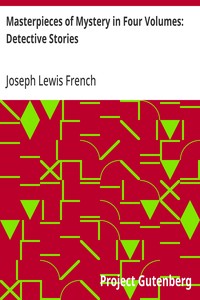
Masterpieces of Mystery in Four Volumes: Detective Stories
English4,066 downloads on Project GutenbergDownload EPUB
Public-domain ebook sourced from Project Gutenberg #27523.
Public-domain ebook
English4,066 downloads on Project GutenbergDownload EPUB
Public-domain ebook sourced from Project Gutenberg #27523.
This four‑volume set gathers a representative sweep of early detective fiction, beginning with Edgar Allan Poe’s “The Purloined Letter,” which re‑creates a midnight conversation between Dupin, a police prefect, and a nameless narrator. The story opens in a Parisian back‑library, where smoke‑filled dialogue leads into a meticulous discussion of a stolen document and the methodical search that follows. The contents list then moves through Arthur B. Reeve’s “The Black Hand,” Wilkie Collins’s “The Biter‑Bit,” and other notable pieces, each illustrating the evolution from Poe’s analytical reasoning to Conan Doyle’s deductive flair and the later incorporation of scientific techniques.
The prose reflects the late‑19th‑century taste for intricate puzzles and genteel wit, with a tone that oscillates between scholarly commentary and the brisk, conversational style of period magazines. Readers who relish the cerebral charm of classic whodunits, enjoy seeing the lineage from Dupin to Holmes, and appreciate the historical context of the genre’s development will find this anthology a rewarding exploration of its formative voices.
The opening · free to read
The honour of founding the modern detective story belongs to an American writer. Such tales as "The Purloined Letter" and "The Murders in the Rue Morgue" still stand unrivalled.
We in America no more than the world of letters at large, did not readily realize what Poe had done when he created Auguste Dupin--the prototype of Sherlock Holmes et genus omnes, up to the present hour. On Poe's work is built the whole school of French detective story writers. Conan Doyle derived his inspiration from them in turn, and our American writers of to-day are helped from both French and English sources. It is rare enough to find the detective in fiction even to-day, however, who is not lacking in one supreme quality,--scientific imagination. Auguste Dupin had it. Dickens, had he lived a short time longer, might have turned his genius in this direction. The last thing he wrote was the "Mystery of Edwin Drood," the mystery of which is still unravelled. I have heard the opinion expressed by an eminent living writer that had Dickens' life been prolonged he would probably have become the greatest master of the detective story, except Poe.
The detective story heretofore has been based upon one of two methods: analysis or deduction. The former was Poe's, to take the typical example; the latter is Conan Doyle's. Of late the discoveries of science have been brought into play in this field of fiction with notable results. The most prominent of such innovators, indeed the first one, is Arthur Reeve, an American writer, whose "Black Hand" will be found in this collection; which has endeavoured within its limited space to cover the field from the start--the detective story--wholly the outgrowth of the more highly developed police methods which have sprung into being within little more than half a century, being only so old.
JOSEPH LEWIS FRENCH.
The book keeps going
Reading is free forever. Sign up and watch scenes appear while you read.



Scenes Storieta drew for other classics.
New illustrated classics
Once or twice a month: the latest books to get full character casts, scene art, and free comic editions. No account needed.