Public-domain ebook
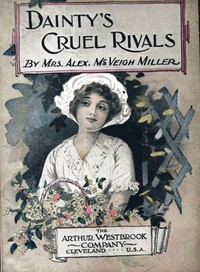
Dainty's Cruel Rivals; Or, The Fatal Birthday
Language: en13,499 downloads on Project Gutenberg
Subjects
Public-domain ebook sourced from Project Gutenberg #31257.
Public-domain ebook
Language: en13,499 downloads on Project Gutenberg
Subjects
Public-domain ebook sourced from Project Gutenberg #31257.
The novel is a melodramatic romance that weaves together love, rivalry, and a touch of the supernatural. It opens with a plaintive nursery chant sung by a black mammy, whose soothing verses lull the heroine Dainty into a dream‑like sleep. From that gentle beginning the narrative quickly shifts to Dainty’s inner anxieties about her “cruel rivals” – Olive, Ela and their scheming aunts – and the promise of a forthcoming marriage to the noble Love Ellsworth. The opening scenes establish the central conflict between Dainty’s tender hopes and the machinations of jealous relatives, while also introducing a ghostly presence that haunts the household, setting the stage for a series of confrontations that will test loyalty and affection.
The prose reflects the ornate, sentimental style of late‑nineteenth‑century domestic fiction, with elaborate descriptions, dialect‑flavoured dialogue, and a rhythm that echoes the period’s serialized romances. Readers who enjoy intricate family intrigues, genteel courtship, and the occasional gothic twist will find the book’s blend of affection, envy, and spectral suspense appealing. Its focus on young women’s emotional lives, coupled with the vivid portrayal of servants and cousins, makes it a satisfying choice for fans of classic adventure‑laden love stories.
The opening · free to read
"Byo, baby boy, bye-- Byo, li'l boy! En 'e run ter 'is mammy Fer ter git 'im out er trouble-- Mammy's li'l baby boy!"
Dainty had sunk down in the easy-chair at the open window, and the tender tears flashed into her eyes at the sweet domestic picture painted by the loving old black mammy.
How beautiful it had sounded, the picture of the future to her fond young heart; but would it ever come true, or would the malice of her enemies yet come between her and happiness? Sad foreboding filled her mind as she recalled Olive's black looks and cruel words while she played the gypsy fortune-teller.
"She was trying to frighten me to death, and I believe she would have succeeded, had not Love so fortunately discovered her identity," she mused, while mammy crooned on monotonously with her nursery song. Suddenly coming to herself, she cried:
"Dar now, I forgot mys'f, as I often do, and t'ought I was back in de good ole times, nussin' de babies dat's all growed up now, an' some on 'em dead, too! But as I was a-sayin', Miss Dainty, deares', Massa Love he kem down ter my darter's cabin dis arternoon, an' say, 'Well, well, mammy, settin' in de sun an' bakin' yo' ole haid es usual! How it brings up de chilehood days wheneber I see yo'! Here's a dollar fer yer, an' some baccy fer yer pipe, an' mammy, I want yer ter do er favor fer yer li'l boy.'
"When Massa Love speak dat coaxin' way he knows I gwine let him tromp on ole black mammy ef he want ter; an' I nods, an' he goes on:
"'Mammy, I come to tole yer I gwine git married on my birfday--de first o' August, yo' know. My sweetheart is a-visitin' at Ellsworf, an' she's de prettiest girl in de world! Her cheeks is like roses, an' her hair is bright like sunshine, an' her eyes blue as de dark vi'lets down in de wood. An' she's good as she's pretty; but dem mean servants at Ellsworf dey done tole her ghost stories, an' she's dat nervous she can't sleep at night for vain 'maginings of hearing ole men coughin' an' seein' ole monks paradin' an' layin' cole hands on her face. She must not sleep alone, fer she's never been parted from her mammy before; but she hates dat coarse Sheila Kelly; so, mammy, you must go up ter de house an' watch in my dear girl's room ebery night till her own mammy comes from Richmun', an' yo' must sleep all day an' lie awake all night ter soothe my nervous darlin' ef she gits frightened, an' mammy, you shall hab a silber dollar ever' mornin' fer takin' keer ob my lub.' So you see why I come, honey. Kase he want me, not fer de silber dollar; kase I don' mean ter tek hit at all, only I didn't tell him so, not ter git inter an argyment wif him. So now, honey, lemme he'p yer to baid, an' I'se warrant de ha'nts sha'n't 'sturb you dis night."
"Then you don't believe the stories of the old monk, mammy?" Dainty said, timidly, as she laid her golden head down on the lace pillow.
"Monks, indeed! No, chile, no; deir aine no monks at Ellsworf, an' never was, 'cept when de circus kem ter de kentry, las' summer was a year agone. Dey was two cute li'l monks den, wif white faces like li'l ole men, an' dey was mighty cur'us li'l rascals, an' dat sassy wif deir red suits and yaller caps; but I aine never heerd o' deir gitten loose from de circus, an' I don' b'leeve dey ever did, an' you can 'pend on what I say, fer I been at Ellsworf ever sence I was born, an' dat's a hunnerd years more or less. Now shet yo' eyes, ma honey. I gwine sing yo' to sleep."
And while Dainty dozed away, thinking gratefully of the fond care of her noble lover, the old woman crooned over her in monotonous cadences the lulling nursery song:
"Byo, baby girl, bye-- Byo, li'l girl! Oh, run ter 'er mammy, Fer ter git 'er out o' trouble-- Mammy's li'l baby girl!"
Softly the white lids drooped over the tired eyes, and Dainty slept peacefully as a little child.
Then the old black mammy hushed her lullaby song and relapsed into silence, gazing in admiring pride at the lovely sleeping face under its billows of golden hair, perhaps wondering why God made people so different--some as fair and beautiful as angels, others black and homely like herself.
But no discontent or envy marred her humble thoughts. Instead, she murmured a low prayer of blessing for the girl who had prayed for herself, kneeling by the bed, but a little while ago; then put out the light and moved over to the window to keep the vigil her "Massa Love" had commanded over his precious darling.
And as she was accustomed to watching by sickbeds, and had been sleeping all afternoon, she managed to keep awake all night, and Dainty slept dreamlessly till dawn. Apparently the ghost was exorcised.
Lovelace Ellsworth was delighted when he saw Dainty's bright, happy face next morning, showing that nothing had marred her calm repose.
Black mammy's ebony face shone with delight, too, as she related how peacefully her charge had slumbered, without a single disturbing dream, all night.
"Bress her dear heart! Mammy gwine tek keer ob her ebry night, an' don't want no silber dollar for it, neider, dat she don't!" she exclaimed, pushing away Love's hand, though he afterward surreptitiously dropped the money into her capacious apron pocket.
After breakfast he kissed his darling a tender good-bye and rode away happily, in the July sunshine, on the little business trip of which he had spoken to Dainty the evening before. He returned so late that night that he did not see her until morning, when he received the same encouraging report. Mammy had proved a most faithful guardian, effectually keeping at bay all the unquiet spirits of the night.
Indeed, for quite a week everything went on pleasantly at Ellsworth.
The mistress of the mansion and her two favorite nieces seemed to have swallowed their chagrin and accepted the situation. They were blandly courteous to the lovers, and seemed to have relaxed their endeavors to wound and annoy them; but, could one have looked beneath the surface, a volcano would have been seen to be smoldering beneath the thin upper crust of politeness.
Mrs. Ellsworth, angry and indignant at the thwarting of her cherished schemes, steeled her heart to all the charms of her youngest niece, and cherished a secret resentment that was destined to bear bitter fruit.
Olive Peyton, mad with slighted love and thwarted ambition, was quite as eager as her aunt for revenge on her lovely rival, while Ela Craye was not behind either in her resentment. Having thrown over her lover for the sake of gold, she was all the more anxious to realize her desires. So the three conspirators stood secretly but solidly against the lovers, and only the future could prove whether the forces of good or evil would win in the bitter contest.
True, Ela was a little frightened still when she recalled the sensational interview with her wronged lover; but she knew that he had fled from the scene of his attempted crime, and returned to his office in Richmond. Indeed, she had written him a curt letter, taking credit to herself for not having betrayed his identity to Love Ellsworth that night. She threatened him, frankly, that if he should ever interfere with her or Mr. Ellsworth again, she should denounce him for the attempted assassination, of which Love bore witness in a slight scar on his white brow.
Vernon Ashley made no reply to Ela's letter, and she began to breathe more freely, hoping that he would trouble her peace no more.
During that calm week, Dainty had one bitter disappointment.
It was the news that her dear mother would be unable to join her at Ellsworth until two days before the wedding.
She had very unfortunately taken a young married pair to board after the girls went to the mountains, and the young wife now lay quite ill, the mother of a feeble infant.
Mrs. Chase did not consider the hired nurse very competent, and had not the heart to desert the young couple in their trouble.
"I have taken the care of the babe on myself," wrote the motherly soul, "and I believe it will be two weeks yet before I can safely desert my post. Then my boarders will leave for the country, and I shall fly to you, my darling, whom I have so sadly missed since you went away."
And, oh! what a joyful heart the loving mother bore at the fruition of all her fond hopes for her lovely daughter!
How bitterly she had grieved over her poverty for Dainty's sake! How she had dreaded to see her assume the drudgery of school-teaching, fading her bright bloom in wearisome toil! But now it would never have to be.
The girl's own natural charms, unhindered by the lack of finery, had won for her the love of a noble man, who would fill her life with sunshine. It was a triumph, too, to see how Olive's and Ela's spite had recoiled on themselves, and failed to harm winsome Dainty, whom they hated simply for her grace and beauty.
She rejoiced in Dainty's happiness, and the girl had been careful not to grieve her by a hint of her annoyances at Ellsworth.
"Poor mamma, she has troubles enough of her own fighting the hard battle of poverty; but, thank Heaven! it will soon be over, for Love has promised that her home shall be here with me always," the young girl thought, with a heart full of joy.
So the happy days slipped away, each crowded with pleasures, for there was never a dull day at Ellsworth. The mistress kept it gay with pleasant entertainments, to which she always invited the best people in the county, especially the eligible young men, hoping that the nieces Lovelace had slighted for Dainty might yet catch rich husbands.
But somehow the best catches seemed already engaged, and the next best ones, while politely attentive to Mrs. Ellsworth's guests, did not betray any marked predilection for their society. Though handsome and well-dressed, they failed somehow in that indefinable charm that often wins for a plainer girl a really enviable lover.
This fact has been often observed in life. The most perfect beauty, unless united to an innate goodness that forms an attractive aura about the person, often fails to impress and win.
"What a beautiful girl! Pray introduce me!" exclaims some admiring young man; but on being presented, he feels an unconscious chill, and after leaving the beauty's presence, finds he has lost all interest in what before had charmed him so. The most probable cause is, that the fair face hid an ignoble soul whose influence had vaguely chilled and depressed his admiration.
Olive Peyton was peculiarly of this unpleasant type. Proud, vain, cold, and ambitious, she had never possessed any magnetic power of attraction, and had actually never received a single proposal, though it would have mortified her intensely for any one to find it out.
The book keeps going
Reading is free forever. Sign up and watch scenes appear while you read.



Scenes Storieta drew for other classics.
New illustrated classics
Once or twice a month: the latest books to get full character casts, scene art, and free comic editions. No account needed.