LONDON: OFFICE OF THE NATIONAL ILLUSTRATED LIBRARY, 227 STRAND.
LONDON: VIZETELLY AND COMPANY, PRINTERS AND ENGRAVERS, PETERBOROUGH COURT, FLEET STREET.
PREFACE.
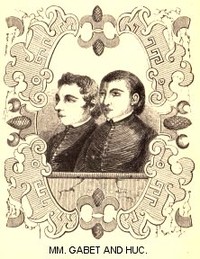
The Pope having, about the year 1844, been pleased to establish an Apostolic Vicariat of Mongolia, it was considered expedient, with a view to further operations, to ascertain the nature and extent of the diocese thus created, and MM. Gabet and Huc, two Lazarists attached to the petty mission of Si-Wang, were accordingly deputed to collect the necessary information. They made their way through difficulties which nothing but religious enthusiasm in combination with French elasticity could have overcome, to Lha-Ssa, the capital of Thibet, and in this seat of Lamanism were becoming comfortably settled, with lively hopes and expectations of converting the Tale-Lama into a branch-Pope, when the Chinese Minister, the noted Ke-Shen, interposed on political grounds, and had them deported to China. M. Gabet was directed by his superiors to proceed to France, and lay a complaint before his Government, of the arbitrary treatment which he and his fellow Missionary had experienced. In the steamer which conveyed him from Hong Kong to Ceylon, he found Mr. Alexander Johnstone, secretary to Her Majesty's Plenipotentiary in China; and this gentleman perceived so much, not merely of entertainment, but of important information in the conversations he had with M. Gabet, that he committed to paper the leading features of the Reverend Missionary's statements, and on his return to his official post, gave his manuscripts to Sir John Davis, who, in his turn, considered their contents so interesting, that he embodied a copy of them in a dispatch to Lord Palmerston. Subsequently the two volumes, here translated, were prepared by M. Huc, and published in Paris. Thus it is, that to Papal aggression in the East, the Western World is indebted for a work exhibiting, for the first time, a complete representation of countries previously almost unknown to Europeans, and indeed considered practically inaccessible; and of a religion which, followed by no fewer than 170,000,000 persons, presents the most singular analogies in its leading features with the Catholicism of Rome.
CONTENTS OF VOLUME I.
PAGE PREFACE CONTENTS iii LIST OF ILLUSTRATIONS vii CHAPTER I. French Mission of Peking--Glance at the Kingdom of 9 Ouniot--Preparations for Departure--Tartar-Chinese Inn--Change of Costume--Portrait and Character of Samdadchiemba--Sain-Oula (the Good Mountain)--The Frosts on Sain-Oula, and its Robbers--First Encampment in the Desert--Great Imperial Forest--Buddhist Monuments on the summit of the Mountains--Topography of the Kingdom of Gechekten--Character of its Inhabitants--Tragical working of a Mine--Two Mongols desire to have their horoscope taken--Adventure of Samdadchiemba--Environs of the town of Tolon-Noor CHAPTER II. Inn at Tolon-Noor--Aspect of the City--Great Foundries of 33 Bells and Idols--Conversation with the Lamas of Tolon-Noor--Encampment--Tea Bricks--Meeting with Queen Mourguevan--Taste of the Mongols for Pilgrimages--Violent Storm--Account from a Mongol Chief of the War of the English against China--Topography of the Eight Banners of the Tchakar--The Imperial Herds--Form and Interior of the Tents--Tartar Manners and Customs--Encampment at the Three Lakes--Nocturnal Apparitions--Samdadchiemba relates the Adventures of his Youth--Grey Squirrels of Tartary--Arrival at Chaborte CHAPTER III. Festival of the Loaves of the Moon--Entertainment in a 61 Mongol Tent--Toolholos, or Rhapsodists of Tartary--Invocation to Timour--Tartar Education--Industry of the Women--Mongols in quest of missing Animals--Remains of an abandoned City--Road from Peking to Kiaktha--Commerce between China and Russia--Russian Convent at Peking--A Tartar solicits us to cure his Mother from a dangerous Illness--Tartar Physicians--The Intermittent Fever Devil--Various forms of Sepulture in use among the Mongols--Lamasery of the Five Towers--Obsequies of the Tartar Kings--Origin of the kingdom of Efe--Gymnastic Exercises of the Tartars--Encounter with three Wolves--Mongol Carts CHAPTER IV. Young Lama converted to Christianity--Lamasery of 85 Tchortchi--Alms for the Construction of Religious Houses--Aspect of the Buddhist Temples--Recitation of Lama Prayers--Decorations, Paintings, and Sculptures of the Buddhist Temples--Topography of the Great Kouren in the country of the Khalkhas--Journey of the Guison-Tamba to Peking--The Kouren of the Thousand Lamas--Suit between the Lama-King and his Ministers--Purchase of a Kid--Eagles of Tartary--Western Toumet--Agricultural Tartars--Arrival at the Blue Town--Glance at the Mantchou Nation--Mantchou Literature--State of Christianity in Mantchouria--Topography and productions of Eastern Tartary--Skill of the Mantchous with the Bow CHAPTER V. The Old Blue Town--Quarter of the Tanners--Knavery of the 109 Chinese Traders--Hotel of the Three Perfections--Spoliation of the Tartars by the Chinese--Money Changer's Office--Tartar Coiner--Purchase of two Sheep-skin Robes--Camel Market--Customs of the Cameleers--Assassination of a Grand Lama of the Blue Town--Insurrection of the Lamaseries--Negociation between the Court of Peking and that of Lha-Ssa--Domestic Lamas--Wandering Lamas--Lamas in Community--Policy of the Mantchou Dynasty with reference to the Lamaseries--Interview with a Thibetian Lama--Departure from the Blue Town CHAPTER VI. A Tartar-eater--Loss of Arsalan--Great Caravan of 128 Camels--Night Arrival at Tchagan-Kouren--We are refused Admission into the Inns--We take up our abode with a Shepherd--Overflow of the Yellow River-Aspect of Tchagan-Kouren--Departure across the Marshes--Hiring a Bark--Arrival on the Banks of the Yellow River--Encampment under the Portico of a Pagoda--Embarkation of the Camels--Passage of the Yellow River--Laborious Journey across the Inundated Country--Encampment on the Banks of the River CHAPTER VII. Mercurial Preparation for the Destruction of 147 Lice--Dirtiness of the Mongols--Lama Notions about the Metempsychosis--Washing--Regulations of Nomadic Life--Aquatic and Passage Birds--The Yuen-Yang--The Dragon's Foot--Fishermen of the Paga-Gol--Fishing Party--Fisherman Bit by a Dog--Kou-Kouo, or St. Ignatius's Bean--Preparations for Departure--Passage of the Paga-Gol--Dangers of the Voyage--Devotion of Samdadchiemba--The Prime Minister of the King of the Ortous--Encampment CHAPTER VIII. Glance at the Country of the Ortous--Cultivated 165 Lands--Sterile, sandy steppes of the Ortous--Form of the Tartar-Mongol Government--Nobility--Slavery--A small Lamasery--Election and Enthronization of a Living Buddha--Discipline of the Lamaseries--Lama Studies--Violent Storm--Shelter in some Artificial Grottoes--Tartar concealed in a Cavern--Tartaro-Chinese Anecdote--Ceremonies of Tartar Marriages--Polygamy--Divorce--Character and Costume of the Mongol Women CHAPTER IX. Departure of the Caravan--Encampment in a fertile 188 Valley--Intensity of the Cold--Meeting with numerous Pilgrims--Barbarous and Diabolical Ceremonies of Lamanism--Project for the Lamasery of Rache-Tchurin--Dispersion and rallying of the little Caravan--Anger of Samdadchiemba--Aspect of the Lamasery of Rache-Tchurin--Different Kinds of Pilgrimages around the Lamaseries--Turning Prayers--Quarrel between two Lamas--Similarity of the Soil--Description of the Tabsoun-Noor or Salt Sea--Remarks on the Camels of Tartary CHAPTER X. Purchase of a Sheep--A Mongol Butcher--Great Feast _a la 210 Tartare_--Tartar Veterinary Surgeons--Strange Cure of a Cow--Depth of the Wells of the Ortous--Manner of Watering the Animals--Encampment at the Hundred Wells--Meeting with the King of the Alechan--Annual Embassies of the Tartar Sovereigns to Peking--Grand Ceremony in the Temple of the Ancestors--The Emperor gives Counterfeit Money to the Mongol Kings--Inspection of our Geographical Map--The Devils Cistern--Purification of the Water--A Lame Dog--Curious Aspect of the Mountains--Passage of the Yellow River CHAPTER XI. Sketch of the Tartar Nations 237 CHAPTER XII. Hotel of Justice and Mercy--Province of 262 Kan-Sou--Agriculture--Great Works for the Irrigation of the Fields--Manner of Living in Inns--Great Confusion in a Town caused by our Camels--Chinese Lifeguard--Mandarin Inspector of the Public Works--Ning-Hia--Historical and Topographical Details--Inn of the Five Felicities--Contest with a Mandarin, Tchong-Wei--Immense Mountains of Sand--Road to Ili--Unfavourable aspect of Kao-Tan-Dze--Glance at the Great Wall--Inquiry after the Passports--Tartars travelling in China--Dreadful Hurricane--Origin and Manners of the Inhabitants of Kan-Sou--The Dchiahours--Interview with a Living Buddha--Hotel of the Temperate Climates--Family of Samdadchiemba--Mountain of Ping-Keou--Fight between an Innkeeper and his Wife--Water-mills--Knitting--Si-Ning-Fou--House of Rest--Arrival at Tang-Keou-Eul
LIST OF ILLUSTRATIONS.
PAGE Frontispiece, Chinese and Tartar Costumes Title-page, Portraits of MM. Gabet and Huc View of the City of Peking 9 The Travellers setting out on their Journey 15 Kang of a Tartar-Chinese Inn 17 The Missionaries in their Lamanesque Costumes 19 Portrait of Samdadchiemba 20 Mountain of Sain-Oula 21 First Encampment 23 Buddhist Monuments 25 Military Mandarin 28 Chinese Idol 32 View of the City of Tolon-Noor 33 Bell and Idol Foundry 36 The Queen of Mourguevan 40 The Emperor Tao-Kouang 44 Tartar Encampment 48 Interior of a Tartar Tent 50 Russian Convent at Peking 61 Lamasery of the Five Towers 79 Lamasery of Tchortchi 85 Buddhist Temple 87 Interior of Buddhist Temple 89 Tartar Agriculturist 98 Chinese Soldier 100 Chinese Money-changers 109 The Camel Market 121 Vagabond Lamas 124 View of Tchagan-Kouren 128 Caravan crossing the Desert 132 Navigation of the Yellow River 139 Camel of Tartary 146 Water-fowl and Birds of Passage 147 A Fishing Party 155 Election of a Living Buddha 165 The Steppes of Ortous 168 Caves of the Ortous 180 Barbarous Lamanesque Ceremony 188 Lamasery of Rache-Tchurin 201 Turning Prayers 203 Mongol Butcher 210 Encampment at the Hundred Wells 222 Grand Ceremony at the Ancestral Temple 227 Chinese Idol 236 Chinese and Tartar Arms 237 Chinese Princess 253 Chinese Caricature 261 Irrigation of the Fields 262 Root of the Jin-Seng 293
French Mission of Peking--Glance at the Kingdom of _Ouniot_--Preparations for Departure--Tartar-Chinese Inn--Change of Costume--Portrait and Character of Samdadchiemba--_Sain-Oula_ (the Good Mountain)--The Frosts on Sain-Oula, and its Robbers--First Encampment in the Desert--Great Imperial Forest--Buddhist monuments on the summit of the mountains--Topography of the Kingdom of _Gechekten_--Character of its Inhabitants--Tragical working of a Mine--Two Mongols desire to have their horoscope taken--Adventure of Samdadchiemba--Environs of the town of Tolon-Noor.
The French mission of Peking, once so flourishing under the early emperors of the Tartar-Mantchou dynasty, was almost extirpated by the constant persecutions of Kia-King, the fifth monarch of that dynasty, who ascended the throne in 1799. The missionaries were dispersed or put to death, and at that time Europe was herself too deeply agitated to enable her to send succour to this distant Christendom, which remained for a time abandoned. Accordingly, when the French Lazarists re-appeared at Peking, they found there scarce a vestige of the true faith. A great number of Christians, to avoid the persecutions of the Chinese authorities, had passed the Great Wall, and sought peace and liberty in the deserts of Tartary, where they lived dispersed upon small patches of land which the Mongols permitted them to cultivate. By dint of perseverance the missionaries collected together these dispersed Christians, placed themselves at their head, and hence superintended the mission of Peking, the immediate administration of which was in the hands of a few Chinese Lazarists. The French missionaries could not, with any prudence, have resumed their former position in the capital of the empire. Their presence would have compromised the prospects of the scarcely reviving mission.
The book keeps going
Keep reading, and see it illustrated
Reading is free forever. Sign up and watch scenes appear while you read.
Scenes Storieta drew for other classics.