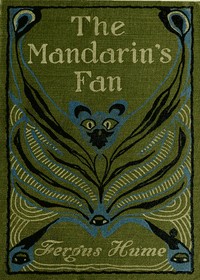
Public-domain ebook
The Mandarin's Fan
by Fergus Hume
Language: en6,116 downloads on Project Gutenberg
Subjects
In: Romance·Crime, Thrillers and Mystery·Novels
Public-domain ebook sourced from Project Gutenberg #36346.
Public-domain ebook
by Fergus Hume
Language: en6,116 downloads on Project Gutenberg
Subjects
In: Romance·Crime, Thrillers and Mystery·Novels
Public-domain ebook sourced from Project Gutenberg #36346.
The Mandarin’s Fan is a detective‑mystery novel by Fergus Hume, the author of the celebrated The Mystery of a Hansom Cab. The story opens in the first chapter, “The Advertisement,” with a vivid evening scene on the terrace of the ancient Royabay mansion. Hume introduces two gentlemen, Major Tidman, a blunt soldier of fortune, and Rupert Ainsleigh, the last of a once‑wealthy family, who discuss a family curse, financial ruin, and a looming marriage dilemma. Their dialogue, set against a richly described English country house and its ruined abbey, establishes the novel’s central conflict: a hereditary “curse” tied to a prophetic poem, a failing estate, and the prospect of marrying a poor heiress. The opening therefore frames the book as a blend of murder‑investigation intrigue and a cross‑cultural mystery that will later involve a Chinese mandarin’s fan.
The prose reflects the turn‑of‑the‑century Victorian style, with elaborate description, formal dialogue, and occasional idiosyncratic punctuation that mirrors the original printing. Hume’s narrative voice is both theatrical and methodical, guiding the reader through layered family histories and cryptic clues. Readers who enjoy intricate plots, period settings, and the atmospheric tension of classic whodunits, especially those fascinated by Anglo‑Chinese connections, will find this work rewarding. Its blend of historical detail, character‑driven suspense, and a puzzle‑like structure makes it a compelling choice for fans of early twentieth‑century mystery fiction.
The opening · free to read
Transcriber's Note.
Every effort has been made to replicate this text as faithfully as possible, however it should be noted that this text contains extremely non-standard and erratic punctuation, capitalization, and spelling. In most places these errata have been transcribed as printed. There is a listing of the major changes at the end of this document.
All changes were made with the objective of maintaining the author's original intent and to more easily allow you, the reader, to understand this novel.
The book keeps going
Reading is free forever. Sign up and watch scenes appear while you read.



Scenes Storieta drew for other classics.
New illustrated classics
Once or twice a month: the latest books to get full character casts, scene art, and free comic editions. No account needed.