Storieta
English
Sign up
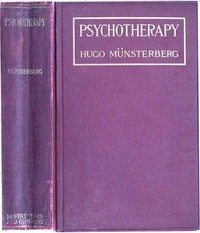
Psychotherapy Including the History of the Use of Mental Influence, Directly and Indirectly, in Healing and the Principles for the Application of Energies Derived from the Mind to the Treatment of Disease

Public-domain ebook

Psychotherapy Including the History of the Use of Mental Influence, Directly and Indirectly, in Healing and the Principles for the Application of Energies Derived from the Mind to the Treatment of Disease

by James J. Walsh

Language: en1,789 downloads on Project Gutenberg

Subjects

In: Health & Medicine·Psychiatry/Psychology

Public-domain ebook sourced from Project Gutenberg #36450.

About this book

James J. Walsh’s Psychotherapy is a scholarly survey that blends historical overview with practical guidance for early‑twentieth‑century physicians. The work opens with Walsh’s own definition of “over‑solicitous” patients, those who “worry themselves sick”, and proceeds to argue that, in 1910, psychotherapy was a vital complement to the limited physiological knowledge of the day. The author frames the book as a collection of lecture notes, organized into a meticulous outline of major topics, sections, chapters and subheads, each marked by bold or italic titles and occasional double‑spaced breaks. Throughout the opening pages he stresses the need to inform, divert, and cheer patients, while lamenting the loss of personal physician‑patient relationships to impersonal technology. The preface situates the text within Walsh’s academic career at Fordham and his ambition to systematize mental influence across both functional and organic disease.

The voice is that of a learned, yet didactic, physician‑professor writing in the early‑1910s. Walsh’s prose is formal, heavily annotated, and steeped in the conventions of contemporary medical education, complete with references to societies, fellowships, and a dedication to a Mayo Clinic surgeon. Readers who appreciate exhaustive historical context, detailed anatomical illustrations, and a methodical, lecture‑style presentation of psychotherapeutic principles, especially those interested in the evolution of mind‑body medicine or the roots of modern psychosomatic practice, will find this volume rewarding.

Who appears in this book

  • James J. WalshMiddle‑aged Caucasian male, spectacles, dark hair, solemn expression, academic gown, early 1910s

The opening · free to read

One of the author's favorite terms is "over-solicitous". The patient literally "worrys themselves sick" over trivial symptoms and makes serious cases worse than necessary. Most of his use of psychotherapy consists of informing, diverting and cheering the patient so that worry and its consequences are not piled on top of real or imagined disease.

This book illustrates the general state of medicine in 1910. Psychotherapy was more important to medical care because so little was known of the complex physical mechanisms of the body. I particularly reacted to the discussion of hay fever because it plagued me for thirty years until experimental desensitization therapy successfully cured my case. Nonetheless, much of value has been lost with the decline of psychotherapy by the family physician. A personal relationship with the physician is often replaced with expensive impersonal technology that mostly tells what is not wrong.

Many paragraphs have bold or italic titles. These are rendered by a extra blank line--a total of two blank lines.

Obvious spelling or typographical errors have been corrected. Inconsistent spelling of names and inventive and alternative spelling is left as printed.

The outline format of the book uses these conventions: Major Topics, [Upper Case title] Sections, [Upper Case, italic title] Chapters, Minor topics, denoted by bold face and an em-dash Topic subheads denoted by italics and and em-dash

for example: SPECIAL PSYCHOTHERAPY SECTION VII. Cardiotherapy Chapter III. Cardiac Neuroses Varieties.-- [Bold] Palpitation.-- [italic]

During the transcription of this book Dr. Michael Stewart of the Mayo Clinic, Jacksonville, FL., diagnosed me with a retinal condition that had deprived me of the ability to read with my left eye. His skilled surgery corrected the condition. I dedicate this transcription to Dr. Stewart and the skilled and thoughtful staff of Mayo. [End Transcriber's Notes]

The book keeps going

Keep reading, and see it illustrated

Reading is free forever. Sign up and watch scenes appear while you read.

Illustrated scene from The Adventures of Sherlock HolmesIllustrated scene from FrankensteinIllustrated scene from The Great Gatsby

Scenes Storieta drew for other classics.

New illustrated classics

A new classic, drawn, in your inbox.

Once or twice a month: the latest books to get full character casts, scene art, and free comic editions. No account needed.