Storieta
English
Save & sign up

About this book

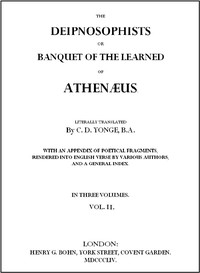
The Deipnosophists is a sprawling banquet of erudition compiled by the Egyptian‑born Athenaeus of Naucratis in the third century AD. Framed as a dialogue between the author and his friend Timocrates, the work opens with a description of a lavish Roman banquet hosted by the wealthy Laurentius, where the assembled guests, physicians such as Galen, jurists, poets, philosophers and rhetoricians, discuss everything from the names of fish to the customs of ancient feasts. The opening passage explains that Athenaeus’s aim is to preserve fragments of lost poetry and prose, and it outlines the massive scope of the text, which proceeds through a series of “books” that catalogue foods, wines, customs, and anecdotes in an almost encyclopedic fashion.

The style is deliberately learned, echoing the dialogic method of Plato while interspersing long quotations, glosses and occasional poetic verses. Written in a late‑antique Greek that has been carefully transliterated and annotated, the prose is dense, rich with classical references, and peppered with scholarly asides. Readers who delight in antiquarian detail, students of ancient social customs, historians of food and drink, or anyone fascinated by the interplay of literature, philosophy and everyday life in the Greco‑Roman world, will find this monumental conversation a rewarding, if demanding, immersion.

Characters in The Deipnosophists

  • AthenaeusMiddle‑aged Greek scholar with short beard, white hair, wearing a flowing chiton and himation
  • TimocratesYoung Greek gentleman, clean‑shaven, dark curls, dressed in a fine embroidered chiton
  • LaurentiusWealthy Roman host, balding, trimmed beard, in a pristine white toga with purple trim and laurel wreath

The opening · free to read

Transcriber's Notes: Greek words in this text have been transliterated and placed between =equal signs=. Words in italics in the original are surrounded by underscores. A row of asterisks represents either an ellipsis in a poetry quotation or a place where the original Greek text was too corrupt to be read by the translator. Other ellipses match the original.

Variations in spelling and hyphenation have been left as in the original.

There are numerous long quotations in the original, many missing the closing quotation mark. Since it is often difficult to determine where a quotation begins or ends, the transcriber has left quotation marks as they appear in the original.

A few typographical errors have been corrected. A complete list follows the text. Other notes also follow the text.

The book keeps going

Keep reading, and see it illustrated

Reading is free forever. Sign up and watch scenes appear while you read.

Illustrated scene from FrankensteinIllustrated scene from The Great GatsbyIllustrated scene from Pride and Prejudice

Scenes Storieta drew for other classics.

New illustrated classics

A new classic, drawn, in your inbox.

Once or twice a month: the latest books to get full character casts, scene art, and free comic editions. No account needed.