Public-domain ebook
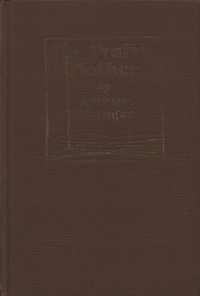
The Locusts' Years
by Mary H. Fee
Language: en735 downloads on Project Gutenberg
Subjects
In: Novels
Public-domain ebook sourced from Project Gutenberg #37089.
Public-domain ebook
by Mary H. Fee
Language: en735 downloads on Project Gutenberg
Subjects
In: Novels
Public-domain ebook sourced from Project Gutenberg #37089.
The opening · free to read
When a man has reached the point where he can reflect, with cynical satisfaction, upon the brutality of organized society, and can contemplate unmoved one of its victims; and when the cause of his reflections is a woman not over thirty, whose worth and refinement are obvious to any reader of faces, that man either must possess a coarse-grained and cruel nature, or he must be very highly civilized.
No shade of doubt could have entered Judge Alexander Barton's mind as to which of these adjectives applied to him. He would have repudiated the faintest hint that a taint of coarseness or cruelty could lie in him. His was one of those eminent political personalities which bubble up from the great caldron of American democracy. He had convictions and principles of a high order. They appeared frequently in the shape of addresses to young men's political and reading clubs, or in a "few remarks" at church socials, where a programme of songs and recitations was followed by the distribution of home-made cakes and candies, and of uninspiriting beverages. It was sometimes remarked of him in that other world which he frequented that his conscientiousness in attending these mild-flavored symposia was the indisputable evidence of his fitness to adorn the roster of the Philippine judiciary. For to whom may we look for an example, if not to the interpreters of the law, whose position vests them with dignity, social and official? From whom may we demand the utterance of lofty principles and of high convictions, if not from the very men whose business it is to punish the unhappy wretches whose actions have declared their principles, expressed or otherwise, of the flimsiest?
Judge Barton was also frequently extolled as the pattern of American democracy, as, indeed, he was. Nothing could have been more catholic than his handshake, nothing more finely measured than the appreciation which it conveyed of the recipient's relation to himself: to the veteran of the Army of the Philippines, it was hearty, and bespoke the comrade in arms; to the struggling young civil-service employee, it was encouraging, and it hinted, ever so delicately, that the inspiration for great ambitions ought to lie in the example of living statesmen; to the clergy and to the members of the Educational Department, who fairly swarm in the Philippines, it was fraternal and spoke confidentially of the tie which linked them in a great work; and to the effervescing spume from the Pacific coast, which is knocking about Manila, loud in vituperation of the change from democratic to bureaucratic society--to that segment of Young America whose disposition to criticise existing institutions led to the happy phrase "undesirable citizens"--the Judge's democratic cordiality always embodied a hope that their mutual relations might continue forever harmonious, and it even intimated that no act on his part could make them otherwise.
The cause of the Judge's highly civilized musings was one of those undesirable citizens of the feminine gender; and, if you ask how anything proper in the feminine gender may be classed as an undesirable citizen, there can only be cited an opinion from the Judge himself--one of those ex-cathedra sentiments which he held as infallible--that any one who refuses to accept pleasantly a situation which he is powerless to remedy, and who continues a quarrel which is futile and which can result only disastrously to its single champion, that person is, primarily, inefficient, and, secondarily, insane; either of which states is undesirable. Furthermore, there is nothing so repellent to a man as the feminine weakness which enlists his sympathy, and, at the same time, challenges the terms on which it is given. To find the shivering wretch on whom you would bestow an alms repudiating your charity and mutely reproaching you for the condition of things which makes you donor and him recipient--in such a metaphor, perhaps, the Judge might have condensed the musings which a month's illness and the daily opportunity of studying Miss Ponsonby had bred.
The young woman who had received so much of His Honor's valuable consideration did not look a very formidable antagonist in a quarrel with organized society. She stood at an open window of the hospital, gazing down on a convalescent-strewn lawn, where a military band was delighting the sick with a Christmas Eve concert. Her tall figure was very slender--so slender, in fact, as to make it quite evident that the blue cotton nurse's dress which she wore was the survival of a plumper epoch. She was not a beautiful woman, nor was she even a pretty one, though she was far from being ugly. Her eyes were gray and kind, with well arched brows. Her nose was slightly aquiline, with sensitive nostrils. A rather low forehead, a broad mouth, and a shapely head covered with brown hair, were attributes which she shared with any number of women. What particularly marked her was a delicate grace of manner, an emanation of fastidiousness in every glance and movement, a reserve which at times became almost stiffness; in short, a distinction which, in happier circumstances, might have made her envied, but which in the mixture of a pioneer community served only to isolate her.
For at least two weeks of convalescence, Judge Barton had amused himself with the attempt to determine why Miss Ponsonby's charm and distinction should be assets of so little practical value to her. His decision was that, in appearance most distinguished, she was singularly lacking in the unconscious self-confidence which usually accompanies distinction; that, a most feminine creature in many respects, she was unfemininely distrustful of her power over men. There was, in her perfectly dignified attitude toward the other sex, and in the absence of all coquetry, a sort of proud abdication of feminine rights. She resigned all a woman's natural claim upon man's emotional nature; and the keen analyst who had studied her so closely fancied that he could detect a repressed challenge of man's superiority. He classified her (with a kind of shrugging pity) as one of those women of whom all men speak respectfully and many men admiringly, but who grow old and plain and bitter, unsought among their more frivolous sisters. At the same time, he admitted an attraction which had kept him bidding indirectly for her notice.
Miss Ponsonby's impassive reserve with men was so wholly a confession, and, at the same time, so proud a disclaimer of the usual meek attitude of unpopular women, that it not only irritated the man who could analyze her, but it provoked his curiosity and led him into attempt after attempt to sting her into speech and unconscious revelations. And whenever he did so and retired, foiled, with the consciousness of having given an unmanly stab to weakness, his man's desire to think well of himself made him put the blame upon her.
On the afternoon of that particular day, Miss Ponsonby's feminine characteristics were in possession. She leaned rather languidly against the window frame, and her bodily fatigue, and a self-conscious forlornness which she strove habitually to conceal, were quite evident. Every movement betrayed the woman pushed beyond her strength; every sensitive, quivering line of her face hinted at emotions rioting under a repressed exterior.
If her very apparent dejection aroused no compunction in the Judge (he being so highly civilized) it evoked an ardent sympathy from the young man in the next bed; for, in those days, not even the potency of a Judge's title could have commanded a private room in the hospital. As a next best expedient, Judge Barton had been placed in a small room opening from the main ward, and containing but two beds. The exigencies of an overcrowded surgical ward made it necessary that the second bed should be occupied by a young pearl fisher, with a crushed chest, who had been taken off a wrecked lorcha. His magnificent physique, and the face of a Greek statue, would have lured from a woman a more complimentary description than the term "young ruffian" which Judge Barton had instantly but inaudibly fastened upon him. "Young ruffian" is perhaps an exaggerated phrase to describe the beauty and insouciance which, in a male, may be qualified by a hat too far on one side. The Judge had never seen Collingwood in his hat, but he divined just the angle which the young man's taste approved.
Collingwood was gradually recovering, but he was still unable to move without the assistance of a nurse or of one of the Filipino attendants. He had the black hair, the pink and white skin, and, the cameo-cut profile of a Celtic ancestry, modified by his father's union with a woman of Tennessee pioneer stock. His eyes, which should have been the Irishman's blue, were a steadfast brown. His frame was a little more massive than his father's had been; the Irishman's blarney had merged into the chaff of the Westerner; but enough of Irish humor remained to lend flavor to the practical, hard-headed sense which he had inherited from the mountaineer side of the family. His speech was cheery and careless, yet shrewd; lacking in polish, yet not uncouth. He was not uneducated, and took an innocent satisfaction in having credentials to show for that fact, being a graduate of a small high-school in one of the Middle States. The Judge had found him a not uninteresting companion, for he was outspoken, a born lover of adventure, and a born money-maker, if the Judge ever knew one.
However, Collingwood himself interested Judge Barton far less than did the growth of an emotion in the young man which the dignitary had covertly watched enlarge from an expansive gratitude to absorbing affection. The "young ruffian" had fallen head over ears in love with a woman whose critical faculties and fastidious instincts might well have shaken the courage of a more pretentious suitor; and he enjoyed the ruffian's usual advantage of being sensitive to material difficulties only. If he felt the distinction in Miss Ponsonby's manner, it was not as something which separated her from him, but as something which made her only more desirable. He mistook her reserve for shyness; her proud detachment, for meekness. He was aflame to seize the woman who not only appealed to his senses, but who stirred ambitions of which he was hardly conscious, and to bear her away from her overtasked life. He wished to play King Cophetua to the beggar maid; and he was saved from appearing supremely ridiculous only by his sincerity and by freedom from all self-consciousness in his desire.
It was so natural that a young ruffian should fall in love with probably the first gentlewoman with whom he had come into frequent association, that the Judge wasted no particular attention on Collingwood's side of the case. What really interested that gentleman was Miss Ponsonby's attitude. For, as he put it to himself, there was a woman with an undeniable personality, engaged in a dumb squabble with society because she could not obtain a recognition of that personality; and the only admirer and partisan she could muster was a young ruffian so far removed from atmospheric influences that he had not recognized that she was a personality; a man who would not have known what was meant by the word. She might have been the young woman who despatches telegrams from the lobby of a first-class hotel, so far as Collingwood's assumption that she belonged to his world was concerned. Her nurse's apron and cap were to him the indisputable evidences of his right to claim her for his friend or for his sweetheart, provided, of course, that the attraction was mutual; and that her taste might be influenced by any other standard than his own, he had no suspicion. Judge Barton had even detected at times the tacit overture for a class combination, the assumption that they of the toilers needed no chance civility from one temporarily thrown into their society. That the situation daily developing under his observant eyes must be humiliating to Miss Ponsonby, Judge Barton had not the least doubt. But he was sufficiently human to hope that the hour of Collingwood's discomfiture (for of that also he had no doubt) might be delayed until he, the Judge, was ready to leave the hospital, and to find some other amusement than that of watching a proud woman's struggle with her femininity.
The book keeps going
Reading is free forever. Sign up and watch scenes appear while you read.



Scenes Storieta drew for other classics.
New illustrated classics
Once or twice a month: the latest books to get full character casts, scene art, and free comic editions. No account needed.