The opening · free to read
Plague, 2. Parishes infected, 1.
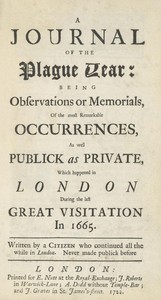
The people showed a great concern at this, and began to be alarmed all over the town, and the more, because in the last week in December 1664 another man died in the same house, and of the same distemper. And then we were easy again for about six weeks, when none having died with any marks of infection, it was said the distemper was gone; but after that, I think it was about the 12th of February, another died in another house, but in the same parish and in the same manner.
This turned the people’s eyes pretty much towards that end of the town, and the weekly bills showing an increase of burials in St Giles’s parish more than usual, it began to be suspected that the plague was among the people at that end of the town, and that many had died of it, though they had taken care to keep it as much from the knowledge of the public as possible. This possessed the heads of the people very much, and few cared to go through Drury Lane, or the other streets suspected, unless they had extraordinary business that obliged them to it
This increase of the bills stood thus: the usual number of burials in a week, in the parishes of St Giles-in-the-Fields and St Andrew’s, Holborn, were from twelve to seventeen or nineteen each, few more or less; but from the time that the plague first began in St Giles’s parish, it was observed that the ordinary burials increased in number considerably. For example:—
From December 27 to January 3 { St Giles’s 16 ” { St Andrew’s 17
” January 3 ” ” 10 { St Giles’s 12 ” { St Andrew’s 25
” January 10 ” ” 17 { St Giles’s 18 ” { St Andrew’s 28
” January 17 ” ” 24 { St Giles’s 23 ” { St Andrew’s 16
” January 24 ” ” 31 { St Giles’s 24 ” { St Andrew’s 15
” January 30 ” February 7 { St Giles’s 21 ” { St Andrew’s 23
The book keeps going
Keep reading, and see it illustrated
Reading is free forever. Sign up and watch scenes appear while you read.
Scenes Storieta drew for other classics.