Storieta
English
Save & sign up

About this book

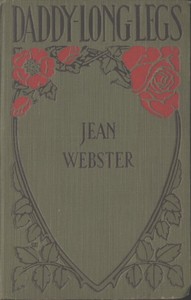
Jean Webster’s Daddy‑Long‑Legs begins in the austere world of a New York orphanage, where the oldest girl, seventeen‑year‑old Jerusha Abbott, spends her days scrubbing, dressing, and shepherding younger charges through the regimented routine of “Blue Wednesday.” The opening scene places her on a cold window seat, watching trustees and carriages pass, and then thrusts her into a surprising summons from the matron. A mysterious benefactor, known only as “John Smith,” has taken an interest in Jerusha’s future, offering her a college education on the condition that she write monthly letters to him, letters that will become the novel’s backbone. The narrative thus sets up a story of an orphan’s sudden chance at higher education, framed by the expectations of the institution and the intrigue of an unseen patron.

The novel is narrated in a light, epistolary style that blends witty observation with the earnest voice of a young woman discovering the wider world. Written in the early‑1910s, its language reflects the genteel prose of the period while retaining a lively, conversational tone that makes Jerusha’s letters feel immediate and engaging. Readers who enjoy coming‑of‑age tales, school‑setting dramas, and gentle romantic humor will find the book’s blend of orphan‑life realism and hopeful ambition appealing, especially those who appreciate a story that unfolds through a series of personal letters rather than conventional narration.

Characters in Daddy-Long-Legs

  • Jerusha AbbottSeventeen-year-old orphan, brown hair in a simple bun, modest high‑collar dress, pale skin, earnest eyes
  • John SmithMiddle‑aged gentleman, trimmed beard, dark suit with waistcoat, round spectacles, dignified bearing

The opening · free to read

[This e-text comes in three forms: Unicode (UTF-8), Latin-1 and ASCII. Use the one that works best on your text reader.

--If apostrophes and quotation marks are “curly” or angled, you have the UTF-8 version (best). If any part of this paragraph displays as garbage, try changing your text reader’s “character set” or “file encoding”. If that doesn’t work, proceed to: --In the Latin-1 version, French words like “étude” have accents, and “æ” is a single letter. Apostrophes and quotation marks will be straight (“typewriter” form). Again, if you see any garbage in this paragraph and can’t get it to display properly, use: --The ASCII-7 or rock-bottom version. French words will not have their original accents, but everything else will be essentially unchanged.

Errors and inconsistencies-- whether corrected or not-- are listed at the end of the e-text. Note that French words, most proper names, and the entire Advertising section, have been left as printed.

Italics are shown conventionally with lines. Boldface and underlining-- both only in the advertising section-- are shown as #mark# and ^mark^ respectively. Inverse emphasis within italic text (rare) is also shown with ^marks^.

Illustrations identified as “Plate” are full-page photographs (“Scenes from the Play”). All others are line drawings. Any text shown in quotation marks is part of the drawing.]

The book keeps going

Keep reading, and see it illustrated

Reading is free forever. Sign up and watch scenes appear while you read.

Illustrated scene from FrankensteinIllustrated scene from The Great GatsbyIllustrated scene from Pride and Prejudice

Scenes Storieta drew for other classics.

New illustrated classics

A new classic, drawn, in your inbox.

Once or twice a month: the latest books to get full character casts, scene art, and free comic editions. No account needed.