Public-domain ebook
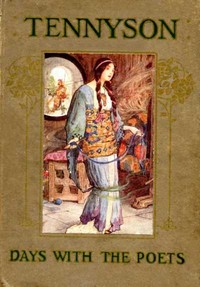
A Day with the Poet Tennyson
Language: en383 downloads on Project Gutenberg
Subjects
In: Biographies·British Literature
Public-domain ebook sourced from Project Gutenberg #40442.
Public-domain ebook
Language: en383 downloads on Project Gutenberg
Subjects
In: Biographies·British Literature
Public-domain ebook sourced from Project Gutenberg #40442.
The opening · free to read
Not in vain the distance beacons. Forward, forward, let us range, Let the great world spin for ever down the ringing grooves of change. Thro' the shadow of the globe we sweep into the younger day; Better fifty years of Europe than a cycle of Cathay."
Locksley Hall.
The daily papers are somewhat late in reaching the Isle of Wight: but the poet could find inspiration even in a source so apparently prosaic as a Times column. He noted down some of those valiant and soul-stirring episodes which go unrecorded save by a passing paragraph: and the poem which, perhaps, has held the public fancy longest, the Charge of the Light Brigade, was written a few minutes after reading the Times' description of the battle containing the phrase "Someone had blundered."
"Half a league, half a league, Half a league onward, All in the valley of Death Rode the six hundred. 'Forward, the Light Brigade! Charge for the guns!' he said: Into the valley of Death Rode the six hundred.
"'Forward, the Light Brigade!' Was there a man dismay'd? Not tho' the soldier knew Someone had blunder'd: Their's not to make reply, Their's not to reason why, Their's but to do and die: Into the valley of Death Rode the six hundred.
"Cannon to right of them, Cannon to left of them, Cannon in front of them Volley'd and thunder'd; Storm'd at with shot and shell, Boldly they rode and well, Into the jaws of Death, Into the mouth of Hell Rode the six hundred.
"Flash'd all their sabres bare, Flash'd as they turned in air Sabring the gunners there. Charging an army, while All the world wonder'd; Plunged in the battery-smoke Right thro' the line they broke; Cossack and Russian Reel'd from the sabre stroke Shatter'd and sunder'd. Then they rode back, but not, Not the six hundred.
"Cannon to right of them, Cannon to left of them, Cannon behind them Volley'd and thunder'd; Storm'd at with shot and shell, While horse and hero fell, They that had fought so well Came thro' the jaws of Death, Back thro' the mouth of Hell, All that was left of them, Left of six hundred.
"When can their glory fade? O, the wild charge they made! All the world wonder'd. Honour the charge they made! Honour the Light Brigade, Noble six hundred!"
The Charge of the Light Brigade.
A little while after breakfast, Tennyson would retire to his "den" on the top storey, for that "sacred half-hour" devoted to poetical composition, and assisted by his beloved pipe, during which nobody dared disturb him. This den, or study, formed a setting worthy of its inmate. Every inch of wall was covered with portrait, sketches, drawings. Almost every distinguished name of the nineteenth century was in some manner represented here: the poet literally worked surrounded by his friends. And in this congenial atmosphere he devoted himself to that life-long pursuit of his, as he has imaged it in the "Gleam," which "flying onward, wed to the melody, sang through the world."
Whatever respective values a future generation may set upon Tennyson's work, there can be little doubt that he himself considered the Idylls of the King, with its inner spiritual meanings, as his greatest work. "There is no single fact or incident in the Idylls," he said, "which cannot be explained without any mystery or allegory whatever." Hence their appeal to the least mystical reader, through sheer beauty of language and superb pictorial effect. But at the same time he let it be known that his whole story was inherently one of pure symbolism: starting from the suggestion that Arthur represented conscience. This idea is predominant, without undue insistence upon it, in Guinevere.
"Yet think not that I come to urge thy crimes, I did not come to curse thee, Guinevere, I, whose vast pity almost makes me die To see thee laying there thy golden head, My pride in happier summers, at my feet. ... Let no man dream, but that I love thee still."
"Queen Guinevere had fled the court, and sat There in the holy house at Almesbury, Weeping, none with her save a little maid, A novice: one low light betwixt them burned, Blurred by the creeping mist; for all abroad, Beneath a moon unseen albeit at full, The white mist, like a face-cloth to the face, Clung to the dead earth, and the land was still.
There rode an armed warrior to the doors, A murmuring whisper thro' the nunnery ran, Then on a sudden a cry, 'The King.' She sat Stiff-stricken, listening; but when armed feet Thro' the long gallery from the outer doors Rang, coming, prone from off her seat she fell And grovell'd with her face against the floor: There with her milk-white arms and shadowy hair She made her face a darkness from the King; And in the darkness heard his armed feet Pause by her; then came silence, then a voice, Monotonous and hollow like a ghost's, Denouncing judgment, but, tho' changed, the King's.
'Yet think not that I come to urge thy crimes, I did not come to curse thee, Guinevere, I, whose vast pity almost makes me die To see thee laying there thy golden head, My pride in happier summers, at my feet. ... Let no man dream, but that I love thee still, Perchance, and so thou purify thy soul, And so thou lean on our fair father Christ, Hereafter in that world where all are pure We two may meet before high God, and thou Wilt spring to me, and claim me thine, and know I am thine husband--not a smaller soul, Nor Lancelot, nor another. Leave me that, I charge thee, my last hope. Now must I hence. ... But hither shall I never come again, Never lie by thy side: see thee no more-- Farewell!' And while she grovell'd at his feet, She felt the King's breath wander o'er her neck, And in the darkness o'er her fallen head Perceived the waving of his hands that blest.
Then, listening till those armed steps were gone, Rose the pale Queen, and in her anguish found The casement: 'peradventure,' so she thought, 'If I might see his face, and not be seen.' And lo, he sat on horseback at the door! And near him the sad nuns with each a light, Stood, and he gave them charge about the Queen, To guard and foster her for evermore."
Idylls of the King.
In the course of the day the poet would devote considerable time and energy to his favourite exercise of garden work. To plant trees and shrubs, to roll the lawn, to dig the kitchen garden, and lovingly to tend the simple flowers which he had set, was his constant delight as long as his strength sufficed. He had a passionate love, and an extraordinary knowledge of Nature: he rejoiced in watching the birds in his great cedar, ilex and fir trees, and his mind was thoroughly attuned to the sweet influences of colour and foliage. Few else could have written that unsurpassable lyric, Come into the Garden, Maud.
"Come into the garden, Maud, For the black bat, night, has flown, Come into the garden, Maud, I am here at the gate alone; And the woodbine spices are wafted abroad, And the musk of the rose is blown. For a breeze of morning moves, And the planet of Love is on high, Beginning to faint in the light that she loves On a bed of daffodil sky. To faint in the light of the sun she loves, To faint in his light, and to die....
"And the soul of the rose went into my blood, As the music clash'd in the hall; And long by the garden lake I stood, For I heard your rivulet fall From the lake to the meadow and on to the wood, Our wood, that is dearer than all;
"From the meadow your walks have left so sweet That whenever a March wind sighs He sets the jewel-print of your feet In violets blue as your eyes, To the woody hollows in which we meet And the valleys of Paradise.
"The slender acacia would not shake One long milk-bloom on the tree; The white lake-blossom fell into the lake As the pimpernel dozed on the lea; But the rose was awake all night for your sake, Knowing your promise to me; The lilies and roses were all awake, They sighed for the dawn and thee.
"Queen rose of the rosebud garden of girls, Come hither, the dances are done, In gloss of satin, and glimmer of pearls, Queen lily and rose in one; Shine out, little head, sunning over with curls, To the flowers and be their sun.
"There has fallen a splendid tear From the passion-flower at the gate, She is coming, my dove, my dear; She is coming, my life, my fate; The red rose cries, 'She is near, she is near;' And the white rose weeps, 'She is late;' The larkspur listens, 'I hear, I hear;' And the lily whispers, 'I wait.'"
Maud.
The same love of Nature made his eye alert for every obscurest beauty, when he put aside his gardening tools and started, as was his wont, for a stroll with some friend along the glorious cliffs of Freshwater. Those were favoured folk, who, like Mrs. Thackeray Ritchie, "walked with Tennyson along High Down, treading the turf, listening to his talk, while the gulls came sideways, flashing their white breasts against the edge of the cliff, and the Poet's cloak flapped time to the gusts of the west wind." This cloak and the Poet were practically synonymous. It figures--a first edition of it--in all the early sketches of him by Spedding, Fitzgerald, etc. (1830-40) and to the last, one can hardly imagine him apart from it.
During these quiet rambles he was wont to discuss with enthusiasm the religious and social problems of the day; they weighed heavily upon his thoughtful mind. His philosophy was a hopeful one, rooted in Christian belief, yet constantly over-shadowed by fugitive misgivings and by a sense of the impermanence of human existence. And while voicing these misgivings in lines which might give pause to weaker minds, he never lost his firm faith in right, in duty, and in ultimate rectification of all apparent wrong.
"Queen rose of the rosebud garden of girls, Come hither, the dances are done, In gloss of satin, and glimmer of pearls, Queen lily and rose in one; Shine out, little head, sunning over with curls, To the flowers and be their sun."
"Oh, yet we trust that somehow good Will be the final goal of ill, To pangs of nature, sins of will, Defects of doubt, and taints of blood;
"That nothing walks with aimless feet; That not one life shall be destroy'd, Or cast as rubbish to the void, When God hath made the pile complete;
"That not a worm is cloven in vain; That not a moth with vain desire Is shrivell'd in a fruitless fire, Or but subserves another's gain.
"Behold, we know not anything; I can but trust that good shall fall At last--far off--at last, to all, And every winter change to spring.
"So runs my dream; but what am I? An infant crying in the night; An infant crying for the light: And with no language but a cry.
"I stretch lame hands of faith, and grope, And gather dust and chaff, and call To what I feel is Lord of all, And faintly trust the larger hope."
In Memoriam.
But these mysteries of life and death will not bear too persistent a contemplation: and presently Tennyson, discarding them in favour of less sombre subjects, would regale his hearers with marvellous recitations. "The roll of his great voice acted sometimes almost like an incantation." The old-world classical legends had always found in him a noble exponent; and nowhere was his peculiar felicity of diction and delicate sense of sound better exemplified than in OEnone.
The book keeps going
Reading is free forever. Sign up and watch scenes appear while you read.



Scenes Storieta drew for other classics.
New illustrated classics
Once or twice a month: the latest books to get full character casts, scene art, and free comic editions. No account needed.