Public-domain ebook
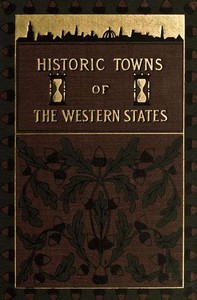
Historic Towns of the Western States
Language: en1,907 downloads on Project Gutenberg
Subjects
In: History - Other·History - American
Public-domain ebook sourced from Project Gutenberg #41349.
Public-domain ebook
Language: en1,907 downloads on Project Gutenberg
Subjects
In: History - Other·History - American
Public-domain ebook sourced from Project Gutenberg #41349.
The work is the concluding volume of a multi‑part series that surveys the historic towns of the United States, this fourth installment turning its focus to the towns of the far‑west. The editor’s introductory note explains that contributors were chosen for their familiarity with local records and for representing a range of viewpoints, even when those views conflicted on subjects such as the Mormons or the ancient mound‑builders. The book is organized as a collection of individual town studies, each authored by a different scholar, and is prefaced by an overview that situates the western settlements within the broader sweep of colonial rivalry, the Louisiana Purchase, and the Mexican‑American War. The opening pages list towns from Marietta to Los Angeles, accompanied by numerous illustrations of monuments, buildings, and landscapes, giving the reader a sense of the breadth and visual richness of the volume.
The prose reflects the turn‑of‑the‑century scholarly style of the early 1900s, echoing the reverence for historians like Francis Parkman and Theodore Roosevelt that the editor cites. It is formal, descriptive, and occasionally nostalgic, with a tone that assumes a readership interested in the systematic, documentary approach to regional history. Scholars, students of American Westward expansion, and readers who enjoy detailed town‑by‑town narratives enriched by period illustrations will find this volume a valuable resource for understanding how the far‑west grew out of the competing claims of Spain, France, and England.
The opening · free to read
In presenting to the reading public this fourth volume in the series of Historic Towns, a volume which brings the series to a close, it is in order for the editor to call attention to the necessarily large measure of liberty accorded to the contributors in their treatment of the records of the several towns. With several of his co-laborers the editor has on one point or another found himself at variance. Examples of such difference of conclusions are presented in the references to the Mormons and to the Mound-builders.
The editor bears in mind, however, the essential difference between editorial responsibilities and those belonging to the writers of the papers. It was his duty to choose as contributors not writers who necessarily share his own view, but those who are most fairly representative of the towns described, who possess the necessary familiarity with the historic records, and whose narratives would be assured of an appreciative and sympathetic reception from their fellow-townsmen,--men who love their town
"with love far-brought From out the storied Past, and used Within the Present."
In the studies of Western history made by the editor during the past ten years, two historians have been his inspiration: Francis Parkman, of blessed memory, revered by all who love good literature and good history; and Theodore Roosevelt, now by the will of God President of the United States, and a trustworthy and inspiring writer of our nation's history long before he took his place among its distinguished makers.
In offering to the public this final volume of American Historic Towns, the editor ventures to hope that by thus focalizing and localizing Western history, the publishers, authors, and editor are contributing somewhat to the popular knowledge of and interest in the history of the Great West which Parkman and Roosevelt first made possible.
Since with this volume the series is brought to a close, the editor trusts that the publishers, Messrs. G.P. Putnam's Sons, will lay aside their reluctance to be mentioned in the Preface, and will permit the editor to express his admiration and indebtedness for their share, larger than is usual with publishers, in the production of the series. To his wife, Gertrude Wilson Powell, acknowledgment is also due for aid given in this as in the earlier volumes, the full value of which cannot here be indicated. Besides making two important contributions to the volume, Messrs. R.G. Thwaites and Harold Bolce have ever been ready with suggestion and counsel, always valued and almost always followed. To Doctors Talcott Williams, Albert Shaw, and George Petrie, the editor would speak this last word of gratitude for cordial and skilled assistance in connection not alone with this book but with the whole undertaking. This closing volume now goes out, with the editor's best-wishes, to the earlier friends of the series and to the new friends yet to be gained for it.
LYMAN P. POWELL.
ST. JOHN'S RECTORY, LANSDOWNE, PENNSYLVANIA, September 21, 1901.
The book keeps going
Reading is free forever. Sign up and watch scenes appear while you read.



Scenes Storieta drew for other classics.
New illustrated classics
Once or twice a month: the latest books to get full character casts, scene art, and free comic editions. No account needed.