Public-domain ebook
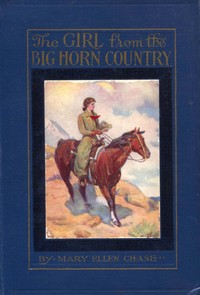
The Girl from the Big Horn Country
Language: en348 downloads on Project Gutenberg
Subjects
In: Novels·American Literature
Public-domain ebook sourced from Project Gutenberg #42287.
Public-domain ebook
Language: en348 downloads on Project Gutenberg
Subjects
In: Novels·American Literature
Public-domain ebook sourced from Project Gutenberg #42287.
The opening · free to read
A September afternoon in the Big Horn mountains! The air crystal clear; the sky cloudless; the outlines of the hills distinct! Elk Creek Valley lay golden in the sunshine, silent save for the incessant hum of locust and cricket, the hurrying of the creek waters, and the occasional bellowing of steers on the range beyond the foot-hills; deserted except for the distant cattle, a coyote stealing across the hills, a pheasant scurrying through the buck-brush by the creek, and some cotton-tail rabbits and prairie dogs, who, sure of safety, meant to enjoy the sunshine while they might.
The foot-hills more than half-encircled the Valley. North, east, and south they tumbled, their brown, closely-cropped sides glowing here and there with the yellow of the quaking-asps, the red of hawthorn, and the bronze of service-berry. Above them rose the higher ranges, clothed in gray-green sagebrush and scant timber, and cut by canyon-forming mountain storms, invisible from the Valley; and far above all, seemingly near, but in reality miles away, the mountains extended their blue, snow-furrowed summits toward a bluer sky. Peak above peak they rose—some isolated and alone, others leaning upon the shoulders of the higher—all silent, majestic, mysterious, as though they held in their great hearts the secrets of the world—secrets of which Elk Creek Valley could never know. Yet the Valley looked very happy and content. Perhaps it had lain so long beneath their protection that it knew no fear.
The creek, rushing madly from the northern foothills, and fed by melting snow from the higher mountains, had cut a canyon for itself in its tumultuous journey from the hills; but as the land became more level, it slackened its pace, content to make but a slight depression through the Valley. Across it toward the west, beyond a great gap in the foothills, stretched an open plateau, which rose in undulations, and extended as far as one could see toward other far distant mountains, on less clear days dim and hazy of outline, to-day almost as blue and distinct as the nearer ranges, though sixty miles away. This great sea of open prairie rolling westward was cut in as many pieces and bore as many colors as a patchwork quilt. Golden wheat-fields, the wheat shocked and piled in wigwams on the plain, met acres of black, freshly-plowed soil, which, in turn, bordered upon the tender green of alfalfa and of newly grown winter grain. Scattered over the prairie stretches, at intervals of a mile, perhaps of several, were homes—here, large ranch houses with out-lying buildings—there, the rough shack of a lone homesteader.
Yes, it was a golden land—smiling and peaceful in the September sunshine. Save for horses and cattle dotted here and there, the prairie seemed almost as deserted as Elk Creek Valley, though its homes promised inhabitants, and a blue line of distant smoke showed where the threshers were at work. Moreover, on the barely visible brown road that threaded its way across the prairie, two specks were moving rapidly in the direction of the Gap. The specks took form, became two riders, a boy and a girl, on wildly galloping horses, which, neck to neck, tore at last through the Gap, forded the creek in a mad splash of water, stirrup-high, and dashed away up the Valley. Reaching the foot-hills a trifle in advance of his companion, the boy pulled in his restive horse, and called over his shoulder to the girl just behind.
“Are Pedro’s feet all right, Virginia?”
“Yes, Don. Jim fixed them yesterday.”
“Let’s take the Mine then, shall we?”
“Yes, let’s!”
And away they went, allowing the sure-footed horses to have their way up one of the foot-hills, called the “Mine,” because some lone prospector, dreaming of a fortune, had dug from its side some poor coal; and then, perhaps discouraged, had abandoned the fruit of his labors, leaving the black heap as a monument to his zeal, and a testimony to the vanity of mere dreams.
They reached the hill-top almost at the same instant, their good steeds panting; they quite undisturbed, and, turning their horses’ heads, drew rein and looked across the Valley. They were a robust-looking pair, red-cheeked and khaki-clad, and as good riders as Wyoming could produce. The boy was seventeen, or thereabouts, well-knit and tall for his years, with dark, heavy hair and clear, blue eyes that looked bluer through his coat of tan. His features were cleanly-cut and strong, and his mouth had a laugh in the corners. A merry, honest, manly-looking lad—Donald Keith by name, and the son of a ranchman on the other side of the Valley.
She—Virginia Hunter—was a year younger, and for sixteen as tall and strong as he for seventeen. She was not pretty, but there was something singularly attractive about her clear, fresh skin, brown now, except for the red of her cheeks, her even white teeth, and her earnest gray eyes, at times merry, but often thoughtful, which looked so straight at you from under brows and lashes of black. Her golden-brown hair curled about her temples, but it was brushed back quite simply and braided down her back where it was well out of her way. A person riding could not bother about her hair. She sat her horse as though he were a part of her, holding her reins loosely in her brown left hand, her right hanging idly at her side. The wind blew back the loosened hair about her face, and the ends of the red handkerchief, knotted cow-boy fashion, under the collar of her khaki shirt. She, like the boy, seemed a part of the country—free, natural, wholesome—and she shared its charm.
They had been comrades for years—these two—for, in the ranch country, homes are often widely separated, and the frequent society of many persons rare. Virginia’s home lay up the Valley, beyond the first range of the foot-hills, while the Keith ranch was situated on the prairie, west beyond the Gap. Three miles apart across country, four by the road; but three or four miles in Wyoming are like so many squares in Boston, and the Keiths and Hunters considered themselves near neighbors. This afternoon Virginia had ridden over to say good-by to all the dear Keiths—Mr. David, Mother Mary, Donald’s older brother Malcolm, and his younger, Kenneth, the farm-hands busy with the threshing, and the men in from the range to help with the wheat; for they were all her friends, and now that she was going so far away to school, they seemed nearer and dearer—indeed, next to her father and those upon their own ranch, the dearest of her world.
They had been quite as sad as she to say good-by. “The country won’t be the same without you, my lass,” Mr. David had said in his genial Scotch way; and Donald’s mother, whom Virginia had called “Mother Mary,” since the death of her own dear mother six years ago, had kissed her quite as though she were her own daughter. Even Malcolm had come in from the wheat field to shake her by the hand and wish her good luck, and little Kenneth’s feelings had been quite wounded because Virginia felt she must decline to carry one of his pet foxes away with her to boarding-school. Then Donald’s father had granted the request in the boy’s eyes that he might be excused from threshing to ride up the Valley and home with Virginia. So now their horses, good friends, too, stood side by side on the brow of the Mine, while their riders looked down the Valley, beyond the cottonwood-bordered creek, and across the wide, rolling prairie to the far away mountains; and then, turning in their saddles, to those ranges and peaks towering above them.
Virginia drew a long breath.
“We’re like Moses on Mount Nebo, looking away into the Promised Land, aren’t we, Don?” Then, as he laughed, “Do you suppose there’s any country so lovely as ours? Is there anything in the East like this? Do you think I’ll be homesick, Don?”
He laughed again, used to her questions.
“I suppose every fellow thinks his own State is the best, Virginia, but I don’t believe there can be any lovelier than this. You know I told you about spending a vacation when I was at school last year with Jack Williams in the Berkshires. Some of those hills aren’t higher than the Mine, you know, and he called them mountains. It seemed like a mighty small country to me, but he thought there was no place like it. I wish he could get this sweep of country from here. No, the East isn’t like this,—not a bit—and maybe you won’t like it, but you’re too plucky to be homesick, Virginia.”
Little did Virginia realize how often those words would ring in her ears through the months that were to follow. She drew another long breath—almost a sigh this time.
“Oh, I wish you were going East again, Don, instead of to Colorado! ’Twould be such fun traveling together, and you could tell me all about the states as we went through them. But, instead, I’m going all alone, and Aunt Louise has warned me a dozen times about talking to strangers. Four days without talking, Don! I shall die! Is it very bad taste to talk to good, oldish-looking people, do you think?”
“_I_ think your aunt’s mighty particular, if you ask me,” the boy said bluntly. “You’ll have to talk to some one, Virginia. You’ll never last four days without it, and I don’t think it’s any harm. But, you see, your aunt’s from the East, and they’re not so sociable as we are out here. I thought she was going East with you.”
“No, she decided not to, and went to Los Angeles this morning; but I’m bursting with watch-words that she left. All the way to your house I said them over, and I nearly ran Pedro into a prairie dog’s hole, I was thinking so hard. I. It is very bad form to talk to strangers. II. Try to be as neat in appearance on the train as you are at home. (Aunt Lou really means neater, Don.) III. Don’t forget to tip the waiter after each meal in the dining-car. IV. Be polite to your traveling companions, but not familiar. That’s all for the journey, but I’ve heaps more for Vermont and for school. Oh, why did you choose Colorado, Don?”
“Oh, I don’t know, except that it’s nearer home, and since I’m going there to college in another year, I may as well get used to it. The East is all right, Virginia, but some way I like it out here better. I’m a rank cow-boy, I guess. That’s what they used to call me at school. Then, besides, the Colorado fellows ride a lot, and they don’t in the East—that is, so much, you know,” he added hastily, as he saw the dismay on her face.
“Don’t ride, Don! Why, I can’t stand it not to ride! Don’t they have horses? Don’t they—know how to ride?”
Her genuine distress disturbed him, and he hastened to reassure her as best he could.
“You’ll find something to ride, I’m sure,” he said. “Don’t worry. Maybe the horses won’t be like Pedro, but they’ll do. You see, your school’s in a larger town than mine. You’ll write me all about it, won’t you, Virginia?”
“Of course, I will—every little thing. If the boys thought you were a cow-boy, the girls will probably think I’m very queer, too.”
“Oh, no, they won’t! You’re—you’re different some way. And, anyway, they won’t be as nice as you,” he finished awkwardly.
The book keeps going
Reading is free forever. Sign up and watch scenes appear while you read.



Scenes Storieta drew for other classics.
New illustrated classics
Once or twice a month: the latest books to get full character casts, scene art, and free comic editions. No account needed.