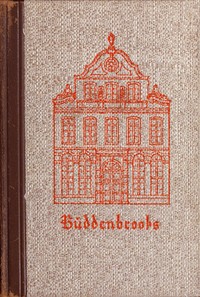
Public-domain ebook
Gold Elsie
by E. Marlitt
English433 downloads on Project GutenbergDownload EPUB
Public-domain ebook sourced from Project Gutenberg #42426.
Public-domain ebook
by E. Marlitt
English433 downloads on Project GutenbergDownload EPUB
Public-domain ebook sourced from Project Gutenberg #42426.
The opening · free to read
It had been snowing all day long,--so steadily that the roofs and window-sills were covered deep with spotless white cushions. And now the early twilight fell, bringing with it a wild gust of wind that raged among the falling snow-flakes like some bird of prey among a flock of peaceful doves.
Although the weather was such that the comfort-loving inhabitants of any small town would hardly have sent their dogs out of doors, not to mention venturing their own worthy persons, yet there was little difference to be seen in the size of the crowd that usually frequents the streets of the large Capital, B----, between the hours of six and seven in the evening. The gas lamps were an excellent substitute for those heavenly lights which would not make their appearance. Carriages were whirling around corners in such tempestuous haste that many a pedestrian rescued life and limb only by a sudden leap aside, while curses both loud and deep were hurled after the coachmen enveloped in their comfortable furs, and the elegant coaches which contained behind their glass doors charmingly dressed women, whose lovely flower-crowned heads, as they peeped from among masses of muslin and tulle, certainly had no suspicion of the fire and brimstone called down upon them. In the warm atmosphere, behind the huge shop windows, elaborately curled and frizzed wax heads, surrounded by blond and black scalps, stared out upon the passers-by. Smiling shopmen displayed their fascinating merchandise, and withered old flower-sellers stood among their fresh-blooming bouquets, which exhaled beauty and fragrance beneath the light of the lamps that shed a brilliant glare upon the slippery pavement and upon the flood of human life streaming by, revealing the pinched, blue features and the desperately uncomfortable movements of all, old and young.
But stay,--not of all! A female figure has just entered one of the principal streets from a narrow by-way. A small threadbare cloak closely envelopes her slender form, and a worn old muff is pressed against her breast, confining the ends of a black lace veil, behind which two girlish eyes are glowing with the sunlight of early youth. They look out joyously into the whistling snow-storm, rest lovingly upon the half-open rosebuds and dark purple violets behind the glass panes of the shop windows, and only veil their light beneath their long dark lashes when sharp hail-stones mingle with the driving snow-flakes.
Whoever has listened while childish fingers, or sometimes fingers no longer childish, confidently begin upon the piano a well-known melody, which goes bravely on for a few bars, then is arrested by a frightful discord followed by a wild grasping after every key on the instrument except the correct ones, while the patient teacher sits by, ceasing to attempt to evoke order out of chaos by the usual steady marking of the time, wearily waiting until the panting melody is seized again and carried on with lightning rapidity through several easy bars as over some level plain,--whoever has thus had his ears stretched upon the rack, can understand the delight with which this young girl, who has just given two music lessons in a large school, offers her hot cheek to the wind as to an energetic comrade, whose mighty roar can breathe wondrous melodies through the pipes of an organ or over the strings of an AEolian harp.
Thus she passes lightly and swiftly through the storm and crowd; and I do not for an instant doubt that if I should present her now upon this slippery pavement to the gentle reader as Fraeulein Elizabeth Ferber, she would with a lovely smile make him as graceful a courtesy as though they both stood in a ball-room. But this introduction cannot take place,--and we really do not need it, for I forthwith intend to relate to the reader my heroine's antecedents.
Baron Wolf von Gnadewitz was the last scion of a famous house whose remote ancestry could be traced back into the dubious twilight which even preceded that golden age when the travelling merchant, journeying through some sequestered pass, was forced to surrender his costly stuffs and wares to a knightly banner and shining steel-clad troup of retainers as often as to the buff-coated highway adventurer. From those illustrious times there had been handed down, in the crest of the Gnadewitzes a wheel, upon which one of these same noble ancestors had breathed out his knightly soul in consequence of having spilt rather too much ignoble trading-blood in one of the above-mentioned assaults upon his merchant prey.
Baron von Gnadewitz, the last of his race, was chamberlain in the service of the Prince Royal of X----, and possessor of various orders and large estates, as well as of those peculiarities of character and disposition which were, in his estimation, befitting the high-born, and which he was accustomed to designate as "distinguished," because all common men, bound by work-a-day moral considerations, and compelled by the stern necessities of life, lose all taste for the inimitable grace and elegance of vice.
Baron Wolf von Gnadewitz was as fond of pomp and show as his grandfather, who had forsaken the old castle Gnadeck upon a mountain in Thuringia, the cradle of his line, and had built him in the valley below a perfect fairy palace in the Italian style. The grandson allowed the old castle to fall into decay, while he enlarged and improved the modern mansion considerably. Yes, it seemed as though he entertained not the smallest doubt but that his latest descendant would be found occupying this favourite palace at the day of judgment, for the old castle was quite dismantled in order that the vast chambers of the new abode might be thoroughly furnished. But he reckoned without his host. Wolf von Gnadewitz had a son, 'tis true,--a son who, at twenty years of age, was so complete and thorough a Gnadewitz that the illustrious image of his ancestor who had perished upon the wheel paled before him. This promising youth one day, upon the occasion of the great autumn hunt in the forest, struck one of his whippers-in a fearful blow upon the head with the loaded handle of his hunting-whip--a fearful blow, but a perfectly just punishment, as every one of the guests invited to the hunt declared, for the man had stepped upon the paw of a favourite hound so clumsily as to render the animal entirely useless for a whole day. And thus it happened that, a short time afterward, Hans von Gnadewitz was to be found not only upon the boughs of the genealogical tree in the hall of the new castle, but suspended by a rope around his neck to a bough of one of the actual trees in the forest. The beaten whipper-in expiated the deed upon the scaffold, but that could not bring the last of the Gnadewitzes to life again, for he was dead,--irrevocably dead, the physicians said; and the long tale of robber-knights, wild excesses, hunting orgies, and horse-racing came to an end.
After this terrible catastrophe, Wolf von Gnadewitz left the castle in the valley, and indeed that part of the country, and dwelt upon one of his many estates in Silesia. He took into his house to nurse him a young female relative, the last survivor of one of the collateral branches of his house. This young relative proved to be a girl of angelic beauty, at sight of whom the old baron entirely forgot the object for which he had invited her beneath his roof, and at last determined to clothe his sixty years in a wedding-garment. To his exceeding indignation, however, he now learned that there might come a time, even to a Gnadewitz, when he could no longer be regarded as a desirable parti, and he fell into a violent rage when his young relative confessed that, in utter forgetfulness of her lofty lineage, she had given her heart to a bourgeois officer, the son of one of his foresters.
The young man possessed no worldly gear, only his sword and a remarkably fine manly person; but he was rich in mind, accomplished, amiable in disposition, and of stainless character. When Wolf von Gnadewitz, in consequence of Marie's confession, turned her from his doors, young Ferber carried her home with delight as his wife, and for the first ten years of their married life would not have exchanged his lot with that of any king on earth. Still less would he have made such an exchange in the eleventh year, for that was the eventful 1848; but with it came fierce struggles for him, and an entire alteration in his circumstances. He was obliged to decide between two duties. One had been inculcated while he was in his cradle by his father, and ran thus: "Love your neighbour, and especially your German brother, as yourself;" the other, which he had in later years imposed upon himself, commanded him to draw the sword in his master's interest. In this strife the teachings of his childhood conquered entirely. Ferber refused to draw the sword upon his brethren; but his refusal cost him his commission, and with it all assured means of subsistence. He retired from the army, and soon afterward, in consequence of a severe cold, was stretched upon a sick-bed, which he left only after years of disheartening weakness. He then moved with his family to B----, where he obtained quite a lucrative situation as bookkeeper in an extensive mercantile establishment. It was high time, for his wife's small property had been lost shortly before by the failure of a bank, and the remittances of money which came to the distressed family from time to time from Ferber's elder and only brother, a forester in Thuringia, were all that kept them from extreme poverty.
Unluckily this good fortune was of short duration. Ferber's chief was a pietist of the most severe description, and spared no one in his zeal for proselytism. His efforts to convert Ferber to his own narrow dogmas were met by such quiet but decided resistance, that the pious spirit of the saintly Herr Hagen was seized with holy horror. Remorse at the thought of affording protection and subsistence to such an avowed free-thinker, gave him no peace by night or by day, until he had freed himself from such a burden of guilt, by a note of dismissal, which banished the tainted sheep from his fold.
About the same time Wolf von Gnadewitz went home to his ancestors, and as during his earthly career he had strictly conformed to the Gnadewitz custom of leaving no insult, fancied or otherwise: unavenged, no worthier conclusion to his life could be found than the will which he drew up with his own hands shortly before he descended into the narrow chamber of lead which was to contain for all futurity his noble bones.
This manly document, which constituted sole heir to his large estates a distant relative of his wife's, concluded with the following codicil:
"In consideration of the undeniable claim which she has upon my property, I bequeath to Anna Marie Ferber, born von Gnadewitz, the castle of Gnadeck in the mountains in Thuringia. Anna Marie Ferber will understand my benevolent intention in her behalf in leaving to her a mansion crowded with memories of the noble race to which she once belonged. In full remembrance and consideration of the good fortune and many blessings which have always hovered above this ancient pile, I hold it entirely superfluous to increase my legacy further. But if Anna Marie Ferber, blind to the value of my gift, should wish to sell or exchange it in any way, her right to it must be abdicated in favour of the orphan asylum of L----."
The book keeps going
Reading is free forever. Sign up and watch scenes appear while you read.



Scenes Storieta drew for other classics.
New illustrated classics
Once or twice a month: the latest books to get full character casts, scene art, and free comic editions. No account needed.