About this book
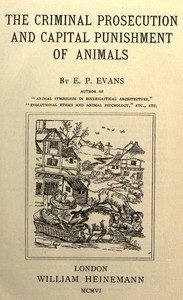
The work is a scholarly survey of a little‑known facet of legal history: the formal prosecution and execution of animals, from medieval ecclesiastical curses against rats to capital sentences handed down on pigs, bulls and even a cock that laid an egg. The opening pages catalogue an astonishing array of cases, rat trials defended by the jurist Chassenée, excommunications of locusts, the hanging of a sow for infanticide, and the burning of a horse for homicide, while interweaving theological commentary, papal formulas, and contemporary scientific explanations. The author, Edward Payson Evans, builds on two 1884 essays and a body of European research, citing primary documents such as receipts for animal executions and statutes ranging from the Constitutio Criminalis Carolina to English deodand law, thereby grounding the narrative in a wealth of archival material.
Written in a dense, nineteenth‑century academic style, the book reads like a legal‑historian’s compendium, peppered with Latin terminology and extensive footnotes. Its tone is analytical rather than sensational, appealing to readers interested in the history of law, medieval jurisprudence, or the cultural construction of criminality. Scholars of legal anthropology, historians of the Church, and anyone fascinated by the odd intersections of law, theology and animal studies will find the detailed case studies and comparative approach especially rewarding.