Public-domain ebook
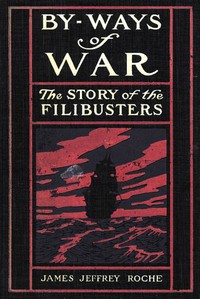
By-Ways of War: The Story of the Filibusters
Language: en564 downloads on Project Gutenberg
Subjects
In: History - American·History - Modern (1750+)·History - Warfare
Public-domain ebook sourced from Project Gutenberg #43634.
Public-domain ebook
Language: en564 downloads on Project Gutenberg
Subjects
In: History - American·History - Modern (1750+)·History - Warfare
Public-domain ebook sourced from Project Gutenberg #43634.
The opening · free to read
Etymology of the word Filibuster--Norse Adventurers--The Buccaneers --Miranda--Services under the Directory--First Expedition from the United States--Dr. Jenner and the King of Spain--Miranda's second expedition and death.
The difference between a filibuster and a freebooter is one of ends rather than of means. Some authorities say that the words have a common etymology; but others, including Charlevoix, maintain that the filibuster derived his name from his original occupation, that of a cruiser in a "flibote," or "Vly-boat," first used on the river Vly, in Holland. Yet another writer says that the name was first given to the gallant followers of Dominique de Gourgues, who sailed from Finisterre, or Finibuster, in France, on the famous expedition against Fort Caroline in 1567.
The name, whatever its origin, was long current in the Spanish as "filibustero" before it became adopted into the English. So adopted, it has been used to describe a type of adventurer who occupied a curious place in American history during the decade from 1850 to 1860.
The citizen or subject of any country, who makes war upon a state with which his own is at peace, with intent to overrun and occupy it, not merely for the piratical ends of rapine and plunder, is a filibuster in the true sense of the term. Such act of war is, by the law of nations, a crime against both countries. Its morality, before the meaner court of popular judgment, will rest upon the measure of its success alone. So judged, as all invaders are judged at last, the bold adventurer draws but few prizes in the lottery of fame. Cortez and Houston are among the few successful filibusters of modern times.
In the shadowy chronicles of the Norsemen we find the first trace of that adventurous spirit which, during twelve centuries, gave the dominion of the ocean to the seafaring people of Northern Europe. The bold Vikings who, without chart or compass, sailed over unknown and dangerous seas, crossed the Atlantic and swept the Mediterranean, were the worthy fathers of the Drakes and Ansons of later years. History bespeaks them cruel, rapacious, daring; pirates when, as Wheaton says, the occupation of a pirate was considered not only lawful, but honourable. But they were not wholly destructive. Borrowing a lesson in natural history from their own lemming, they solved the troublesome problem, how to get rid of a surplus population, by sending the superfluous members forth to seek a new field. The lemming eats his way to the sea, in which he finds his grave; but his human imitator more wisely found there a pathway to fortune. They went forth mainly to conquer, incidentally to colonize and settle. Among themselves they were primitive republicans, though harsh tyrants to their vanquished foes. "Who is your king or leader?" asked the herald of King Charles the Simple, before the decisive battle on the banks of the Eure in A.D. 898. "We have no king, no chief, no master; but 'Rolf, the Walker,' leads us in war and on the day of battle," was the proud answer of Rolf's comrades and peers. That this was no idle boast, Rolf's own descendant, King John of England, learned to his sorrow when the sons of the sturdy Norse filibusters met him face to face at Runnymede. The Magna Charta is the written code of that fierce democracy, dreaded alike by its serfs and its kings. The Vikings stand alone as a race of warriors whose hardihood overcame even their native superstition, in leading them to defy the gods themselves. They were sceptics, because they knew not fear. Love was as yet an unknown power in their religion.
The Norsemen were suppressed only by absorption. Owing no fealty to their native land, they took possession of the conquered countries, in which they proved to be the strongest barrier against further aggressions from the dreaded North. But before this degree of safety was gained, all Europe had felt the scourge of the terrible Vikings, who had burned or put in vassalage London, Cologne, Treves, Paris, Tours, and Marseilles; carried their victorious arms to Portugal, Spain, Sicily, and Constantinople; and given dynasties of Norse blood to England, Russia, and France. Rolf married a natural daughter of King Charles, whence came the Norman dukes and the royal line of England. In brief, the Vikings held the western world at their mercy, overturning thrones, founding kingdoms, stabling their horses in the palaces of princes, and upholding on their hireling spears the crown of the fallen Cæsars.
With the rise of the powerful maritime nations of Europe filibusterism slumbered for several centuries. The immortal expedition of Cortez being, in so far as it lacked the sanction of his king, wholly that of a filibuster, needs but passing mention here. Its success has lifted it into the realms of history and made it a household story. Filibusterism was to awake on a new field and lead the van in the long warfare which, in two hemispheres and during three centuries, has followed the meeting of Northman and Southron. England, and also France, looked with jealous eyes upon the grasping policy of Spain in the New World. The fortune of discovery had given to the two former the apparently barren lots of Canada and the British colonies. Spain had drawn the rich prize of El Dorado. Not content with the spoils of Mexico and Peru, she grudged to the hardy hunters of the West Indies their petty trade with her colonies. She claimed the Mississippi. The epitaph of Columbus was read as a veritable bequest by Spanish greed. But avarice over-reached itself. The persecutions heaped upon the "boucaniers" of the West Indies aroused a spirit of opposition, which success fanned into aggressive fires, and which the governments of England and France did nothing to extinguish. The cumbrous galleon with its golden freight was no match for the swift Vly-boat, manned by reckless adventurers in whom the appetite for gold was whetted by the memory of countless wrongs.
From unexpected successes by sea the Buccaneers made bold to attack the rich towns on the Spanish Main, which they held for heavy ransoms, or sacked with all the attendant cruelty of their ancestral Berserkers. Panama, Granada, Gibraltar, every town or fort of note, fell before the resistless buccaneers, until the names of Morgan, Portugues, Dampier, and Lolonois became words of terror to the Spanish colonists. Yet it must be borne in mind that the buccaneers were not pirates. They warred against one enemy, the same which had for years oppressed them and their brethren, while the countries to which they owed allegiance were too weak or too indifferent to protect their distant sons. When the buccaneer degenerated into the mere pirate, none were more prompt than his late comrades to follow up and punish the Ishmaelite. Buccaneer Morgan, knighted and made governor of Jamaica, was the terror of the West India pirates, though the virtue of his motives may fairly be questioned.
To her buccaneers England owes the birth of her great navy, whose first fame was won in the rout of the Spanish Armada. They were buccaneers who first sailed around the world; they founded the East India Company, and were Britain's sword and shield for the defence of her nascent colonies. Neglect and indifference rewarded their deeds, until they had grown strong enough to protect themselves. Spain had her paid servants in the very cabinets of England and France, a policy which she has not forgotten how to employ in other lands and later days.
Because of a growing respect for the law of nations, filibusterism, during the grave changes of the eighteenth century and the lull before the storm of the American revolutions, slumbered once again.
The American revolution meant the people defending its rights; the French revolution meant the people avenging its wrongs. Each was successful; both taught an undying lesson to humanity. Free America, with wise selfishness, aimed to assure and bequeath her liberty; Republican France, with loftier if less practical aims, sought to carry the gospel of freedom to all nations. She failed only when she yielded her dearly won liberty to the seduction of martial glory. Napoleon, the child of the people, became a parricide, and usurped the place of the fallen trinity--Liberty, Equality, and Fraternity.
Among the ardent friends of liberty who rallied around the flag of the Directory was Don Francisco Miranda, a native of Venezuela, of which province his grandfather had been governor. He was well educated, and owned a large private fortune. On account of his revolutionary sentiments he was forced to fly his native country and the military service of Spain, in which he had gained the rank of colonel. The bulk of his property was made forfeit. With what he could save from the wreck he fled to the United States in 1783. He afterwards visited several European countries. The French revolution found him in Russia, whence he at once set out to offer his sword to the Directory. He held a command under Dumourier in the Holland campaign of 1783, in which he won a brave name but no serviceable laurels. The campaign was a failure. Dumourier deserted the cause, and Miranda was arrested and tried for treason. Although undoubtedly innocent, his political intrigues had aroused against him powerful enemies who procured his banishment from France. He removed to England, a country whose ministry he interested in his lifelong scheme for the revolution of his native land. New York was chosen as the point of departure. With bills of exchange on London he bought there the ship Leander, with a formidable armament. On the 2nd of February, 1805, the first filibustering expedition from the United States, consisting of about two hundred men, "some of them gentlemen and persons of good standing in society, though mostly of crooked fortunes," set sail for Venezuela on a crusade of liberty. When eleven days at sea they were brought to by H.B.M. ship Cleopatre, and nineteen of the adventurers were impressed, in the ungracious fashion of the British navy of the period. The Leander was detained, notwithstanding her American clearance, until General Miranda produced some private papers, at sight of which the British captain not only allowed her to proceed unmolested, but also gave her a "protection paper," forbidding all other English cruisers to detain or search her. Apart from the Leander's questionable mission, this remarkable permit to travel on the high seas throws a striking light upon the construction of international law at the beginning of the nineteenth century.
Miranda received material aid and comfort from Admiral Cochrane, commanding the British squadron on the West India station, but although his force was swelled by two small vessels, it was, from its first advent on the Spanish Main, a wretched failure. Differences among the invaders, aggravated by the wayward temper of the leader, together with a total apathy or active hostility on the part of the very Venezuelans whom the filibusters had come so far to deliver, brought all their fond hopes to nought. Such of the adventurers as were not captured by the Spaniards surrendered to an English frigate and were carried to the West Indies, whence they made the best of their way home.
The book keeps going
Reading is free forever. Sign up and watch scenes appear while you read.



Scenes Storieta drew for other classics.
New illustrated classics
Once or twice a month: the latest books to get full character casts, scene art, and free comic editions. No account needed.