Public-domain ebook
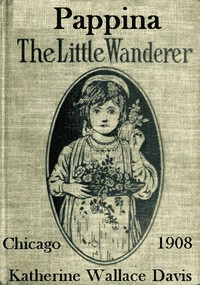
Pappina, the Little Wanderer: A Story of Southern Italy
Language: en383 downloads on Project Gutenberg
Subjects
In: Italy·Children & Young Adult Reading·Adventure
Public-domain ebook sourced from Project Gutenberg #45556.
Public-domain ebook
Language: en383 downloads on Project Gutenberg
Subjects
In: Italy·Children & Young Adult Reading·Adventure
Public-domain ebook sourced from Project Gutenberg #45556.
The opening · free to read
It was away up in that part of Naples called San Lucia, where clothes seem forever hanging out to dry, that Pappina lived with the rest of the Pierno family, a tribe too large to enumerate.
Pappina was only seven years of age, but she was different from every other child living in dingy, dirty San Lucia. Few even of the grown people of the neighborhood cared to be clean, and as for their hair--why, they paid no attention to that, but let it go as it found itself. But Pappina took delight in combing her silky black hair and in washing her beautiful face and dimpled hands.
This was a wonder to all who lived near.
"The one who washes! Per bacco [Great heavens]!" they said when they saw her. But their amazement did not disturb Pappina. She went about her play in the sordid old tenement-court like a sunbeam astray.
Only when she sang and danced and the people gathered around her did she seem to take much notice of her neighbors.
"Such a voice in one so small! It is from the angels!" the women would say, as, charmed by her singing and her grace, they would toss her un soldo (a half-penny).
The other children would run with every soldo to buy macaroni, for the children were always hungry in San Lucia, where even soldi are scarce; but Pappina, a true little Neapolitan, loved dress and display. She spent her money for trinkets with which to adorn her bewitching, graceful self.
Pappina's love of beauty sprang from her eager little heart like a sweet flower from a patch of rich earth on a rocky hillside.
It grew with very little nourishment from without, for in all her seven years she had hardly been out of sight of the hivelike tenement where her hard-working father himself had been born. On rare days she was taken to a near-by street where for generations the women of the neighborhood had gone to do their family washing at a free fountain; and of course, as all little girls in Italy do, she went to a gray old church regularly with her mother. Down the narrow street, past the mean shops, to church was the longest journey out into the world the bright-eyed little maiden had ever taken.
Her brothers, however, were great travelers. Sometimes at night they came home with tales of the wonderful foreigners who thronged the Toledo, of the splendid shops where all the treasures of the earth were gathered--jewels that sparkled like the sun; flowers that smelled like a breath of heaven; rich and gay clothes! Pappina sat with shining eyes and listened to these amazing tales until her heart was full of a longing to go and see for herself the wonders described.
On some mornings after drinking in news of the unknown world to which her brothers journeyed every day, Pappina would follow them down the stairs, through the court, out upon the cobble-stoned street, with outstretched hands, crying:
"Take me, Filippo, Vittorio!"
"_Non oggi, sorella_ [Not to-day, sister]," they laughed as they dodged between the people in the street.
Sometimes she would follow her brothers for some distance, only to be taken back into the courtyard of the tenement when they discovered her running after them. Pappina, who had a temper of her own, returned more often in anger than in tears.
One day a great resolve came to her as she stood watching them go away.
"I've staved at home long enough," she said to herself. "They won't take me, but I'm going; I'm surely going."
Pappina spent all the morning in adorning herself for the journey. Time and again her mother called to her:
"Pappina, bambina [baby], what are you doing?"
But Pappina, standing before a bit of looking-glass, never heard the call, she was so busy pinning on a bit of lace or a ribbon, or combing and curling her tresses.
Soon after noon a grotesque little figure darted out of the tenement and down the street. Without looking to right or left it ran swiftly for a short distance, and then it stopped and looked back to see if any one were following. Then Pappina--for it was she--moved on, bound for the Toledo.
She held her head up proudly, and all the bits of lace and ribbon that she had fastened to her faded little frock fluttered about her as she hurried on--toward the Toledo she thought, but, in truth, over the bridge that leads to the Marina or wharf at Castle dell'Ovo.
The place had no historic interest for her. Pappina knew nothing of history; she was just a poor little Neapolitan girl. Only foreign tourists visited the oval-shaped castle because it was the place where Cicero met Brutus bloody-handed from the murder of Cæsar; where kings and queens had dwelt and been imprisoned. She saw only the crowds of people--the divine people who made the wonderland her brothers told about.
Some of the people were waving their arms toward the water and laughing. Pappina approached the edge of the wharf, that she might see everything that was going on.
Well-dressed men were throwing money into the waves.
"What wealth they must have!" exclaimed Pappina to herself. "Such queer words they speak, too! These must be the foreigners Vittorio tells about!"
She drew still nearer and saw that the people were laughing at the way a mob of half-naked boys were diving for the soldi the foreigners threw into the water, bringing the coins up in their mouths.
"Oh, the foreigners are not crazy; they are only kind," she thought.
She turned at a burst of laughter behind her, and there were more foreigners throwing soldi to more boys who were standing on their heads, turning hand-springs, and crying: "_Date_ [give] un soldo."
Pappina was astonished. There were blond-haired Englishmen, blue-eyed Germans, black-whiskered Russians, generous Americans; and such wonderful ladies everywhere!
"Where do all the soldi come from?" she murmured as she stood gazing about her in amazement.
Suddenly a group of light-hearted tourists, bent on discovering all the treasures of a foreign land, swept around Pappina.
"What a quaint little beauty!" one lady exclaimed. "See how she has decked herself out in all her finery! What cherubic eyes!"
Pappina clasped her hands to her breast and shrank back from the gaze of the eyes fastened upon her. She was such a little girl, and never before had she been so far away from home; no wonder the sudden attention of all these finely dressed ladies and gentlemen frightened her.
"I must go home," she exclaimed; "I must run home and tell them all about it. Oh, what a grand time I've had!" She laughed aloud as she broke through the crowd and darted away.
On ran Pappina until she spied the statues of La Villa, and then, although the beauty of the park was before her eyes, she was frightened. Where was her home--her dear, dear home? where were her brothers and sisters? Pappina was lost.
Suddenly her lips stopped quivering: forgotten were her home and her fright. Her little feet paused.
A band! Wonder of wonders! For the first time in her life Pappina heard the whole air aquiver. Streams of sweet sound swept around her. Her whole body tingled, down to her feet. She began to dance with the unconsciousness of a music-mad little child. Tapping her toes on the pavement, gliding and swaying to and fro with the music, keeping time with her arms, dancing with truly wonderful grace, she had drawn a large group of people about her by the time the waltz had ceased.
"Bravo! Bravo!" the people cried as they showered soldi upon the surprised little girl.
She drew back, frightened.
"Yours, all yours!" called some voices.
The book keeps going
Reading is free forever. Sign up and watch scenes appear while you read.



Scenes Storieta drew for other classics.
New illustrated classics
Once or twice a month: the latest books to get full character casts, scene art, and free comic editions. No account needed.