The opening · free to read
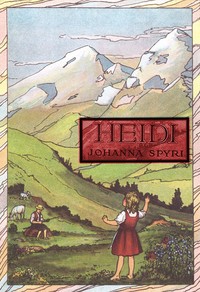
There is here presented to the reader a careful translation of "Heidi," one of the most popular works of the great Swiss authoress, Madam Johanna Spyri. As particulars of her career are not easily gathered, we may here state that Johanna Heusser was born at Zurich, June 12, 1827. She wrote nothing in her youth. She was happily married to the Advocate Spyri. Later, the Franco-Prussian war evoked from her a book devised for a charitable purpose, and the success of this volume revealed her future. She died at her home in Zurich in 1891. Her fame has spread to all countries, and her many books have delighted not only the children for whom they were so artfully written, but they have become favorites with lovers of children as well.
As to "Heidi," itself, wherever mountains are seen or read about, the simple account of the early life of the Swiss child, amid the beauties of her passionately-loved home, will be a favorite book for younger readers and those who seek their good.
Johanna Spyri lived amidst the scenes she so gracefully described. In all her stories she shows an underlying desire to preserve her young readers alike from misunderstanding and the mistaken kindness that frequently hinders the happiness and natural development of their lives and characters.
Among her many works are the following: "Arthur and His Squirrel," "On Sunday," "From the Swiss Mountains," "A Scion of the House of Lesa," "The Great and the Small All May Aid," "From Near and Far," "Cornelius," "Lost but Not Forgotten," "Gritli's Children," 2 volumes, "Without a Country," "What Shall Then Become of Her?," "Sina," "From Our Own Country," "Ten Stories," 2 volumes, "In Leuchtensa," "Uncle Titus," "A Golden Saying," "The Castle Wildenstein," "What Really Happened to Her," "In the Valley of the Tilonne," "The Hauffer Mill."
M. H. M.
The book keeps going
Keep reading, and see it illustrated
Reading is free forever. Sign up and watch scenes appear while you read.
Scenes Storieta drew for other classics.