Storieta
English
Save & sign up

About this book

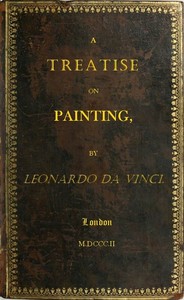
This work is a facsimile of the 1802 London edition of Leonardo da Vinci’s Treatise on Painting, presented exactly as it appeared in the early nineteenth‑century print. The editor has preserved the original orthography, including variants such as “musquetry” and “Du Frêne”, and retained the inconsistent use of Roman and Arabic numerals for plate references, while quietly correcting obvious printing errors. Footnotes are distinguished by a prefixed “i” for introductory material and plain Arabic numerals for da Vinci’s own comments, and typographical conventions from the source are signalled with underscores, slashes and caret symbols. The volume opens with a formal title page, a biographical sketch drawn from previously inaccessible sources, and a detailed table of chapters that maps each numbered heading to its counterpart in the Italian original, followed by an exhaustive catalogue of topics ranging from proportion and anatomy to light, shadow and colour.

The text reads in a scholarly, didactic voice typical of early‑nineteenth‑century art manuals, blending Leonardo’s own observations with the commentary of translators and academicians. Its dense, systematic layout, filled with numbered sections, plate citations and frequent asides, appeals to readers who relish meticulous technical instruction, historians of art theory, and practitioners seeking insight into the foundational principles that shaped Renaissance and later painting techniques. Those comfortable with archaic spelling and extensive footnote apparatus will find it a rewarding window into Leonardo’s systematic approach to drawing, anatomy and composition.

Who appears in A Treatise on Painting

  • Leonardo da VinciMiddle‑aged Italian man, long dark hair, full beard, wearing Renaissance scholar robes and a leather satchel
  • MelziYoung Florentine noble, smooth hair, clean‑shaven, dressed in fine early‑16th‑century doublet with embroidered cuffs
  • Du FrêneFrench gentleman of modest age, short curly hair, trimmed beard, in a late‑15th‑century doublet with a fur collar

The opening · free to read

This e-text is based on the 1802 edition. The original spelling has been retained, as well as inconsistencies, such as 'musquetry'/'musketry', 'Du Frêne'/'du Fresne', 'Melzio'/'Meltio'/'Melzi', etc. Uncommon or old-style spelling has not been altered, such as 'opake' (opaque), 'verdegris' (verdigris), 'dutchess' (duchess), etc. Errors due to bad print, as well as minor punctuation errors have been tacitly corrected.

In the text, the plates are referenced by using Roman numerals, whereas the captions of the plates show Arabic numerals; the same applies to the Table of Chapters and the chapter headings, respectively. This inconsistency has been retained.

Footnotes related to introductory chapters have been prefixed with the letter 'i' ([i1]-[i210]); footnotes in da Vinci's own text, however, are shown in plain Arabic numerals ([1]-[102]).

Italic passages in the original version have been placed between underscores (text); text in small caps has been symbolised by forward slashes (/small caps/). A superscript character has been denominated by a preceding caret symbol (^).

The following typographical errors have been corrected:

# p. xviii: 'overspead' --> 'overspread'; 'Vincius ast oculis' --> 'Vincius est oculis' # p. lxxxiii: 'Vasari, 36,' --> 'Vasari, p. 36' # p. lxxxv: 'Maestrodi' --> 'Maestro di' # p. xcii: 'Fontainbleau' --> 'Fontainebleau' # p. 22: Plate 2: original caption points to page 2; corrected to page 22. # p. 37: 'pully' -->'pulley' # p. 117: 'andso' --> 'and so' # p. 156: 'A B E D' --> 'C B E D' # p. 181: 'that that' --> 'than that' # Footnote 62: 'tranferred' --> 'transferred'

The Table of Chapters has been moved to the beginning of the text for reasons of clarity and comprehensibility.

The book keeps going

Keep reading, and see it illustrated

Reading is free forever. Sign up and watch scenes appear while you read.

Illustrated scene from The Adventures of Sherlock HolmesIllustrated scene from FrankensteinIllustrated scene from The Great Gatsby

Scenes Storieta drew for other classics.

New illustrated classics

A new classic, drawn, in your inbox.

Once or twice a month: the latest books to get full character casts, scene art, and free comic editions. No account needed.