Public-domain ebook
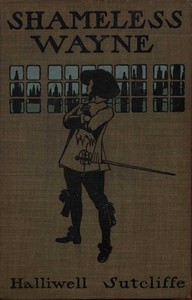
Shameless Wayne: A Romance of the last Feud of Wayne and Ratcliffe
Language: en643 downloads on Project Gutenberg
Subjects
In: Historical Novels·Romance·Novels
Public-domain ebook sourced from Project Gutenberg #47674.
Public-domain ebook
Language: en643 downloads on Project Gutenberg
Subjects
In: Historical Novels·Romance·Novels
Public-domain ebook sourced from Project Gutenberg #47674.
The opening · free to read
The little old woman sat up in the belfry tower, knitting a woollen stocking and tolling the death bell with her foot. She took two and seventy stitches between each stroke of the bell, and not the church-clock itself could reckon a minute more truly. Sharp of face she was, the Sexton's wife, and her lips were forever moving in time to the click of her knitting-needles.
"By th' Heart, 'tis little care his wife hed for him," she muttered presently. "Nobbut a poor half-hour o' th' bell, an' him wi' a long, cold journey afore him. Does she think a man's soul can racket up to Heaven at that speed? Mebbe 'tis her pocket she cares for--two-an'-sixpence, an' him a Wayne! One o' th' proud Waynes o' Marsh, an' all, th' best-born folk i' th' moorside. Well, there's men an' there's men, mostly wastrils, but we mud weel hev spared another better nor Anthony Wayne, that we could."
Her voice died down again, though her lips still moved and her needles chattered restlessly. The wind raced over the moor and in at the rusty grating, and twice the Sexton's wife ceased knitting to brush away a cobweb, wind-driven against her cheek.
"An' him to hev no more nor a half-hour's tolling, poor mortal!" she said, breaking a long pause. "What 'ull he do when he gets to th' Gate, an' th' bell hes stopped tolling, an' there's no Christian music to waft him in? But theer! What did I say o' th' wife when Anthony Wayne went an' wedded again--a lass no older nor his own daughter, an' not Marshcotes bred nawther. Nay, there's no mak o' gooid in 't--two-an'-sixpence to buy a man's soul God-speed, there niver war ony gooid i' bringing furriners to Marshcotes. Little, milkblooded wench as she is, not fit to stand up agen a puff o' wind. Well, I've a'most done wi' th' ringing--save I war to gi'e him another half-hour for naught, sin' he war a thowt likelier nor th' rest o' th' men-folk."
The little old woman smiled mirthlessly. For folk accounted her sharp of tongue and hard of heart, and she would never have done as much for any but a Wayne of Marsh House. Silence fell once again on the belfry tower, broken only by the click-click of the needles, the creak of the rope, the subdued thunder of the bell, the wailing frenzy of the wind as it drove the hailstones against the black old walls.
Eerie as the night was in the belfry, it was wilder yet in the bleak kirkyard without, free to the moor as it was, and full of corners where the wind hid itself to pipe a shriller note than it could compass in the open. The wind, a moon three-quarters full, a sky close packed with rain and sleet, fought hard together; and now the moon gained a moment's victory, shimmering ghostly grey across the wet tombstones; and now the scudding wrack prevailed, hiding the moon outright. The sodden winter leaves were lifted from the mould, and danced to the tune of the raindrops pattering upward from the tombstones.
A figure crossed the moor and halted awhile at the church-yard gate--a slim figure, of a lissom strength and upright carriage which marked her as a Wayne of Marsh House. Like a sapling ash the girl had swayed and bent to the hurricane as she fought her way through the storm; but all that the wind could do it had done, and had left her unbroken--breathless only, and glad of the gate's support for a moment.
The moon drove through the cloud-wrack as she stood there, lighting each shadowed hollow of her face. There was tenderness in her eyes, but tears were drawn like a veil across them; there was softness in the mouth, but pride and resolve hid all save the sterner lines. She turned her head quickly toward the belfry as the clang of the death-bell struck through the storm-din of the larger strife; and then she hid her face in her two strong hands, and sobbed as wildly as ever the wind could do. And after that she went forward, through the gate, up the narrow path, past the great stone, with the iron rings on either side, which hid the burial vault of the Waynes.
"Not there, father! They will never leave you out there for ever," she whispered--"you who were so strong yesterday, so full of the warmth of life. God, God, if You were made after our fashion, as men say, You would raise him from the dead. How the blood dripped, dripped from the little hole in his side. Oh, God, be merciful! Say that the wind has blown my wits away--say that all this is----"
She checked herself. Her passion died out, leaving her bitterly calm as the graves she lingered by.
"Nay, there is no mercy, nor shall be," said she.
"No mercy--no mercy," yelled the wind, as it howled across the moor and in through the kirkyard hedge.
The girl was comforted in some sort, it seemed, by the tempest's devilry. She turned from the vault and moved with a firm step to the foot of the church-tower; one hand had stolen to her girdle, and as the bell's note shuddered down the wind-beats once again, her fingers tightened round the knife-hilt.
"A drear neet for th' owd Maister," the Sexton's wife was crooning to herself, as she knitted her stocking in the belfry tower above. "'Tis a cold journey an' a long he's bound for, an' he'll feel th' lack o' flesh-warmth; ay, poor body! I could hev wished his soul fairer weather."
Up the crooked stair, worn by a half-score generations, passed Nell Wayne, with her brave carriage and her pitiless face. The Sexton's wife dropped a stitch of her knitting as she heard the door open; and her heart went pit-a-pat, for it was a fit night for ghosts.
"Oh, 'tis ye, Mistress, is't?" she grumbled, soon as she saw it was no ghost at all, but just Nell Wayne of Marsh.
The girl looked at her awhile in silence, as if the crabbed figure, working busily with hand and foot by the light of a rush candle, were dear to her at such a time.
"Well, then, what hes brought ye through th' storm?" said the little woman. "I warrant 'tis easier to lig between sheets nor to cross th' moor to-neet."
"There's no ease, Nanny, save in fighting the storm," cried the girl. "Could I rest quiet at Marsh House, think'st thou, knowing what lies there?"
"Nay, for th' wind rapped hard at th' windows an' called ye out; ye war iver th' storm's bairn," said Nanny, chuckling grimly.
"I came to ask thee to give father a longer passing than his wife is like to have seen to. Here is my purse, Nanny--take what thou wilt so long as his soul is cared for."
Ay, there was heart in the Sexton's wife, for all her rough pilgrimage through life. She knew, now for the first time, how deep her love went for this daughter of the Waynes; and even as she pushed away the money, with impatient protest, her voice broke and her eyes filled with tears.
"Dearie," she whispered, coming close to the girl's side and putting a lean arm about her. "Dearie, ye must not look like that. Ye're ower young to let all Hell creep into your face--ower young, I tell ye--an' I should know, seeing I nursed ye fro' being a two-year babby."
"Over young! Nay, a woman can never be over young to learn God's lesson, Nanny. 'Tis fight at our birth--poor woman's sort of struggle, with tears--and fight through the summer days when the very skies strive against the seed-crops that should keep our bodies quick--and fight again, when winter rails at the house walls, trying to batter them in."
"Hev a kindlier thowt o' God," cried the other eagerly--more eagerly, it may be, than her own faith warranted. "Put th' father out o' mind sooin as th' sorrow grows a bit more dumb-like, an' think on a likely man's love an' th' bairns to come."
"What art doing, Nanny? The bell has been silent these five minutes past," cried the girl. It was strange to see how grief had altered her--to mark how peremptory and harsh of voice she had grown, how little she seemed to care for aught save for such matters as concerned her father, whose body was lying cold and stiff in the oak-lined hall at Marsh, whose soul was journeying wearily toward an unsubstantial Heaven. Yet the superstition of her folk held her, and the bell's silence was a horror near akin to crime, since it robbed the dead man of whatever cheer the next world held.
The Sexton's wife said nothing at all, but took up her knitting and slid her foot into the loop of the bell-rope. Nell Wayne leaned against the rotting woodwork of the door, and fingered the dagger that lay beneath her cloak, and fancied that every jar of the bell was a blow well driven home. The Sexton's wife glanced shrewdly at her, as if in fear of this still, strenuous mood.
"Better talk to a body, my dear; 'twill drive th' devils out," she said.
As one awakening from a trance, Nell moved forward and laid a hand on the other's shoulder. Her calm was gone; she quivered from head to foot. "Wast talking of love, and bairns to come?" she said. "Love? Ay, to see your lover killed before your eyes. And bairns? Must the mothers rear up the wee things, that never did them harm, to suffer and to curse the God that made them?--Nanny, I know who struck the blow."
The Sexton's wife lifted her face sharply. "Ay, so? 'Twill be gooid news for somebody to hear--your uncle, belike, or one o' th' Long Waynes o' Cranshaw."
"Kinship is well enough, Nanny--but 'twill not carry this last feud. Has Wayne of Marsh no children, that his quarrel needs go abroad to be righted?"
"Ay, he hes childer," said Nanny slowly--"a lass not grown to ripeness, an' four lads ower young to fight, an' another lad who's man enough to drink belly-deep."
"Hush, Nanny! What if Ned be wild as a bog-sprite--he must always be next to father in my heart. He has been from home this se'n-night past, nurse, or he would strike for me. I know he would strike for me. But he may be long a-coming, and this sort of quarrel breeds foulness if 'tis not righted quickly."
The wind was whimpering now, and scarce had strength to win through the grating of the belfry tower. From without, on the side where the Bull tavern backed the kirkyard, there came the sound of noisy revel--a hunting song, half drowned in drunken clamour and applause.
"Yond's your father's eldest-born, I'll warrant," said Nanny, jerking her thumb over her shoulder; "'tis like he's home again, Mistress, for there's no voice like Shameless Wayne's to sing strong liquor down 's throit."
The girl winced. "Let him be Shameless Wayne to the gossips, Nanny; is't thy place to judge him?" she flashed.
"Nawther mine nor yourn, dearie--'tis only that my heart cries out for ye, being left so lonely-like; an' pity allus crisps my tongue. Shall I slip me dahn to th' Bull, an' whisper i' th' lad's ear? Happen he knaws nowt o' what's chanced at Marsh."
"Nor will know, even if 'tis he, till the morning clears his wits. Hark ye, Nanny, women have done such things aforetime, and my arm is strong."
The little old woman went on with her knitting, and still the bell rope creaked at its wonted intervals; but there was a change in the ringer's face--a brightness of the eye, a quiver of the shrunken body. She read the girl's purpose aright.
"Will it not serve?" went on Nell, slipping her hand from under her cloak and conning the ringer's face eagerly.
The book keeps going
Reading is free forever. Sign up and watch scenes appear while you read.



Scenes Storieta drew for other classics.
New illustrated classics
Once or twice a month: the latest books to get full character casts, scene art, and free comic editions. No account needed.