Public-domain ebook
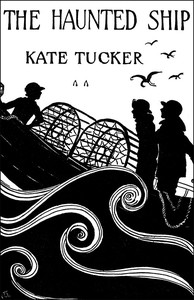
The Haunted Ship
Language: en296 downloads on Project Gutenberg
Subjects
In: Children & Young Adult Reading·Adventure·Novels
Public-domain ebook sourced from Project Gutenberg #50794.
Public-domain ebook
Language: en296 downloads on Project Gutenberg
Subjects
In: Children & Young Adult Reading·Adventure·Novels
Public-domain ebook sourced from Project Gutenberg #50794.
The opening · free to read
“Hey, Jerry, get along there, you fool horse!”
Jo Bailey flipped the reins over the back of the lumbering nag. Not that there was any hurry, but he was so eager to see what the Seymours would be like. They were coming from Boston to spend the summer at the Bailey house and Jo was on his way down to the station at Pine Ledge to meet their train.
The past winter had been a lonely one for Jo and his father, who lived up on a hill by the sea, far from the village. Some of the time the snowdrifts had been seven feet deep, but Jo didn’t expect these city people to understand what that meant; they could not realize what the Maine people called “a shut-in winter.” The Seymours were coming after the grass had grown green and the fields sprouted up through the brown moist earth, and they would be going home before the cold winds came down from the north woods, the cold that closed so surely and fiercely about the Baileys in their white house on the hill above the sea and shut them in so tightly that they could see nothing but the sea and the great stretches of snow for a long four months at a time.
Spring changed the whole world for Jo Bailey, and spring was here now; winter had gone. The soft dirt road sucked up under Jerry’s clumping feet and brooks ran in merry freshets through their deep gutters on either side of the road. So Jo swung the old plow horse into place beside the little station platform and whistled while he waited. The year’s fun would begin to-day. In the early spring he had helped his father plant, but that work was done and so was school, and he had long and pleasant days before him, when his chores could be finished before breakfast.
Jo never had seen the Seymour family and to-day he was going to find out what they were like. There were three of them coming with their father and mother and if they were as nice as their father they’d be all right. Mr. Seymour was a painter who had discovered the Bailey house last year while he was wandering along the Maine coast on a sketching trip. He had said that the Bailey farm was the most beautiful place he ever had seen.
Of course Jo liked hearing that, and he felt proud at knowing that an artist from Boston found the old farm so lovely, though exactly what the painter saw in the big ocean pounding against the foot of the tall broken cliff, the stretch of smooth meadow running down over the slope of the hill, and the dense pine woods reaching back for miles and miles, Jo couldn’t understand any better than the Seymours could comprehend his winter.
The Seymours were about his own age, Jo was thinking as he sat on a box on the station platform, whistling and waiting. The oldest was a girl, Ann, Mr. Seymour had told him last summer, and Jo was skeptical as to what he might expect from her. A little bit of a fraidcat, probably, always dressing up and particular about her clothes; but he could bear it, if only the boy was spry. “Spry” was a word that meant a great deal in Maine; in Jo’s opinion if a boy was “spry” he was all that a boy should be.
While Jo waited at the station, Ann Seymour was sitting impatiently in the train, looking forward to just such a place as Jo’s meadow to stretch her long legs in a good run. School and basket ball were very well in winter but she had grown as tired as Jo of the cold, and as soon as April weather brought out the buds on Boston Common, Ann grew restless and began to talk about Maine.
Ann was fourteen, just like Jo Bailey; her brother Ben was twelve, and Helen was ten. She was decidedly the baby of the family and one of the reasons for their all coming to Pine Ledge so early in the season. She had been dreadfully ill during the past year and Mr. Seymour had thought of Pine Ledge farm as the best place for Helen when they first talked about a summer vacation. So the plans were made and he had told the children about Jo--how he had no mother, and, because of this, they must share their own mother with him; how he lived bravely in the snow all winter and walked through the drifts to school; and how he knew all about the woods and the rocks and tides and went fishing, up-river and out to sea. He made Jo sound interesting, and the Seymours were waiting to see him quite as impatiently as he was waiting for them.
“Will there be Indians at Pine Ledge?” Helen’s round blue eyes were like saucers as she peered out of the car window into the woods and fields through which the train was sliding so rapidly. “Will there be real live Indians with feathers and paint on them?”
“Don’t be such a silly,” said Ben. He secretly hoped there were Indians but he wouldn’t have admitted it to any one. “Indians moved away from this country years ago, years and years ago, all except a few tame Indians. But perhaps there are bears out in those woods. Bears live where green bushes grow so thick. They hide in the bushes and jump out when you’re not looking.”
He was delighted to see Helen shiver in frightened excitement. It made him feel rather trembly, too, to think of bears as big as men that jumped out and growled.
“Have they big teeth?” asked Helen, as she pressed her small nose against the window glass, looking hard for a glimpse of a bear.
“I guess they have teeth! And round ears and claws and fur.”
“Oh-h-h! I don’t want to met any bears.” Helen’s nose was pressed into a flat white spot in her desire to look deeper into the woods.
“Jo Bailey won’t let them touch you, will he, father?” said Ann reassuringly.
She turned to her father, who sat absorbed in watching the country flowing past his window. She knew how he loved the green fields and the woods, all the lovely shapes of things and the way they were placed on the green earth, for he painted them on wide, long canvases. Sometimes the things he painted didn’t look as Ann thought they ought to, but she always found him ready to explain why he made them so different from the way they had appeared to her eyes. People who knew about painting said that his work had unusually fine quality and Ann believed that soon he would be very famous and then there would be a great deal more money to spend than they had now. She would be able to go west and start a ranch with hundreds of horses and cowboys riding them. That was the dream of her life.
Ben didn’t care much about having more money. He was satisfied to sit and watch his father at work. Often Mr. Seymour gave him an old piece of stretched canvas to paint on while he sat so quietly there beside him. Ben liked to splash in the paint and try to do something himself.
In spite of being a boy he was not nearly as strong as Ann, although he was only two years younger. She could tumble him over easily, but she was unusually strong for her age. It was hard for Ann to remember always not to be too rough with Ben and Helen. She was not quite aware of how she was looking forward to being with Jo Bailey, for her father had said, “Jo’s as sturdy as they make ’em.” Jo, Ann knew, would be able to do everything she could and then do more. And Jo would tell them about bears and Indians, for though, like Ben, she knew perfectly well that no Indians or bears would be in the Pine Ledge woods, she liked to imagine that there might be some.
“Dad,” she said to Mr. Seymour, and he turned his keen smiling eyes toward her. “Jo will know whether bears come into his woods, won’t he? Tell Helen that Jo will take care of her.”
“I shouldn’t wonder,” answered Mr. Seymour, “but he will speak for himself in about one minute from now, for here we are.”
What a scurrying for coats and bags as the train pulled up before the square wooden box that was Pine Ledge station! They all climbed down the high steps to the platform, Helen without hat or coat because, as usual, she had been too excited to get them on until the last moment had come.
So this was Jo, waiting for them beside a fat old plow horse and a roomy brown wagon that Ann learned to call the buckboard. Jo was much bigger than Ann had thought he would be, and freckles were spattered on his tanned face. He wore a very faded pair of clean overalls and the collar of his blue shirt stood out like a second pair of ears. He grinned a wide shy grin and his heavy boots scraped awkwardly on the platform as he walked across to meet them.
Helen couldn’t wait. She ran across to him before the others were fairly out of the train. “Where are the Indians and the bears? Please show them to me right away.”
“Bears?” answered Jo, laughing in spite of his bashfulness. “Bears-- Well, I guess I can find you places where they have been, later in the summer, around the berry patches, but they don’t linger here in the springtime. And the Injuns were scared away years ago. People ain’t scalped up here any more.”
All the Seymours were around him by this time. “We shall have to do without the Indians,” said Mrs. Seymour gayly. “Really, I prefer not to be scalped.”
Jo laughed again as he went to help with the baggage; a feeling of satisfaction and contentment filled him. These new people were friendly. He was going to like them.
“I’ll take those, Mr. Seymour.” And over Jo’s square shoulders went the strapped shawls, the extra coats, and with three valises in each hand the boy strode down to the buckboard.
Ben’s mouth dropped open in astonishment as he watched.
“Isn’t that too heavy a load?” Mr. Seymour protested; but Jo called back, “Not a mite heavier than milk pails.”
“How strong you are!” exclaimed Ann.
After Mr. Seymour had gathered up his share of the remaining luggage two bags remained. Ben looked at them. He had not supposed that he could lift them from the platform but he had watched Jo with admiring eyes, and now when Ann stooped for the bags he suddenly brushed her aside and grabbed the two valises.
“I’ll do that,” he said, and he struggled after his father and Jo, the two bags trailing from his lean frail arms.
Jo piled baggage and Seymours into the two-seated wagon, although how he managed to stow them all away Ann couldn’t imagine until she saw him do it. The buckboard seemed elastic, and Jerry, the big lumbering old horse, traveled along as though he had no load at all.
“Want to sit on the little front seat with me?” Jo asked Ann. Jo had decided at first glance that he liked this thin tall ruddy girl with her bobbed hair. She didn’t seem like the girls he had known; she was more like a boy with her frank smile and clear eyes. No frills or fancies about her, no sly nudgings or giggles that might mean anything, no holding hands. No pretending not to understand his own sensible frankness, no trying to make him remember that she was a girl. She sat beside him as he drove, her bright eyes darting this way and that, letting nothing escape her sight, excitedly seeking out the things that Jo had known every day of his life. Jo knew that if he had gone to Boston he would have felt the same way about things that were different from those at home.
Funny thing--he had expected to like the boy best, but even this early Jo saw that he was going to have the most fun with the girl whom he had dreaded meeting.
The book keeps going
Reading is free forever. Sign up and watch scenes appear while you read.



Scenes Storieta drew for other classics.
New illustrated classics
Once or twice a month: the latest books to get full character casts, scene art, and free comic editions. No account needed.