
Public-domain ebook
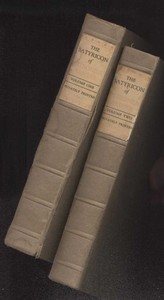
The Satyricon — Complete
Language: en8,493 downloads on Project Gutenberg
Subjects
In: Erotic Fiction·Banned Books from Anne Haight's list·Novels
Public-domain ebook sourced from Project Gutenberg #5225.
Public-domain ebook
Language: en8,493 downloads on Project Gutenberg
Subjects
In: Erotic Fiction·Banned Books from Anne Haight's list·Novels
Public-domain ebook sourced from Project Gutenberg #5225.
The Satyricon is a Roman work of fiction that blends satire with vivid depictions of everyday life in ancient Rome. The edition you hold is a complete, unexpurgated translation by W. C. Firebaugh, which incorporates the notorious forgeries of Nodot and Marchena as well as the textual readings introduced by De Salas. The translator’s preface foregrounds the difficulty of rendering Petronius’s colloquial argot for a modern audience, noting how each generation must renegotiate slang that was once familiar to the author and his contemporaries. The volume is organized into five books, each followed by detailed notes on topics ranging from prostitution to the infamous “dildo,” and it is illustrated with scenes from the novel’s most notorious episodes, such as the Dinner of Trimalchio and the escapades of Encolpius and his companions.
Petronius’s voice is razor‑sharp, witty, and unapologetically earthy, reflecting the decadence of Nero’s court while exposing the foibles of the social elite. The prose is lean and elegant when the educated characters converse, but it shifts to a raw, almost cinematic realism when describing taverns, brothels, and street life. Readers who enjoy a blend of historical detail, biting satire, and a narrative that revels in the grotesque and the comic will find this translation rewarding. It especially appeals to those interested in Roman culture, classical literature, and the evolution of literary realism.
The opening · free to read
Complete and unexpurgated translation by W. C. Firebaugh, in which are incorporated the forgeries of Nodot and Marchena, and the readings introduced into the text by De Salas.
Among the difficulties which beset the path of the conscientious translator, a sense of his own unworthiness must ever take precedence; but another, scarcely less disconcerting, is the likelihood of misunderstanding some allusion which was perfectly familiar to the author and his public, but which, by reason of its purely local significance, is obscure and subject to the misinterpretation and emendation of a later generation.
A translation worthy of the name is as much the product of a literary epoch as it is of the brain and labor of a scholar; and Melmouth’s version of the letters of Pliny the Younger, made, as it was, at a period when the art of English letter writing had attained its highest excellence, may well be the despair of our twentieth century apostles of specialization. Who, today, could imbue a translation of the Golden Ass with the exquisite flavor of William Adlington’s unscholarly version of that masterpiece? Who could rival Arthur Golding’s rendering of the Metamorphoses of Ovid, or Francis Hicke’s masterly rendering of Lucian’s True History? But eternal life means endless change and in nothing is this truth more strikingly manifest than in the growth and decadence of living languages and in the translation of dead tongues into the ever changing tissue of the living. Were it not for this, no translation worthy of the name would ever stand in need of revision, except in instances where the discovery and collation of fresh manuscripts had improved the text. In the case of an author whose characters speak in the argot proper to their surroundings, the necessity for revision is even more imperative; the change in the cultured speech of a language is a process that requires years to become pronounced, the evolution of slang is rapid and its usage ephemeral. For example Stephen Gaselee, in his bibliography of Petronius, calls attention to Harry Thurston Peck’s rendering of “bell um pomum” by “he’s a daisy,” and remarks, appropriately enough, “that this was well enough for 1898; but we would now be more inclined to render it ‘he’s a peach.’” Again, Peck renders “illud erat vivere” by “that was life,” but, in the words of our lyric American jazz, we would be more inclined to render it “that was the life.” “But,” as Professor Gaselee has said, “no rendering of this part of the Satyricon can be final, it must always be in the slang of the hour.”
“Some,” writes the immortal translator of Rabelais, in his preface, “have deservedly gained esteem by translating; yet not many condescend to translate but such as cannot invent; though to do the first well, requires often as much genius as to do the latter. I wish, reader, thou mayest be as willing to do the author justice, as I have strove to do him right.”
Many scholars have lamented the failure of Justus Lipsius to comment upon Petronius or edit an edition of the Satyricon. Had he done so, he might have gone far toward piercing the veil of darkness which enshrouds the authorship of the work and the very age in which the composer flourished. To me, personally, the fact that Laurence Sterne did not undertake a version, has caused much regret. The master who delineated Tristram Shandy’s father and the intrigue between the Widow Wadman and Uncle Toby would have drawn Trimalchio and his peers to admiration.
W. C. F.
2. The Author. a His Character. b His Purpose in Writing. c Time in which the Action is placed. d Localization of the Principal Episode.
3. Realism. a Influence of the Satyricon upon the Literature of the World.
4. The Forgeries.
THE SATYRICON. Heinsius and Scaliger derive the word from the Greek, whence comes our English word satyr, but Casaubon, Dacier and Spanheim derive it from the Latin ‘satura,’ a plate filled with different kinds of food, and they refer to Porphyrion’s ‘multis et variis rebus hoc carmen refertum est.’
The text, as we possess it, may be divided into three divisions: the first and last relate the adventures of Encolpius and his companions, the second, which is a digression, describes the Dinner of Trimalchio. That the work was originally divided into books, we had long known from ancient glossaries, and we learn, from the title of the Traguriensian manuscript, that the fragments therein contained are excerpts from the fifteenth and sixteenth books. An interpolation of Fulgentius (Paris 7975) attributes to Book Fourteen the scene related in Chapter 20 of the work as we have it, and the glossary of St. Benedict Floriacensis cites the passage ‘sed video te totum in illa haerere, quae Troiae halosin ostendit (Chapter 89), as from Book Fifteen. As there is no reason to suppose that the chapters intervening between the end of the Cena (Chapter 79) and Chapter 89 are out of place, it follows that this passage may have belonged to Book Sixteen, or even Seventeen, but that it could not have belonged to Book Fifteen. From the interpolation of Fulgentius we may hazard the opinion that the beginning of the fragments, as we possess them (Chapters 1 to 26), form part of Book Fourteen. The Dinner of Trimalchio probably formed a complete book, fifteen, and the continuation of the adventures of Encolpius down to his meeting with Eumolpus (end of Chapter 140) Book Sixteen. The discomfiture of Eumolpus should have closed this book but not the entire work, as the exit of the two principal characters is not fixed at the time our fragments come to an end. The original work, then, would probably have exceeded Tom Jones in length.
a--“Not often,” says Studer (Rheinisches Museum, 1843), “has there been so much dispute about the author, the times, the character and the purpose of a writing of antiquity as about the fragments of the Satyricon of Petronius.” The discovery and publication of the Trau manuscript brought about a literary controversy which has had few parallels, and which has not entirely died out to this day, although the best authorities ascribe the work to Caius Petronius, the Arbiter Elegantiarum at the court of Nero. “The question as to the date of the narrative of the adventures of Encolpius and his boon companions must be regarded as settled,” says Theodor Mommsen (Hermes, 1878); “this narrative is unsurpassed in originality and mastery of treatment among the writings of Roman literature. Nor does anyone doubt the identity of its author and the Arbiter Elegantiarum of Nero, whose end Tacitus relates.”
In any case, the author of this work, if it be the work of one brain, must have been a profound psychologist, a master of realism, a natural-born story teller, and a gentleman.
b--His principal object in writing the work was to amuse but, in amusing, he also intended to pillory the aristocracy and his wit is as keen as the point of a rapier; but, when we bear in mind the fact that he was an ancient, we will find that his cynicism is not cruel, in him there is none of the malignity of Aristophanes; there is rather the attitude of the refined patrician who is always under the necessity of facing those things which he holds most in contempt, the supreme artist who suffers from the multitude of bill-boards, so to speak, who lashes the posters but holds in pitying contempt those who know so little of true art that they mistake those posters for the genuine article. Niebuhr’s estimate of his character is so just and free from prejudice, and proceeds from a mind which, in itself, was so pure and wholesome, that I will quote it:
“All great dramatic poets are endowed with the power of creating beings who seem to act and speak with perfect independence, so that the poet is nothing more than the relator of what takes place. When Goethe had conceived Faust and Margarete, Mephistopheles and Wagner, they moved and had their being without any exercise of his will. But in the peculiar power which Petronius exercises, in its application to every scene, to every individual character, in everything, noble or mean, which he undertakes, I know of but one who is fully equal to the Roman, and that is Diderot. Trimalchio and Agamemnon might have spoken for Petronius, and the nephew Rameau and the parson Papin for Diderot, in every condition and on every occasion inexhaustibly, out of their own nature; just so the purest and noblest souls, whose kind was, after all, not entirely extinct in their day.
“Diderot and a contemporary, related to him in spirit, Count Gaspar Gozzi, are marked with the same cynicism which disfigures the Roman; their age, like his, had become shameless. But as the two former were in their heart noble, upright, and benevolent men, and as in the writings of Diderot genuine virtue and a tenderness unknown to his contemporaries breathe, so the peculiarity of such a genius can, as it seems, be given to a noble and elevated being only. The deep contempt for prevailing immorality which naturally leads to cynicism, and a heart which beats for everything great and glorious,--virtues which then had no existence, --speak from the pages of the Roman in a language intelligible to every susceptible heart.”
e--Beck, in his paper, “The Age of Petronius Arbiter,” concluded that the author lived and wrote between the years 6 A.D. and 34 A.D., but he overlooked the possibility that the author might have lived a few years later, written of conditions as they were in his own times, and yet laid the action of his novel a few years before. Mommsen and Haley place the time under Augustus, Buecheler, about 36-7 A.D., and Friedlaender under Nero.
d--La Porte du Theil places the scene at Naples because of the fact the city in which our heroes met Agamemnon must have been of some considerable size because neither Encolpius nor Asclytos could find their way back to their inn, when once they had left it, because both were tired out from tramping around in search of it and because Giton had been so impressed with this danger that he took the precaution to mark the pillars with chalk in order that they might not be lost a second time. The Gulf of Naples is the only bit of coastline which fits the needs of the novel, hence the city must be Naples. The fact that neither of the characters knew the city proves that they had been recent arrivals, and this furnishes a clue, vague though it is, to what may have gone before.
Haley, “Harvard Studies in Classical Philology,” vol. II, makes out a very strong case for Puteoli, and his theory of the old town and the new town is as ingenious as it is able. Haley also has Trimalchio in his favor, as has also La Porte du Theil. “I saw the Sibyl at Cumae,” says Trimalchio. Now if the scene of the dinner is actually at Cumae this sounds very peculiar; it might even be a gloss added by some copyist whose knowledge was not equal to his industry. On the other hand, suppose Trimalchio is speaking of something so commonplace in his locality that the second term has become a generic, then the difficulty disappears. We today, even though standing upon the very spot in Melos where the Venus was unearthed, would still refer to her as the Venus de Melos. Friedlaender, in bracketing Cumis, has not taken this sufficiently into consideration. Mommsen, in an excellent paper (Hermes, 1878), has laid the scene at Cumae. His logic is almost unanswerable, and the consensus of opinion is in favor of the latter town.
The book keeps going
Reading is free forever. Sign up and watch scenes appear while you read.



Scenes Storieta drew for other classics.
New illustrated classics
Once or twice a month: the latest books to get full character casts, scene art, and free comic editions. No account needed.