Public-domain ebook
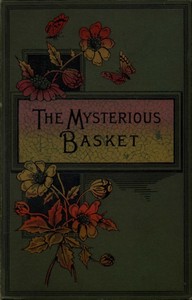
The Mysterious Basket; or, The Foundling. A Story for Boys and Girls
by Anonymous
English445 downloads on Project GutenbergDownload EPUB
Public-domain ebook sourced from Project Gutenberg #53810.
Public-domain ebook
by Anonymous
English445 downloads on Project GutenbergDownload EPUB
Public-domain ebook sourced from Project Gutenberg #53810.
The opening · free to read
"They are wondrous merry to-night in the upper inn," said Hicup (the landlord of the one lower down the village) to his wife, who was turning over the leaves of the almanac. He sulkily threw his cap off his head, and flung himself into an easy-chair.--"All the windows are lighted up in the principal room, and there is no end to the strumming of fiddles; the beer-room is swarming with customers and strangers, whose conveyances are standing before the door as a show to torment me. Why does no one ever come our way now? Although the wooden arm holding the beer-can stretches itself out ever so far, inviting the travellers to come in, not an individual enters the door, not a turn do we get!--Is it any wonder, then, if the beer in the cellar turns sour, and that the last customer who found his way here by chance, was frightened away by it? But this is always the way in the world,--where pigeons are, there pigeons fly."
"The people must be bewitched," said Dame Hicup, in a stammering voice.
Hicup looked attentively at his wife, and then at the brandy bottle, which stood near her in a corner cupboard.
"So you have been at the brandy again, you old witch, and half-emptied the bottle!" said our host in a rage, seizing his stick. "Wait, I will give you"----. A loud knocking at the window-shutter interrupted both the sentence and the intended castigation.
"Who's there?" he bawled out.
"A poor woman, who begs a lodging for the night," was the answer.
"A poor woman," continued Hicup sullenly. "Such guests are always to be had; you had better go up to the other inn, you will be more comfortable there than with us."
Dame Hicup, to whom this interruption was most opportune, having a due regard for her bones, became, all of a sudden, compassionate. "He who sends the poor from his door," she began, "to him Heaven will not send the rich;" and, without waiting for the assent of her husband, she stepped across the room, and opened the door. A woman, poorly clad, with a large handkerchief hanging behind her head, and a basket on her back, stood before her.
"Come in, come in," said Dame Hicup invitingly, bringing her into the room.
"Have you a passport?" gruffly demanded the landlord.
"Yes; here it is;" and the woman drew from her pocket a piece of folded paper, which she handed to the master of the inn, who, without looking at it, said, "Where are you going?"
"To Neiderhaslich."
"What's your occupation? What are you carrying?"
"I deal in crockery and stoneware; therefore I must take care, and put down my basket gently."
"Umph! umph!" growled Hicup; then, turning to his wife, he muttered in a tolerably audible voice, "Do you mean to give the woman a bed in the low room? It is not the first time that such gentry have packed up all they could get, and gone off during the night, finding their way out by the window."
The stranger had heard every word; but far from seeming offended, merely said, "You need not put straw in the room for me, as any corner in an out-house, or in a stable, will do well enough."
"All the stalls are empty, the more's the pity," replied Dame Hicup; "so if you prefer being there,"----
"Oh! yes," eagerly interrupted the traveller, going to lift up her basket again.
"Leave that where it is," said the suspicious Hicup, who saw in it security for the reckoning; "it will be safer here, and more readily lifted on again, than in the stable."
"Could we not make a bargain?" asked the landlady insinuatingly; "such brittle goods are always wanted."
"No, no," replied the stranger hastily; "everything in the basket is bespoke, and carefully packed up; I would lose my custom were I to open it. Perhaps another time"----
"Oh! there is no haste," answered Dame Hicup; "the thought only happened to come into my head."
The stranger quickly swallowed some liquid, took a piece of bread in her hand, and, under the pretext of being very tired, went away, accompanied by the hostess, who wished to show her where she was to sleep.
Our host, meanwhile, was still sitting in his arm-chair, thinking with envy of his rival, the landlord of the upper inn. The moment his wife came back, she made her way straight to the basket, with the intention of having a peep at its contents in spite of its cover. The threatening voice, however, of her husband defeated her purpose. "Hands off, there! I see you are dying with curiosity to know what is in the basket; but, as a punishment for your brandy-drinking, you shall not get leave to touch it; and this is a far less punishment than you deserve."
In a very discontented mood, but dreading the anger of her husband, Dame Hicup sat down again at the table. All was so quiet, that gradually the eyes of both closed, and, not being disturbed with much light, as the candle was burnt out, they fell asleep.
Suddenly Dame Hicup started up,--"Do you want anything?" she asked.
"No," answered her partner, angry at being awakened; "but, yes, I would like to be the landlord of the inn up there."
After these few words, all was quiet again, until a kind of creaking noise was heard, and a half-suppressed cry struck their ears; at which Hicup, terrified, sprang from his chair. "Wife! wife!" he shouted, shaking the Dame; "do you not hear?--thieves are breaking in!"
No thieves broke in, but the voices of two children broke out into a cry, and, at the same time, the basket creaked and moved. With eyes wide open, the angry landlord stared at the mysterious basket. His wife, on whose mind the truth seemed to flash, hastily pulled away the cover, and saw, to her no small dismay, the heads of two children lying close together. She clasped her hands in terror, while her husband muttered to himself,--"Fine earthenware indeed! Out of such clay are we all made."
"Come! come!" quickly cried his wife, dragging him after her; "a thought strikes me!" It struck the good man too, when they had sought the stable in vain for the owner of the basket. Hicup again wished to make use of his stick to put his wife in remembrance that she had brought the vagabond into the house; but Dame Hicup retorted, throwing the blame on her husband, who, by preventing her looking into the basket, had given the woman time to escape. Our hostess examined minutely the foundlings and their cradle, and our host gave vent to his wrath in every variety of words.
"Now, truly, we have got all at once precious guests!" he said, laughing scornfully. "Fine food this for the village gossips! But he who has the misfortune, need not concern himself about the joking. Wife, if you don't get rid instantly of the squalling brats, you shall pay dearly for it. We have scarce bread enough for ourselves, and are we to divide it with cast-away infants? Take them up to the landlord at the other end of the village, from whose table plenty crumbs fall to keep them. It is a good thing that we have neither servant-maid nor boy in the house to carry tales."
By this time, Dame Hicup had lifted the children out of the basket, and again, by dint of hushing, made them quiet. They fixed their eyes on their new nurse, and stretched out their little arms in the air. They were both boys, of the same size, remarkably alike, and about seven or eight months old.
"They are twins," said Dame Hicup with the greatest certainty; "as for their mother, the woman who left them is too old, and their linen too fine."
"Would it were coarse as hemp!" interrupted the wrathful landlord, "to hang the vagrant. Make haste, I tell you, and free the house of these urchins; put some brandy into their milk, that they may sleep soundly, and then make the landlord of the upper inn a present of them."
The Dame did as she was bid, without making the slightest attempt to induce her husband to keep the deserted infants. She mixed the brandy with the milk, which the children greedily swallowed, and soon after fell asleep.
With one small burden under each arm, the mistress of the inn left her house late in the night. When she returned with empty hands in about half-an-hour, her husband, who was anxiously waiting, cried out to her in great glee,--"So you have really got rid of them! tell me how."
"There were too many people in the inn for me to venture within the door," answered his wife; "but at the outside of the entrance a travelling carriage was standing, whose driver had gone seemingly into the beer-room to get a glass of something. I heard a loud snoring from some one in the back seat; but in the front there was nothing but parcels and packages; so I laid the one youngster softly down on the top of them, and the other I slipped into a horse's manger which was close to the door of the inn."
"Thank our stars!" said worthy Master Hicup, "that we have escaped at the expense of only a good fright."
It was already far past midnight, and still the dance in the salle in the upper inn had not ceased. Never had the dancers been more indefatigable at their hardest work than they were now, as they panted for breath, and glowed with heat. More and more wearied became the musicians, as they wetted their parched throats alternately with beer and brandy.
"Let us have the grandfather's dance for a finish!" cried the boldest dancer--one who was always last at work, and therefore last at the dance--to the young girls, who were preparing to go away. "Holloa! you fiddlers, play us something sprightly, and don't spare either your breadth or your bones. The grandfather's dance! do you hear?" and seizing the hand of his partner, he began to sing in a loud voice,
The book keeps going
Reading is free forever. Sign up and watch scenes appear while you read.



Scenes Storieta drew for other classics.
New illustrated classics
Once or twice a month: the latest books to get full character casts, scene art, and free comic editions. No account needed.