Public-domain ebook
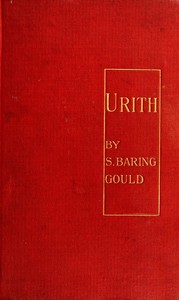
Urith: A Tale of Dartmoor
Language: en537 downloads on Project Gutenberg
Subjects
Public-domain ebook sourced from Project Gutenberg #54304.
Public-domain ebook
Language: en537 downloads on Project Gutenberg
Subjects
Public-domain ebook sourced from Project Gutenberg #54304.
The opening · free to read
DEVIL TOR.
In the very heart of Dartmoor, far from human habitation, near two thousand feet above the level of the sea, but with no prospect in the clearest weather on any side upon cultivated land, stands at present, as stood two hundred years ago, and doubtless two thousand before that, a rude granite monolith, or upright stone, about fourteen feet high, having on it not a trace of sculpture, not the mark of any tool, even to the rectification of its rugged angles and rude shapelessness.
In every direction, far as the eye can range, extends brown, desolate moorland, broken here and there with lumps of protruding rock, weathered by storm into the semblance of stratification.
A bow-shot from this upright stone rises such a hump that goes by the name of Devil Tor; and the stone in question apparently formed originally the topmost slab of this granite pile. But when removed, by whom, and with what object, remains a mystery. The beauty of a vast upland region lies not in its core, but in its circumference, where the rivers have sawn for themselves valleys and gorges through which they travel to the lowlands in a series of falls, more or less broken. About the fringe, the mountain heights, if not so lofty as in the interior, show their elevation to advantage, towering out of the cultivated plains or undulating woodland at their bases.
In the centre there is less of beauty, because there is no contrast, and it is by comparison that we form our estimates.
In the heart of the upland all is equally barren, and the variations of elevation are small. This is especially the case with the interior of that vast elevated region of Dartmoor, which constitutes bog from which flow the rivers that pour into the Bristol Channel on one side, and into the English Channel on the other.
The monolith, blackened by lichen, standing in such utter solitude, was no doubt thought to bear some resemblance to the Great Enemy of Man, and the adjoining Tor was regarded as his throne, on which he seated himself but once in twelve months, on Midsummer Eve, when the Bale-fires flamed on every hill in his honour. On all other occasions he was erect in this eyrie region, peering east and west, north and south, to see what evil was brewing in the lower world of men.
Devil Tor is reached by very few, only now and then does a shepherd pass that way, as the bogs provide no pasturage. The peat there has grown from hoar antiquity undisturbed by the turf-cutter on account of the remoteness of the spot and the difficulty of transport. The fisherman never reaches it, for it lies above the sources of all streams.
The surface of the moor is chapped and transformed by the chaps into a labyrinth, of peaty hummocks and black and oozy clefts, the latter from six to twelve feet deep, running in every direction, and radiating out of each other at all angles. Why the peat is so cleft is hard to say, there is no running water in the gashes, which in many cases go down to the white granite like the fissures in the body of a leper that in places disclose the bone. It would almost seem as though the bitter cold of this region had chapped its surface, and that no soft warm weather ever came to mollify, and to heal its gaping wounds.
Evening had closed in, but not attended by darkness, for the whole sky was glowing. The moor was on fire.
The season was that early spring in which what is locally termed "swaling" takes place, that is to say, the heather is set fire to after the dry winds of March, so as to expose and to sweeten the herbage.
The recent season had been exceptionally dry, even for so rainless a season, and the fires that had been kindled near the circumference of the moor had run inwards, gained the mastery, and rioted over the whole expanse beyond control. They leaped from bush to brake, they crossed streams, throwing over tufts of flaming bracken, pelting the further shore, till that also was ignited.
They circumvented bogs, they scrambled up moraines of granite, locally termed clatters, they ran up the hills on one side, enveloped their rocky crests in lambent flame, and descended the further side in a succession of bounds, and now they raged unchecked in the vast untrodden interior, where the wiry heather grew to shrubs, and the coarse grass and rushes were dust dry. There it ate its way along, a red advancing tide, working to windward, with a low roar and crackle, snapping at every bush, mumbling the tufts of rush, tossing up sparks, flame, and smoke, so that in the general glow and haze every landmark was disguised or effaced.
To no distance could the eye reach, because the whole atmosphere was impregnated with smoke, the smoke red and throbbing with the reflection of the fires over which it rolled. Indeed, the entire firmament was aglow, at one time flashing, at another darkening, then blazing out again as a solar photosphere, responsive to the progress and force of the conflagration.
Crouched at the foot of the great upright stone, that rose over her as the Devil triumphing over his pray, was a girl, with sullen, bewildered eyes, watching the fires as they folded about her, like flame fingers interlacing to close in and squeeze, and press the life out of her.
Her hands were bandaged. She rested her chin on them. She was a handsome girl, but with the features irregular. She had large dark eyes--possibly at this moment appearing unduly large, as they stared with a vacant unconcern at the mingled darkness and flame. Her complexion was by nature a transparent sallow, but now it glowed--almost vermilion in the light of the burning moor. Her brow was broad, but low and heavy. The face was strange. When the long dark eyelashes fell, then there was in the countenance, in repose, a certain pathos, a look of sadness, of desolation; but the moment the eyes opened, this was gone, and the eyes proclaimed a sullen spirit within, underground, a smoulder of fierce passion that when stirred would burst forth into uncontrolled fury--akin to madness. When the lids fell, then the face might be pronounced beautiful, but when they rose, only the sullen, threatening eyes could be seen, the face was forgotten in the mystery of the eyes.
As the girl sat beneath the great black monolith her brooding eyes were turned as a brake exploded into brilliant flame. She watched it burn out, till it left behind only a glow of scarlet ash; then she slowly turned her head towards Devil Tor, and watched the fantastic shapes the rocks assumed in the flicker, and the shadows that ran and leaped about them, as imps doing homage to their monarch's chair.
Then she unwound the bandages about her hands, and looked at her knuckles. They were torn, and had bled, torn as by some wild beast. The blood was dry, and when she wrenched the linen from a wound to which it adhered, the blood began again to ooze. Her wounds were inflamed through the heat of the fires and the fever in her blood. She blew on them, but her breath was hot. There was no water within the engirdling ring of fire in which she could dip her hands. Then she waved them before her face, to fan them in the wind, but the wind was scorching, and charged with hot ash.
Sitting thus, crouched, waving her bloodstained hands, with the bandage held between her teeth, under the black upright stone of uncouth shape, she might have been taken for a witch provoking the fires to mischief by her incantations.
Suddenly she heard a voice, dropped the kerchief from her mouth, and sprang to her feet, as a shock of fear--not of hope of escape--went through her pulses to her heart. Whom was she likely to encounter in such a spot, save him after whom the Tor was named, and which was traditionally held to be his throne?
On the further side of the encompassing fires stood a young man, between her and Devil Tor; but through the intervening smoke and fire she could not discern who he was, or distinguish whether the figure was familiar or strange.
She drew back against the stone. A moment ago she was like a witch conjuring the conflagration, now she might have been taken for one at the stake, suffering the penalty of her evil deeds.
"Who are you? Do you desire to be burnt?" shouted the young man.
Then, as he received no reply, he called again, "You must not remain where you are."
With a long staff he smote to right and left among the burning bushes, sending up volumes of flying fiery sparks, and then he came to her, leaping over the fire, and avoiding the tongues of flame that shot after him maliciously as he passed.
"What!" he exclaimed, as he stood before the girl and observed her. Against the ink-black, lichened rock, her face, strongly illumined, could be clearly seen. "What! Urith Malvine?"
She looked steadily at him out of her dark, gloomy eyes, and said, "Yes, I am Urith. What brings you here, Anthony Cleverdon?"
"On my faith, I might return the question," said he, laughing shortly. "But this is not the place, nor is this the time, for tossing questions like shuttlecocks on Shrove Tuesday. However, to satisfy you, I will tell you that I came out in search of some ponies of my father's--scared by the fires and lost. But come, Urith, you cannot escape unaided through this hoop of flame, and now that you are contented with knowing why I am here, you will let me help you away."
"I did not ask you to help me."
"No, but I am come, unasked."
He stooped and caught her up.
"Put your arms around my neck," said he. "The fire will not injure me, as I am in my riding boots, but your skirts invite the flame." Then he wrapped together her gown about her feet, and holding her on his left arm, with the right brandishing his staff, he fought his way back. The scorching breath rushed about them, ten thousands of starry sparks, and whirled round and over them. He took a leap, and bounded over and through a sheet of flame and landed in safety. He at once strode with his burden to the pile of rocks where were no bushes to lead on the fire--only short swath, and a few green rushes full of sap.
"Look, Urith," said he, after he had recovered breath, "between us and the next Tor--whose name, by the Lord, I don't know, but which I take to be the arm-chair of Lilith, the Devil's grandam--do you see?--the very earth is a-fire."
"How, the earth?"
"The peat is so dry that it has ignited, and will smoulder down into its depths for weeks, for months, mayhap, till a Swithurn month of rains has extinguished it. I have known a moor burn like this all through the summer, and he that put an unwary foot thereon was swallowed like the company of Korah in underground fire."
The girl made no reply. She had not thanked the young man for having delivered her from the precarious position in which she had been.
"Where am I?" she asked, turning her head about.
"On Devil Tor."
"How far from home?"
"What--from Willsworthy?"
The book keeps going
Reading is free forever. Sign up and watch scenes appear while you read.



Scenes Storieta drew for other classics.
New illustrated classics
Once or twice a month: the latest books to get full character casts, scene art, and free comic editions. No account needed.