Public-domain ebook
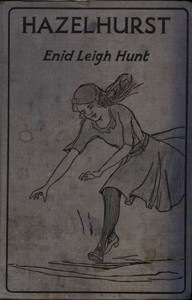
Hazelhurst
Language: en574 downloads on Project Gutenberg
Subjects
Public-domain ebook sourced from Project Gutenberg #55297.
Public-domain ebook
Language: en574 downloads on Project Gutenberg
Subjects
Public-domain ebook sourced from Project Gutenberg #55297.
The opening · free to read
The present generation of the Le Mesuriers were possessed of powerful lungs, the same being a heritage.
It is true that many of the great vaulted rooms and galleries of Hazelhurst, which had rung to the clear tones of the Le Mesurier voice for some three or four hundred years, were now so empty of furniture, so devoid of thick hangings and tapestries--the very floors being stripped bare of the covering natural to well-appointed floors--so denuded, in short, of everything wherein, and behind which, the rich quality of the Le Mesurier voice might lurk and muffle itself, to ring on thinned while suffering no loss of compass, that this might, in some measure, make explanation of the seemingly exceptional strength of their vocal capacity; nay, further, might exonerate them from all charge of exceptionality, but for the fact that as children the Le Mesuriers had shouted with precisely the same lusty vigour and resonance from the lap of luxury. For it was but seven years since that the feet of the five Le Mesurier boys, with the pair belonging to the one Le Mesurier girl, had stridden or trotted, according to their respective length of limb, over deep-piled carpets, from one magnificently furnished apartment to another. They had been seated in the great oak-panelled dining-room, at a table groaning under its weight of massive silver, to feast upon the daintiest fat of the land, tended by noiseless human machines in the Le Mesurier livery. So that if, when sitting deep and well covered in the lap of luxury, the Le Mesurier voice was acknowledgedly sonorous, it is unreasonable to suppose now that it was only seemingly so, under the condition of over-much empty space wherein to resound. Besides, if further proof be needed: five-and-twenty years ago, when the first of the five Le Mesurier boys was born, Doctor Dash, a most eminent authority from London, had remarked upon the voice, and the nurses had declared they had never heard anything like it. It was further agreed to be a very beautiful voice when not raised in grief; even then its beauty remained for the mother; and each new Le Mesurier baby commanded a most interested and attentive audience, the more flattering in their attendance that they came in the full cognisance that no gracious words were to be expected, but solely in the keenness of their desire to learn whether or not the newcomer was possessed of the widely appreciated and justly valued constituent of the Le Mesurier personality.
The sixth and last baby, a girl, in no wise shamed her family nor disappointed those who attended her first summons by any deterioration in lungs. The voice, in its infancy certainly, like the rest of her, was undeniably present, clear, authoritative, cultured, albeit softer-toned than her brothers', as was seemly in a girl.
This last-born Le Mesurier, last-born at least in the direct descent, if not of the generation, while being neither a disappointment nor a disgrace, was an immense surprise. No guard left the side of the white satin-hung cradle whilst she slept, nor the little silver tub wherein she splashed, nor the soft white carpet spread over a portion of the nursery floor whereon she took her exercise, on her back, kicking, ever and anon deeming it advisable to expand the famous lungs in cooings and trills and, on occasion, exerting more lustiness in other sounds, pertaining to babyhood. I repeat, no guard left her until relieved by one equally vigilant. But for the voice, she would, despite this fact, have created serious doubts in the minds of the respective members of her family, and all connected with it, as to whether some changeling was not usurping the cradle, the tub, and the exercise ground of the rightful Le Mesurier girl.
For the child had brown hair and eyes; and the skin, though exquisitely clear and delicate, was, of necessity, darker than that which went to constitute a well-ordered, self-respecting Le Mesurier.
In the first days of her life, therefore, in spite of the love that encompassed her, the child was held to be something of an alien. The pride in the lovely little creature that overflowed the mother's heart came rather timidly, rather deprecatingly, from her lips. None of her boys had presumed to be anything but fair, the most daring among them attaining to only light brown hair, and all looked upon the world with the traditional blue eyes. The case, however, was not unprecedented; and when this fact was ascertained, the family was free to recover its natural calm and to pursue the even tenor of its way, holding its head even higher than heretofore.
One day, as Helen Le Mesurier was exhibiting the little beauty to a host of admiring friends, with a wistful and slightly apologetic manner, in which attitude she vainly sought to veil her pride, Hubert, her husband, was struck with a sudden thought. Hastily quitting the room, unnoticed, he sped in some excitement to the picture-gallery, situate in the west wing of the great house. Too impatient to brook the delay of unbarring the heavy shutters, he seized and lighted a lamp, which he held at arm's length above his head, as he eagerly and swiftly scanned row upon row of dead and gone Le Mesuriers portrayed upon the walls. Everywhere fair hair, from light brown to gold, gleamed in the lamplight, straight-featured, broad-browed, the women dazzlingly fair of skin, the men square-chinned, and, for the most part, curly-headed--one and all blue-eyed.
But Hubert passed these by, for some vague memory had awakened within him. Surely his father had once shown him, as a child, the portrait of a dark-eyed girl, half in pride, half in apology. If his memory were not tricking him, such a portrait must be in existence. He made his way directly to the more secluded parts of the room. His diligence was soon rewarded, for there, within a corner niche, almost at his feet, he discovered the object of his search: a small portrait of a lovely little girl, scarcely above miniature size, surrounded by an oak frame. Her hair, of a nut-brown, waved and rippled to her waist, and a pair of wide brown eyes looked out, mischievously, upon the beholder; the wonderfully clear and delicate skin was warm of tone.
Setting down the lamp, Hubert, his fingers trembling with eagerness, unfastened the picture, and, turning it, read upon the back: "Hazel Le Mesurier, aged five years, 1671."
Thus it was that the Le Mesurier girl came to be named Hazel.
At five years of age a painting was made of her head and shoulders, in like pose, on the same sized canvas as that of her namesake, and, behold, the two faces, allowing for the dissimilarities of style arising from the difference of the schools of painting of so remote a period from those of the present time, were as like, one to the other, as two--hazelnuts!
When his daughter had attained to her ninth year, Hubert Le Mesurier fell ill and died, being then in the forty-fifth year of his age.
The twenty-and-odd years of his majority had been one hard struggle to redeem the heavily mortgaged estate inherited from a spendthrift father and grandfather. His endeavours ended in failure; he had speculated deeply for many years, keeping his fortunes, with few fluctuations, at the same dreary level. On his demise came the inevitable crash: the foreclosure of the mortgage. Other debts there were; so that, when Helen and her eldest boy, Guy, of some nineteen or twenty years, who, having the ordering of these things, had quieted and pacified even the loudest crying among their creditors, and were once more enabled to breathe freely, now that so heavy a burden as debt was removed from the delicate shoulders of the mother and the youthful ones of the son--so inapposite a load for either to bear--they found the great house a very barrack in its echoing bareness, being, indeed, divested of many things.
Heavy oak furniture, some dating from Queen Anne's time, covered in decent palls, was moved away in vans down the gloomy avenue of great trees, with funeral gait. Also much valuable plate and almost priceless china.
But the mourners who had sustained this loss were left rejoicing in that the portrait gallery, sacred to the Le Mesuriers, doubly sacred to Helen as her husband's dying trust, was left inviolate; and as the poor thing stood, surrounded by her five sons, in the huge marble-paved entrance hall, she exclaimed, tears of very thankfulness coursing down her cheeks:
"Why should we grieve while we have each other? While together we can protect what my Hubert, what your father held so dear."
Each Le Mesurier boy, in varied pose of heroic resolve, protested his loyalty and devotion to his father's memory, and to the honoured name of ancient lineage which he bore; and each Le Mesurier boy's heart beat strong and fast according to the stage of development in which his inherent pride of race had found expression and proportionally to the valorous and chivalric feeling that stirred in the depth of each affectionate Le Mesurier boy's nature toward his lady mother.
Hazel, with outspread skirts, gravely danced, twirled and pirouetted with light, quick feet in the background; but on hearing the tears in her mother's voice, with a little caressing cry she flew to Helen's side, flung her arms about her and, looking up into her face, cried:
"Mother, mother, don't forget that you have me"; and Helen, as she stroked the curly head, and looked into the upturned brown eyes, felt warm comfort glow at her heart, in that nought but death could wrest from her these six priceless treasures, her children.
The stables and carriage-house were emptied. Then came the disbandment of the company of servants. Many wept, and, refusing the wage due to them, took sorrowful leave of their mistress and the young masters whose infancy they had tended.
Two, however, there were who did not weep and who, on the almost indignantly named plea of having left their former beloved master and mistress, Helen's parents, for the express purpose of following the fortunes of Helen herself, on her marriage with Hubert Le Mesurier, stood their ground in the most literal sense, by obstinately declining to go. These two were Miles the butler and Martha Doidge, who, kitchenmaid in her early youth, at thirty--the age of her exodus with Helen--had been raised step by step till now, at fifty, the good woman had attained to the dignity of housekeeper at Hazelhurst.
"But my dear, faithful Martha," Mrs. Le Mesurier expostulated, "you forget: there will be no field for such services as yours. Most of the rooms will be closed and your cupboards will be empty. And you, Miles, your duties have been wrested from your hands."
Such arguments were vain. Martha Doidge established herself as cook and general factotum, managing, with the help of two young girls from the neighbouring hamlet, with great dexterity and order, the domestic affairs pertaining to the habitable part of Hazelhurst.
As for Miles, who was nigh upon sixty years, he did all that a faithful, hardworking servant might, indoors and out. Five o'clock in the morning would often find him gardening assiduously, polishing windows, or engaged in some such work, attired in a dilapidated old suit, which he called his "undress"; but nine o'clock would see him serving the simple breakfast with all the old dignity and with even added respect, arrayed, as became the butler of "high family," in all the glory of the fast-growing-shabby-and-shiny full dress of his vocation.
The book keeps going
Reading is free forever. Sign up and watch scenes appear while you read.



Scenes Storieta drew for other classics.
New illustrated classics
Once or twice a month: the latest books to get full character casts, scene art, and free comic editions. No account needed.