Public-domain ebook
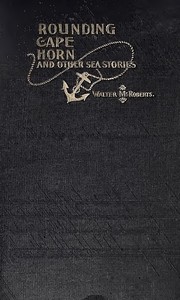
Rounding Cape Horn, and Other Sea Stories
Language: en376 downloads on Project Gutenberg
Subjects
In: Short Stories·Adventure·American Literature
Public-domain ebook sourced from Project Gutenberg #55408.
Public-domain ebook
Language: en376 downloads on Project Gutenberg
Subjects
In: Short Stories·Adventure·American Literature
Public-domain ebook sourced from Project Gutenberg #55408.
The opening · free to read
Entered according to Act of Congress, in the year 1894, BY WALTER MCROBERTS, In the office of the Librarian, at Washington.
. . . To . . . J. MURPHY, M.D. These Stories are Affectionately Dedicated By his friend,
THE AUTHOR.
INDEX.
PAGE The Life-Savers 7 Thanksgiving on the Dicky Bird 27 My Brazilian Adventure 57 Bringing in a Derelict 85 The Monomaniac 113 Crossing the Line 161 Missing 193 A Dangerous Cargo 211 The Parson’s Text 233 Rounding Cape Horn 241
THE LIFE-SAVERS.
Captain Litchfield, the keeper of the station, was in the observatory, whose windows commanded a view of the ocean and beach for a long distance in either direction. Occasionally he caught a glimpse of the lighthouse two miles to the north, but the cheerful beacon was rendered dim by the snow which filled the air, and was invisible much of the time. As a violent gust beat against the frosty panes and shook the stout building, the keeper thought of the Peruvian, and other good ships that had met their fate on the Massachusetts coast during just such nights as this. He had doubled the beach patrol and now strained his eyes in momentary expectation of seeing the signal to all that coast that a disaster had occurred. It is a thrilling time—waiting and watching to hear the news of a wreck that is certain to take place; striving to locate the doomed craft in the profound darkness out at sea; hoping against hope that some miracle may avert the impending catastrophe!
Just at dusk that evening, the men at Fourth Cliff Station (a few miles to the south) had sighted a large brig close-hauled and struggling northward under storm sails. The blinding storm had apparently prevented those on board from seeing how perilously near they were to land, but they soon after discovered their danger, for more sail was clapped on the vessel—much more than she could safely carry—and she tore through the water at a great rate, in a desperate endeavor to drive past the outlying rocks and shoals off Scituate and Cohasset. The attempt might have succeeded had it not been for the fearful leeway the craft was making, but it seemed as though every cable’s length she advanced brought her perceptibly nearer to the beach.
Night soon hid the brig from view, but the keeper’s experience told him that her fate was sealed, and he burned red rockets to warn the adjacent station to be on the lookout for the wreck which must soon take place. Thus it was that Captain Litchfield and his crew had been for several hours in momentary expectation of a summons to save human life. Half way between the two stations a rocky point jutted out into the water, and here it was that both keepers expected the brig to strike; but by an extraordinary exhibition of pluck and good seamanship, she cleared this danger.
As the minutes passed, the crowd of half-frozen villagers on the beach concluded that the vessel had managed to escape to the open sea, and began to realize that their limbs were cold and numb. The greater part betook themselves to their cottages; mayhap to listen to some harrowing tale of shipwreck and death from the lips of an octogenarian smoking his pipe in the chimney corner, while drift-wood snapped and blazed upon the fire, and the housewife heated over the remnants of a chowder with which to cheer the stomachs of the returned watchers, ere they sought the doubtful warmth of their bed rooms.
But the station crew redoubled their vigilance. They well knew the brig could not tack in that furious gale, and there was not room to wear, without taking ground;—
The signal!
A patrolman on the northern beat had suddenly ignited his Coston light—the red emblem which both tells the watchful keeper that a wreck has been sighted, and assures the crew of the unfortunate vessel that succor is at hand.
The surfmen and patrolmen passed the signal along the beats and hurried to the station, each to perform his allotted part in the work of rescue. The keeper burned a rocket to inform the Fourth Cliff crew. It was answered almost simultaneously by a distant patrolman with his handlight, and by a white rocket sent up from Fourth Cliff; the crew and apparatus from that point would soon be hurrying to the scene of the wreck.
The patrolman who gave the alarm had sighted the brig just before she went aground. She was then headed directly for the beach, bows on, her captain evidently realizing that escape was impossible, and that his only chance lay in getting the craft near the shore. The tide was high, and she had taken ground scarcely a quarter of a mile from the beach, and almost directly in front of the station. Immediately after striking, she had swung around broadside on, and now the dim outline of her canvas and rigging could be faintly distinguished through the storm.
In the station all was excitement and action, but there was no confusion. Within a few moments of the time the wreck had been sighted, the keeper issued the first order: “Open boat-room doors—man the beach-cart!”
Laden with the life-saving apparatus, and drawn by six surfmen, the cart was hauled out of the station and over the loose, yielding stones that lay between it and the ocean. The wide tires prevented the vehicle from sinking among the stones and rendered the task not difficult. The tremendous surf booming in made it impossible to launch the life-boat, and it was through the medium of the breeches buoy that the brig’s crew were to be rescued.
Bad news travels swiftly, and a rapidly increasing knot of men, boys, and even a few women was already assembled, many of whom offered assistance, while one or two did not hesitate to give advice. The keeper directed them to procure dry wood from the station and start a bonfire, which they did with alacrity, the flames soon crackling merrily.
The cart having been halted, the crew proceeded to unload it, and while Captain Litchfield placed the gun in position, the others buried the sand-anchor, prepared the shot-line box, set the crotch in the proper place, and performed other duties of importance. Everything about the stranded vessel was dark and silent. She displayed no mast-head lantern or any light whatever, her crew having probably taken to the rigging as soon as she struck to avoid being washed overboard. The fierce gale cut the faces and blinded the eyes of the life-savers when they attempted to look towards the wreck, but the keeper contrived to train the gun and raise it to the proper elevation for firing. All things being ready, he gave the lanyard a sharp pull. There was a report, a puff of smoke, and away sped the metal cylinder into the blackness, with the shot-line attached.
A few minutes passed, during which some of the crew had a chance to warm their numb fingers at the fire. The direction of the wind was favorable, and the keeper had strong hopes of getting that first line over the vessel. But there was no pull upon it—nothing to show that those on the wreck had seen it. And yet it had certainly fallen on the brig, for all attempts by those on shore to withdraw it were futile. Perhaps the unfortunate crew knew the line was on deck, but were unable to reach it without being washed away; perhaps they were too thoroughly chilled to make any exertion in their own behalf, although this seemed scarcely possible in view of the short time the vessel had been aground. But at any rate they failed to secure the line, and in trying to haul it back on shore it parted somewhere off in the darkness.
The operation had to be repeated, and a second shot was fired as quickly as the apparatus could be made ready. This was a complete failure, for it did not go over the brig at all. The third attempt promised to be crowned with success, for the line not only fell upon the vessel, but came within reach of the beleagured crew—a fact that was soon made apparent by a decided pull upon it. It was the first evidence of life upon the wreck, and sent a thrill through the breasts of the rescuers.
Number One had just bent the shot-line around the whip, and the keeper was about to signal the wreck to haul off, when the line again parted. This was a keen disappointment, for precious moments must be consumed in preparing the apparatus for another shot; and evidence was not lacking to show that the seas were making a clean breach over the wreck, sweeping her decks of everything movable. A small boat, one end in splinters, was flung upon the beach almost at the foot of the rescuers; in the edge of the surf was something that resembled a hen-coop; one of the villagers discovered a flight of steps and several planks a little to the right of the station; and other familiar objects were rapidly coming ashore.
The fourth shot proved successful, and after the brig’s crew secured the line, the whip was attached to it and those on the wreck hauled off until the whip was within their reach. The two surfmen tending the shore ends soon felt several pulls, which they interpreted as a signal that the tail-block had been made fast on the brig. Now the lee part of the whip was bent on to the hawser close to the tally-board, {17a} and while one man saw that it did not foul the hawser, others manned the weather whip and thus hauled the hawser off to the wreck. The breeches buoy block {17b} was next attached, after which operations were suspended until a signal should be received from the stranded vessel that the hawser had been made fast to one of the masts. The length of time that the brig’s crew required to perform this ordinarily simple act told the life-savers, as plainly as words could have done, how greatly they were exhausted by their two hours’ exposure to the bitter wind and icy spray. Their stiffened fingers at length gave the signal, and the station crew quickly hauled in the slack of the hawser. The crotch was now raised, which had the effect of elevating the hawser above the surface of the ocean sufficiently for the breeches buoy to travel upon it without touching the water. All was ready, and the keeper ordered: “Man lee whip—haul off!”
As the buoy slid easily along the hawser and vanished in the darkness towards the wreck, the pent-up feelings of the villagers burst forth. The boys yelled, shouted hurrahs, and danced like sprites about the fire, upon which they flung more drift-wood. Men and women pressed closer about the keeper and his assistants, shading their eyes with their hands, as they strove to follow the course of the buoy. Lips moved and limbs trembled, but as much from excitement as from cold.
At this juncture the Fourth Cliff crew arrived, having toiled for two hours through snow-drifts, and over loose stones, with their heavy apparatus. It had been found impossible to obtain horses in the neighborhood without great delay, and the men were thus compelled to set out without them. The major part of the work of rescue was already done, allowing the half-frozen crew time to warm themselves at the fire, where they held themselves in readiness to render instant service.
The signal from the brig having been given, Captain Litchfield commanded: “Man weather whip—haul ashore!” The men hauled in the whip with a will, while the villagers, eager to get a glimpse of the approaching buoy and its human freight, crowded about until the keeper was compelled to order them back.
The book keeps going
Reading is free forever. Sign up and watch scenes appear while you read.



Scenes Storieta drew for other classics.
New illustrated classics
Once or twice a month: the latest books to get full character casts, scene art, and free comic editions. No account needed.