The sea has always been the cradle of the English race, and over six hundred years ago an old chronicler wrote of our great sea tradition that “English ships visited every coast,” and that “English sailors excelled all others both in the arts of navigation and in fighting.” In this respect, the west of England has probably played a greater part in our maritime development than any other portion of the United Kingdom, and the names of her most famous seamen--Drake, Raleigh, and Hawkins among others--are now almost household words. There are, however, many other nautical celebrities among her sons, whose names deserve a more prominent place in our naval annals, and such an one is Captain Woodes Rogers. Not only does he rank as a splendid navigator and magnificent seaman, but he also filled an important rôle as a colonial administrator and governor, and was one of the pioneers in the development of our colonial empire. He is, indeed, one of the most picturesque and romantic figures of the first half of the eighteenth century, and his rescue and account of Alexander Selkirk’s privations on the uninhabited island of Juan Fernandez undoubtedly provided Defoe with materials for “Robinson Crusoe.” It is not too much to assume that had there been no Woodes Rogers, Defoe’s charming and immortal romance, which has delighted millions of readers, might never have been written.
Nevertheless, Rogers is rather an elusive personage, and the writer of the appreciative article on him in the “Dictionary of National Biography” was unable to glean any particulars of his birth, parentage, or marriage. Thanks to recent research it is now possible to supply some of these details. It is certain that his ancestors had been settled at the old seaport of Poole, Dorset, since the beginning of the sixteenth century, and among the mayors of Poole the name is prominent during the reign of Elizabeth. His great-grandfather, John Rogers of Poole, married Ann Woods, and from this union the name of Woods (afterwards spelt Woodes) Rogers was perpetuated for at least three generations, until the death of Woodes Rogers’s infant son in 1713. Woodes Rogers the second, the father of the subject of this book, was a sea-captain, born at Poole in 1650. He eventually removed to Bristol, where his family consisted of two daughters and two sons, the eldest of whom, Captain Woodes Rogers, was probably born there in 1679, but the precise date is uncertain.[1] All that we know is that Rogers, like his father, followed a sea career, and in the records of Bristol he is described as a “mariner,” from which we may assume that he was connected with the Merchant Venturers of that Port. He is probably to be identified with the Captain Rogers whom the famous navigator Captain William Dampier mentions in his “Voyages” published in 1699, as “my worthy friend,” and from whom he included three contributions in his book:[2] (i) A long letter on the African hippopotamus as he (Rogers) had seen them in the “River Natal”; (ii) A description of the trade winds from the Cape of Good Hope to the Red Sea; (iii) An account of “Natal in Africk as I received it from my ingenious friend Captain Rogers, who is lately gone to that place, and hath been there several times before.” This gives a lively account of the manners and customs of the natives, and the natural history of the country.
It is evident that at this period the Rogers family occupied a prominent position both in the industrial and social life of Bristol, and in January, 1705, the marriage of Woodes Rogers to the daughter of Admiral Sir William Whetstone, of Bristol, the Commander-in-Chief in the West Indies, took place at St. Mary Magdalen, Old Fish Street, London.[3] This marriage proved a stepping stone to Rogers’s future career, and in consequence of the union between these two old families Rogers was made a freeman of his native place, as the following entry from the city records, under the date of 16th March, 1704/5, shows:--“Woodes Rogers junior, Mariner, is admitted to the liberties of this city for that he married Sarah, daughter of Sir William Whettstone, knight.”[4]
We now come to the year 1708, in many respects the most eventful of Woodes Rogers’s career. He had long been impressed by the way in which both France and Spain monopolised the whole of the trade to the South Sea, and he determined, if possible, to remedy the evil. In 1698 M. de Beauchesne Gouin, a captain in the French navy, went there with two ships for the purpose of establishing trade, and an account of that voyage, in the shape of the commander’s “Journal” coming into the hands of Rogers, he eagerly perused and digested it. Elated by the success of Beauchesne Gouin, the French had carried on a vast trade ever since, and in one year, Rogers informs us, no less than seventeen warships and merchantmen had been sent to the South Sea. In the first year it was estimated that their ships carried home above 100 millions of dollars, or nearly 25 millions sterling, besides which they convoyed the Spanish galleons and treasure ships to and from the West Indies. By this means they had become absolute masters of all the valuable trade in those parts, and the riches thus amassed had enabled them, according to Rogers, “to carry on the war against most of the Potentates of Europe.”
This war, known as the War of the Spanish Succession, in which the forces of Great Britain, Austria, and Holland were allied against those of France and Spain, lasted from 1702 till 1713, and Rogers, as befitted a seaman of sound knowledge and wisdom, realised the truth of the old saying that he who commands the sea commands the trade. Not only did he wish to see the English take a share in this vast trade of the South Sea, but he realised that it would be a fitting opportunity to attack the enemies’ commerce there, and so by cutting off her resources it would help to shorten the war, and enrich his own country. To quote his own words “necessity has frequently put private men on noble takings.” This was indeed a noble undertaking, and in the belief that it was both necessary and profitable to undertake such an expedition, he drew up a scheme which he presented to his friends, the merchants of his native Bristol. The time was particularly opportune for such a venture, for an Act[5] had recently been passed by Parliament which marks a crucial and important point in the history of privateering. In this Act an effort was made to restore to privateering all the old spirit of adventure which permeated our sea story in the reign of Elizabeth. Previously the Crown had reserved to itself one fifth of all prizes taken by privateers; now the whole interest was transferred to the owner and crew. This Act marks the close of the period of decline, and the opening of a period of great activity. The Crown now sanctioned privateering solely for the benefit which it was hoped to derive from injury inflicted on the enemy.[6]
Under these circumstances it was only natural that the scheme which Rogers propounded should have been looked on in a most favourable light, and the expedition was duly financed and fitted out. Rogers dedicates his book to his “surviving owners,” and among them it is of particular interest to note the following:
Sir John Hawkins, Mayor of Bristol in 1701; Christopher Shuter, Mayor in 1711; James Hollidge, Mayor in 1709; Captain Freake and Thomas Clements, Sheriffs of Bristol; John Romsey, Town Clerk of Bristol, and Thomas Goldney, a leading Quaker of Bristol.[7] It will be seen from this that during the voyage (1708-11) the whole of the Corporation at one time or another were interested in the venture.
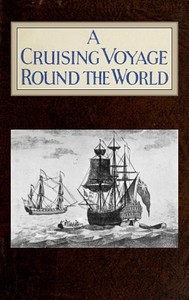
The money being forthcoming, two merchant ships, or “private Men of War” were fitted out. These were the Duke of 320 tons, with a crew of 117 men and mounting 30 guns, and the Dutchess, a slightly smaller ship of 260 tons, with a crew of 108 men, and 26 guns. How these two small ships (the equivalent of a 6th-rate ship of the Royal Navy of the day, with a keel length of about 80 ft. and a breadth of about 25 ft.) helped to make history, the readers of Woodes Rogers’s “Cruising Voyage” will be able to judge. Each ship had a commission from the Lord High Admiral to wage war against the French and the Spaniards, and in order that those who sailed with him should not be forgotten Rogers has left us the names of all the officers in the two ships, and among them may be noted the following:--Captain Stephen Courtney, Commander of the Dutchess, “a man of birth, fortune, and of very amiable qualities,” who contributed to the expense of the voyage; Thomas Dover, second Captain of the Duke, President of the Council, and Captain of the Marines, whose appointment appears to have been due to his financial interest in the voyage. By profession “a Doctor of Physick,” he is remembered to posterity as the inventor of “Dover’s Powder”[8]; Captain Edward Cooke,[9] who was second to Captain Courtney, had been twice taken prisoner by the French.
The most noteworthy was undoubtedly Captain William Dampier,[10] then in his fifty-sixth year, who sailed under Rogers as “Pilot for the South Seas.” The choice was a wise one, for probably no man living had a wider experience in those waters, having been there three times before, and twice round the world. To the Spaniards his name was second only to that of Drake, a formidable asset in a voyage of this kind. That he should have consented to serve under a much younger man is sufficient testimony of the regard and esteem in which he held Woodes Rogers.
Among the officers of the Duke were three lieutenants and three mates. Of the latter, John Ballet, third mate, was designated surgeon if occasion arose, he having been “Captain Dampier’s Doctor in his last unfortunate voyage round the world.” This department was further strengthened by the inclusion of Dover’s kinsman, Samuel Hopkins, an Apothecary, who was to act as Dover’s lieutenant “if we landed a party.” In addition two young lawyers, George Underhill and John Parker, were borne upon the ship’s books, “designed to act as midshipmen.” Among the officers of the Dutchess under Captain Courtney, was Rogers’s young brother, John, who sailed as second-lieutenant.
The instructions given by the owners were embodied in a document, which Rogers solemnly calls the “Constitution,” which was signed and sealed at Bristol on the 14th of July, 1708. This document not only stipulated the exact powers of the various officers, but laid down a definite rule that “all attempts, attacks, and designs upon the enemy” should at first be debated by a general council of the officers, and the same applied to all “discontents, differences, or misbehaviour.” The wisdom of this procedure was apparent from the first, and Rogers states that without this method “we could never have performed the voyage.”
And so, within three weeks of the signing of the Constitution, Rogers and his merry men sailed from the King Road, near Bristol, on August the 2nd, on what proved to be one of the most successful voyages that ever left the shores of Great Britain. His crew consisted for the most part of “Tinkers, Taylors, Hay-makers, Pedlers, Fiddlers, etc.,” not forgetting John Finch “late wholesale oilman of London,” as ship’s steward, and the ship’s mascot, a fine specimen of an English bull-dog. Though the composition of the crew was Gilbertian in the extreme, its spirit, as we shall see, was in the main, Elizabethan.