Public-domain ebook
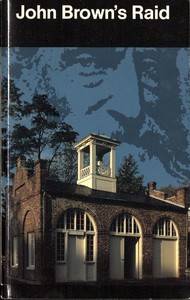
John Brown's Raid
by United States. National Park Service
Language: en905 downloads on Project Gutenberg
Subjects
In: History - American·History - Warfare
Public-domain ebook sourced from Project Gutenberg #56106.
Public-domain ebook
by United States. National Park Service
Language: en905 downloads on Project Gutenberg
Subjects
In: History - American·History - Warfare
Public-domain ebook sourced from Project Gutenberg #56106.
The opening · free to read
National Park Service History Series Office of Publications, National Park Service, U.S. Department of the Interior, Washington, D.C.
John Brown’s Raid 1 The Road to Harpers Ferry 2 Rendezvous for Revolution 12 To Free the Slaves 25 The Tiger Caged 35 The Trap is Sprung 43 John Brown’s Body 49 Epilogue 61 Appendix: The Capture of John Brown 65 Selected Reading List 70
The text of this booklet was prepared by the staff of the Office of Publications and is based on National Park Service reports by William C. Everhart and Arthur L. Sullivan.
National Park Handbooks are published to support the National Park Service’s management programs and to promote understanding and enjoyment of the more than 350 National Park System sites, which represent important examples of our country’s natural and cultural inheritance. Each handbook is intended to be informative reading and a useful guide before, during, and after a park visit. More than 100 titles are in print. They are sold at parks and can be purchased by mail from the Superintendent of Documents, U.S. Government Printing Office, Washington, DC 20402.
Harpers Ferry National Historical Park is administered by the National Park Service, US. Department of the Interior. A superintendent, whose address is Harpers Ferry, WV 25425, is in immediate charge.
Library of Congress Cataloging in Publication Data
United States National Park Service. John Brown’s raid. National Park Service history series Supt. of Docs. no.: 129-2: J61/4. 1. Harpers Ferry. W. Va. John Brown Raid. 1859. I. Title. II. Series: United States. National Park Service. History series. E451.U58 1974 973.7’116 73-600184
“_All through the conflict, up and down Marched Uncle Tom and Old John Brown, One ghost, one form ideal; And which was false and which was true, And which was mightier of the two, The wisest sibyl never knew. For both alike were real._” Oliver Wendell Holmes June 14, 1882
Through the gloom of the night, Sunday, October 16, 1859, a small band of men tramped silently behind a horse-drawn wagon down a winding Maryland road leading to Harpers Ferry, Va. From the shoulder of each man hung loosely a Sharps rifle, hidden by long gray shawls that protected the ghostly figures against the chilling air of approaching winter. A slight drizzle of rain veiled the towering Blue Ridge Mountains with an eerie mist. Not a sound broke the stillness, save the tramping feet and the creaking wagon.
Side by side marched lawyer and farmer, escaped convict and pious Quaker, Spiritualist and ex-slave, joined in common cause by a hatred of slavery. Some had received their baptism of fire in “Bleeding Kansas,” where a bitter 5-year war between pro-slavery and anti-slavery factions left death and destruction in its wake and foreshadowed a larger conflict to come. Most were students of guerrilla tactics; all were willing to die to free the slaves.
This strange little force, five Negroes and 14 whites, was the “Provisional Army of the United States,” about to launch a fantastic scheme to rid the country of its “peculiar institution” once and for all, a scheme conjured up by the fierce-eyed, bearded man seated on the wagon—“Commander in Chief” John Brown. He was the planner, the organizer, the driving force, the reason why these men were trudging down this rough Maryland road to an uncertain fate.
This man who would electrify the Nation and bring it closer to civil war by his audacious attack on slavery was born at Torrington, Conn., on May 9, 1800, the son of Owen and Ruth Mills Brown. The Browns were a simple, frugal, and hard-working family. They had a deep and abiding interest in religion, and from earliest childhood John Brown was taught the value of strong religious habits. He was required, along with his brothers and sisters, to participate in daily Bible reading and prayer sessions. “Fear God & keep his commandments” was his father’s constant admonition. It was also his father who taught him to view the enslavement of Negroes as a sin against God.
In 1805 the Browns, like many other families of the period, moved west to Ohio. There, in the little settlement of Hudson, about 25 miles south of Cleveland, John grew to manhood. He received little formal education; most of what he learned came from what he afterwards called the “School of adversity.” He cared little for studies, preferring life in the open. Consistently choosing the “hardest & roughest” kinds of play because they afforded him “almost the only compensation for the confinement & restraints of school,” he was extremely proud of his ability to “wrestle, & Snow ball, & run, & jump, & knock off old seedy Wool hats.”
When John was 8 years old his mother died, and for awhile he believed that he would never recover from so “complete & permanent” a loss. His father remarried, but John never accepted his stepmother emotionally and “continued to pine after his own Mother for years.”
An indifferent student, and “not ... much of a schollar” anyway, John quit school and went to work at his father’s tannery. Owen Brown, who had been a tanner and a shoemaker before moving to Hudson, had already taught his son the art of dressing leather from “Squirel, Raccoon, Cat, Wolf, or Dog Skins,” and John soon displayed remarkable ability in the trade. When the War of 1812 broke out, Owen contracted to supply beef to the American forces in Michigan. He gave John the task of rounding up wild steers and other cattle in the woods and then driving them, all by himself, to army posts more than 100 miles away. Contact with the soldiers and their profanity and lack of discipline so disgusted young Brown that he later resolved to pay fines rather than take part in the militia drills required of all Hudson males of a certain age.
It was during the war, or so Brown later claimed, that he first came to understand what his father meant about the evil of slavery. He had just completed one of his cattle drives and was staying with a “very gentlemanly landlord” who owned a slave about the same age as John. The Negro boy was “badly clothed, poorly fed ... & beaten before his eyes with Iron Shovels or any other thing that came first to hand.” Outraged by this, John returned home “a most determined Abolitionist” swearing “Eternal war with Slavery.”
In 1816 John joined the Congregational Church in Hudson and soon developed a strong interest in becoming a minister. For a while he attended a divinity school in Plainfield, Mass., then transferred to another school in Litchfield, Conn. At that time Litchfield was a center of abolitionist sentiment; it was also the birthplace of Harriet Beecher Stowe, whose book Uncle Tom’s Cabin, published in 1852, would stir passions North and South, win international support for the anti-slavery cause, and help to bring on civil war in 1861. How much of Litchfield’s abolitionist atmosphere young Brown absorbed is not known. A shortage of funds and an inflammation of the eyes forced him to return to Ohio in the summer of 1817. His dream of becoming a minister was forever shattered, but he never lost his religious fervor.
When he was 20 years old, “led by his own inclination & prompted also by his Father,” Brown married Dianthe Lusk, a “remarkably plain” and pious girl a year younger than himself. She died 12 years later, in August 1832, following the birth of their seventh child. Brown remarried within a year, and fathered 13 children by his second wife, Mary Ann Day. In a never-ending struggle to feed and clothe his growing family, Brown drifted through Ohio, Pennsylvania, New York, Connecticut, and Massachusetts plying many trades. He worked at tanning, surveying, and farming; at times he was shepherd, cattleman, wool merchant, and postmaster; for a while he bred race horses and speculated in real estate. Uniformly unsuccessful in these ventures, Brown’s debts mounted, and he was barely able to keep his large family from starvation.
Despite his frequent business reversals and his strenuous and consuming efforts to support his family, Brown never abandoned his intense desire to free enslaved Negroes from bondage. His first opportunity to strike a blow at the institution he hated so much came in Kansas, where, following the passage of the Kansas-Nebraska Act in 1854, pro-slavery “Border Ruffians” clashed brutally with anti-slavery “Jayhawkers” over the extension of slavery to Kansas and Nebraska Territories.
Five of Brown’s sons—Owen, Jason, Frederick, Salmon, and John, Jr.—had emigrated to Kansas and joined the free-soil cause. When they appealed to their father for help in May 1855, Brown, another son Oliver, and son-in-law Henry Thompson rushed to Kansas and plunged into the conflict with a fury. As captain of the “Liberty Guards,” a quasi-militia company that he himself formed, Brown shortly gained national notoriety as a bold and ruthless leader.
For the next several years, murders, bushwhackings, lynchings, and burnings were common occurrences, and the territory was aptly named “Bleeding Kansas.” Atrocity matched atrocity. When pro-slavery forces sacked and burned the town of Lawrence in May 1856, Brown was outraged. Proclaiming himself an instrument of God’s will, he, with four of his sons and three others, deliberately and brutally murdered five pro-slavery men along the banks of Pottawatomie Creek. In the months that followed, Brown terrorized the Missouri-Kansas border by a series of bloody guerrilla attacks that brought him to the attention of the Nation’s abolitionist faction. In late August 1856, about a month before he left Kansas, Brown and his men clashed with pro-slavery Missourians at the small settlement of Osawatomie. That action earned him the nickname “Osawatomie” and cost him the life of his son Frederick. It also hardened his stand against slavery. “I have only a short time to live—only one death to die,” he said, “and I will die fighting for this cause. There will be no more peace in this land until slavery is done for. I will give them something else to do than to extend slave territory. I will carry this war into Africa.”
Three of John Brown’s most trusted lieutenants in the Harpers Ferry raid:
The attack on Harpers Ferry was the culmination of a plan Brown had evolved many years before he went to Kansas. By the early 1850’s he had come to believe that a location within the slave States should be selected where raids on slave plantations could be easily carried out and the freed bondsmen sent to safety in the North. Convinced that mountains throughout history had enabled the few to defend themselves against the many, he believed that even against regular Army troops a small force operating from a mountain stronghold could hold out indefinitely and provide sanctuary for freed slaves, who would be supplied with arms to fight for their liberty. Brown had decided, from studying European fortifications and military operations, that somewhere along the Allegheny Mountain chain a small force could achieve those objectives.
In the autumn of 1857, on his second trip to Kansas, Brown began recruiting his force for the projected raid. Among the first to join him were three young veterans of the Kansas fighting: John E. Cook, Aaron D. Stevens, and John H. Kagi. Each would play an important role in the attack on Harpers Ferry.
The book keeps going
Reading is free forever. Sign up and watch scenes appear while you read.



Scenes Storieta drew for other classics.
New illustrated classics
Once or twice a month: the latest books to get full character casts, scene art, and free comic editions. No account needed.