Public-domain ebook
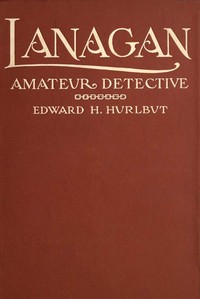
Lanagan, Amateur Detective
Language: en381 downloads on Project Gutenberg
Subjects
In: Crime, Thrillers and Mystery·Novels·American Literature
Public-domain ebook sourced from Project Gutenberg #56720.
Public-domain ebook
Language: en381 downloads on Project Gutenberg
Subjects
In: Crime, Thrillers and Mystery·Novels·American Literature
Public-domain ebook sourced from Project Gutenberg #56720.
The opening · free to read
Jack Lanagan of the San Francisco Enquirer was conceded to have “arrived” as the premier police reporter of San Francisco. This honour was his not solely through a series of brilliant newspaper feats in his especial field, but as well by reason of an entente that permitted him to call half the patrolmen on the force by their given names; enjoy the confidences of detective sergeants, a close-mouthed brotherhood; dine tête-à-tête in private at French restaurants with well-groomed police captains on canvasback or quail out of season, and sit nonchalantly on a corner of the chief’s desk and absent-mindedly smoke up the chief’s two-bit cigars.
It was an intimacy that carried much of the lore of the force with it: that vital knowledge not of books. Bill Dougherty on the “pawnbroker detail” knew scarcely more “fences” than did Lanagan; Charley Hartley, who handled the bunco detail, found himself nettled now and then when Lanagan would pick him up casually at the ferry building and point out some “worker” among the incoming rustics whom Hartley had not “made,” and debonair Harry O’Brien, who spent his time among the banks, was more than once rudely jarred when Lanagan would slip over on the front page of the Enquirer a defalcation that had been engaging O’Brien’s attention for a week.
So it went with Lanagan; from the “bell hops” of big hotels, the bar boys of clubs, down to the coldest-blooded unpenned felon of the Barbary Coast who sold impossible whiskey with one hand and wielded a blackjack with the other, the police sources were his.
Consequently Lanagan, having “arrived,” may be accorded a few more liberties than the average reporter and permitted to spend a little more time than they in poker in the back room at Fogarty’s, hard by the Hall of Justice. Here, when times were dull, he could drift occasionally to fraternise with a “shyster,” those buzzards of the police courts and the city prisons who served Fogarty; or with one of the police court prosecuting attorneys affiliated with the Fogarty political machine, for Fogarty was popularly credited with having at least two and possibly three of the police judges in his vest pocket. Or he could rattle the dice with a police judge himself and get the “inside” on a closed-door hearing or the latest complaint on the secret file; and he could keep in touch with the “plain-clothes” men who dropped in to pass the time of day with Fogarty; or with the patrolmen coming on and off watch, who reported to Fogarty as regularly as they donned and doffed their belts and helmets things they thought Fogarty should know.
In this fashion does the police reporter best serve his paper; for it is by such unholy contact that he keeps in touch with the circles within circles of the police department of a great city. Some he handles by fear, some he wins by favour, some he wheedles. In the end, if he be a brother post-graduate, the grist of the headquarters’ mill is his.
Of the shysters there is Horace Lathrop, for instance, who boasts a Harvard degree when he is drunk--never when he is sober.
Horace is sitting with Lanagan at Fogarty’s rear room table, while Lanagan sips moodily at his drink.
Larry the Rat, runner for the shysters, pasty of face, flat of forehead as of chin, with an upper lip whose malformation suggests unpleasantly the rodent whose name he bears, shuffles in and bespeaks Lathrop at length. That worthy straightens up, glances at Lanagan, and then remarks:
“Casey has just brought in a moll,” and arises, with elaborate unconcern, to leave the room.
“Well,” drawled Lanagan, “what else?”
“Nothing. That’s all I know. Going to try to get the case now, whatever it is.”
“Is that all you told him, Larry?” asked Lanagan. The Rat mumbled unintelligibly and shuffled away.
“The Rat’s answered after his breed,” said Lanagan. “He says no, it is not. Now, Horace--pardon me, Barrister Lathrop--kick through. You know I’ve got to deliver a story to my paper to-day. Come on.”
Lanagan never wasted words with Lathrop. There were a few trivialities that he “had” on that individual. But Lathrop balked.
“Look here, Lanagan, all I got’s her name and address. It isn’t square. She may have a roll as long as your arm. You print this story, the newspaper men go at her for interviews, tip her off about me, she gets a regular lawyer, and where do I come off? You fellows are always crabbing our game. I gave you that shoplifter story a week ago and you played it for a column. You know you did, Jack; now you know you did.”
Lathrop had been whining. Now he stiffened.
“I ain’t going to,” defiantly; “I’m tired o’ being bullied by you. Aw, say now, Jack, it’s a big case. And I got a wife and kids to look out for”--which was a fact--“and here you come taking the bread and butter out of their mouths. It ain’t square, Jack; you know it ain’t.”
All morals to all men, reflected Lanagan, and laughed lazily, pulling a copy of the Enquirer across the table.
“See her, Horace? Right on this page--page one, column two, right here, with your name in big black-face letters--a little story of about one-third of a column on that $750 touch-off on that Oroville deacon, who went astray for the first time of his life and was pinched as a drunk--to be fleeced by you and your precious band. There isn’t any way of getting his money back, or proving a case against you or the two cops who cut the roll with you and Fogarty. I didn’t print the story, but I’ve got the facts pretty straight; and it goes right here--right in this nice, conspicuous place for the grand jury to see and for that wife and those ‘kids’ to see also, who, singular as it may sound, actually don’t know what particular brand of a ‘lawyer’ you are. Get all that?”
Lathrop “got” it.
Lanagan was then told that the detinue cells held a young woman of remarkable beauty, Miss Grace Turner, taken from a family rooming house on O’Farrell Street. Also that through Lathrop word of her arrest was to be taken to her brother there. Lathrop--or Larry the Rat, both being cogs in the same machine--had come by the information by the underground wire that runs from every city prison to the bail-bond operators and their shysters without.
Fogarty was the bail-bond chief, and possibly one of the plain-clothes men who just now rested his elbow upon the bar may have passed that name and address to Larry the Rat.
The “detinue” cases are those on the secret book at headquarters, that stable police violation of Magna Charta; the detinue cases, therefore, become the focus of the police reporter’s activity.
“And incidentally, Horace, you stay away from 1153A O’Farrell Street until I get through,” was Lanagan’s final command.
“But what about Fogarty?” whined the shyster. “He must know by this time I got the case. You know what he could do to me if he wanted to, Jack.”
“Yes, and I know what I could do to him if I wanted to, and he knows it, too,” snapped Lanagan. “Leave him to me.”
“I’m a friend of Miss Turner’s,” he said as the landlady opened the door at 1153A O’Farrell. “I wish to speak with her brother.”
“He’ll be glad to see you. He has been worrying. You ain’t another one of them detectives? I didn’t tell him, though. He was asleep and the doctor said he shouldn’t be worried just now. It might be fatal. What did they do with the poor, dear girl?”
“Merely holding her for a few hours. What was the trouble?”
“Giving a bad check to the druggist for medicine. She did the same thing at the grocer’s. It’s a dirty trick, I say, to arrest the poor thing. Why, the grocer’s bill was only a few dollars. They don’t eat enough to keep my canary. The man eats mostly almonds. Something wrong with his stomach, and that seems to be all he can eat. Funny, ain’t it?”
The garrulous woman led Lanagan to a doorway in the rear. He knocked and, in response to a feeble voice, entered.
Propped up with two pillows was a young man whose wasted features were bright with a hectic flush; whose arms, hanging loosely from his gown, were shrunk to the bone and sinews. The eyes were grey, steady, and assured; so much so that Lanagan half halted on the threshold as he felt the response in his own sensitive brain to the personality that flashed to him through those eyes. A man of mental power, thought Lanagan; of swift decision and of iron will.
The voice was little more than a gasp, but each word by effort was clearly uttered.
“You’re an upper office man?”
“No. I am a newspaper man. Why did you ask that?”
“Because they were here and took my sister for overdrawing what little funds we had in bank.”
There was concentrated fury in his weak voice.
“Still I am curious to know how you knew they were plain-clothes men that took her?”
“How? A newspaper man ask how? Because they walk like a ton of pig lead. And didn’t that cursed grocer threaten to have her arrested for a paltry four or five dollars? I heard her scream when they took her. This”--more quietly, with a slight shrug and comprehensive gesture to indicate his wasted form and flushed cheeks--“this particular complaint serves to strengthen our outer faculties for a while at least, even if it is at the expense of our inner ones.”
“I take it your sister is bringing you from the interior to the South?”
The book keeps going
Reading is free forever. Sign up and watch scenes appear while you read.



Scenes Storieta drew for other classics.
New illustrated classics
Once or twice a month: the latest books to get full character casts, scene art, and free comic editions. No account needed.