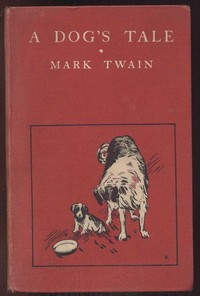
The children called him Pierrot from the first. That is, of course, no proper name for a Flemish dog, but you see Mère Marie had come from Dinant, where almost everybody speaks French, and she had been taught French in school. Besides, she had French friends in Brussels and was very fond of everything French and warm and southern. So she had often told the children stories about Harlequin and Columbine and Pierrot; and when they saw what a comical, clumsy little fellow the puppy was, and how much he looked as though he wore big, baggy breeches, Henri called him “drôle Pierrot,” and wee Lisa clapped her fat little hands and laughed shrilly.
Jean Van Huyk had brought Pierrot home in his arms one spring evening and had tumbled him out upon the floor of the cottage to startle Henri and Lisa. But they refused to be frightened, for Henri was learning the rules of courage and Lisa thought at first that the puppy was a baby lamb. Straightway she fell upon him and sought to hug him to her plump little bosom, but Pierrot only bit her ear and made her squeal with delight, and then wriggled out of her arms and hurriedly waddled over to Henri, who rolled him over on his back and tickled his round little stomach. Whereat Père Jean roared loudly and old Gran’père cackled from his chair.
Then shaggy old Luppe, who had pulled Mère Marie’s milk-cart for seven years, yawned tremendously, dragged himself laboriously to his feet, stalked over from the doorway and sniffed at Pierrot, and then turned back with a look of dignified boredom. By this ceremony Pierrot was constituted an accepted member of the household.
It was Luppe’s advancing years, in fact, that explained the coming of Pierrot. It was sad to think of the day when the old fellow would no longer be able to trot into town with the milk and cheese, but Providence has set narrow boundaries to a dog’s life, and Mère Marie would soon need a younger and stronger steed.
So one Sunday morning Père Jean had bade Henri dress himself in his best clothes, for they were to drive into Brussels to the dog market, and half the world would be there. The Belgians do not think it strange to go to market on Sunday, for it is an entirely different kind of market from those conducted on week days, and they put on their gay clothes and make a holiday of it.
When Père Jean and Henri arrived, the city was already alive with people and they made a pleasant sight in the bright sunshine. Père Jean found a place to tie his horse and then they hastened directly to the Grande Place. This was a great paved square with imposing buildings on all sides such as the Hôtel de Ville and the Maison du Roi. There were a great many people in the square and they were all very lively and busy and jolly.
One side of the square looked like a great garden, for here was the flower market, and the florists vied with each other in their displays of plants and cut flowers. It was very beautiful, also it smelled wonderfully sweet, so that Henri fell under a sort of enchantment and Père Jean had to drag him away.
On another side of the square were parrots and cockatoos and canaries and birds of all kinds in little wooden cages. Some of the parrots were making comical efforts to talk like people, the song birds were whistling and trilling, and all was gay and colourful, which delighted Henri. But they had a bird of their own at home, and it was not birds that Père Jean had come to see.
At length they came to the dog market. Four or five hundred dogs of all ages and sizes and colours lay dozing or stood pulling at their leashes. There were big, strong dogs like Luppe; alert black Schipperkes; Brussels Griffons, with faces like those of little bearded old men; Belgian sheep dogs with erect, pointed ears, short-haired brown fellows and beautiful long-haired black ones; all sorts of dogs from Great Danes to ridiculous little Dachshunds. There were capable-looking work dogs; mournful-eyed mothers; swaggering young bloods proclaiming loudly their desire for battle; awkward, blundering, adorable four-month-olds, and fuzzy little babies that wabbled on their sprawling legs as though made of jelly. Henri saw a dozen dogs that would have suited him perfectly, but Père Jean was apparently more difficult to please, for he went from group to group without making a selection. At last he told Henri that he could not find the sort of dog he wanted and that it was better to go home without any than take one that would not turn out well.
Henri looked down the row of assuredly desirable dogs and his lip began to tremble a little. So Père Jean, instead of taking Henri home at once, bought some cakes for their dinner and told him he should remain to hear the grand concert in the afternoon, which pleased Henri so much that he forgot his disappointment.
At noon there was a great hubbub and bustle in the Grande Place, for the market was over and all the vendors must be out of there at once. In the afternoon the Regimental Band came in its wonderful uniforms and played stirring music in the kiosk until the shadows began to lengthen and Henri grew very weary.
It had been a wonderful day and Henri fell asleep that night with gay pictures dancing before his eyes and music sounding in his ears. This was happiness enough for little Henri, but Père Jean had not found the dog he was after. He knew the value of the right kind of dog and he would have nothing else.
So Père Jean made a journey one day to fat Auguste Naets, the butcher of Vilvorde, who was famous for the dogs he bred. Auguste bragged much about these dogs. Their blood, he said, ran away back into the Middle Ages to the boarhounds of the Dukes of Brabant. Matins, he called them; and it is true that for a hundred years, when other men had grown careless of their breeding, Auguste’s father and grandfather and great-grandfather had kept the breed pure, so that when the National Federation for the Breeding of Draft Dogs was founded a dozen years ago they deemed the Naets strain worthy of a certificate of merit with five red seals attached, which Auguste proudly had framed and hung in his shop.
Of the hundred thousand or more dogs that are used in Belgium as chiens de trait, none were finer than those which Père Jean found in the kennels of Auguste Naets. They were large dogs, with something of the look of the St. Bernard about them, but with smaller heads and more lithe and rangy bodies. In colour they were all sorts of combinations of black, white, and tawny; Auguste held that colour meant nothing to a cart-dog. Their ears were long and drooping and their tails were docked when they were puppies to avoid interference with the harness. They would have been handsomer with long tails, but Auguste was breeding for utility rather than for beauty. There was a time when the dog-owners of Belgium cropped their dogs’ ears to make them stand erect and pointed, but it was found that during their steady work outdoors in winter rain and snow beat into their ears and caused sores and deafness, so that the practice of depriving them of their natural protection was abandoned.
Auguste’s dogs, like others of their breed, were tireless and powerful. They could easily draw a load of 400 pounds, though 200 pounds was usually considered a one-dog load. Three dogs hitched to a 400-pound load could run with it at a steady, rapid trot for miles without apparent weariness.
Père Jean loved dogs, and he could have stayed all day with Auguste in his kennels, but to Auguste business was business, and he at length persuaded Père Jean to pay a good price for a likely looking beggar from the latest litter. That was Pierrot.
“He has the big feet and the large bones,” said Auguste. “That means he will grow large and strong and live for many years, like my Jacques,” and he pointed to the superb sire that headed his kennels.
So Père Jean took the fuzzy, awkward little puppy back to the little tile-roofed cottage he had built for his bride ten years before, and where Henri and wee Lisa had been born.
They were sober, industrious, thrifty folk, the Van Huyks, and prosperous among their neighbours. In Belgium a peasant is always a peasant, and there is a wide gulf fixed between the rich and the poor, but Père Jean owned his little dairy farm six miles out from Brussels on the Waterloo Road, beyond the Forest of Soignies, and they were very comfortable and happy.
It was a pleasant country, with green pastures and meadows, nodding wheat and rye fields, and trim, orderly market gardens on every hand, and with straight, smooth, hard roads all leading to town between tall rows of poplar trees. Père Jean tilled the little farm and he and Gran’père milked the cows and made the cheese, while Mère Marie took the milk in to Brussels every morning in big brass and copper cans which she kept very clean and shiny.
Farther back from the city, where the farms were poorer and the market not so near, the peasants wore rough smocks and clumsy wooden shoes and lived mostly on coarse rye bread and bacon and potatoes, with milk and rice and dried herring on Fridays. But Père Jean and Mère Marie always wore leather shoes when they went to town, and only the children clumped around in yellow sabots to save their Sunday shoes, and Gran’père because he preferred them.
Mère Marie was a plump, fresh-faced young woman with a beautiful, heavy crown of golden brown hair which was always neatly dressed, no matter how much of a hurry she was in. She went bareheaded, winter and summer, except when it rained; then she drew her shawl over her head. She wore a trim short skirt and a clean white apron.
On Sundays the family went regularly to mass, dressed in their finest clothes, and then feasted on hare and eggs and butter and cheese and many kinds of vegetables. In the afternoon Père Jean took his cornet and went to practise with the band, and sometimes he took Henri with him. It was a wonderful band, for all Belgians love to make music, and little Henri could hardly wait for the time when his father would teach him to play, too. But when the band played the martial music, ah, then little Henri’s bosom swelled almost to bursting, and he determined to be a soldier when he grew up. That would be grand, indeed! But Père Jean only smiled and told him that being a soldier wasn’t all bands and fine uniforms.
Some of the peasants used dogs to harrow and cultivate their vegetable gardens, but Père Jean owned a big black horse named Medard, so that Luppe’s only duty was to draw the milk-cart and to bark at night if strangers approached. When Pierrot grew old enough Luppe taught him to wake up and bark at strange noises and to keep quiet at other times, for a good watchdog does not waste his breath on the moon. When the huntsmen rode by with their chiens de chasse Pierrot would become very much excited and wanted to follow them, but Luppe explained to him that their vocation was a very foolish and frivolous one, and beneath the dignity of a chien de trait, though Luppe himself would often lose his head over the warm scent of a hare, or even of a rat or mole.