Public-domain ebook
Roadtown
Language: en410 downloads on Project Gutenberg
Subjects
Public-domain ebook sourced from Project Gutenberg #58964.
Public-domain ebook
Language: en410 downloads on Project Gutenberg
Subjects
Public-domain ebook sourced from Project Gutenberg #58964.
The opening · free to read
Nineveh, Babylon, Rome, London, New York,--all cities from the twilight of the past to the high noon of the present have been constructed on one plan, which is no plan at all. Like Topsy, they jest growed, with no further aims in view than to huddle together for the sake of companionship and self-protection against enemies. A map of the haphazard streets straying crookedly through them looked like cracks in an earthenware dish. The siege-walls which until recently surrounded them emphasized the prisoner-like existence of their inhabitants. Noise, dirt, disease, suffocation and confusion, crime--these spirits of evil took up their abode in the midst of them, never to be dislodged, and students of political economy, hygiene, decency and morality wasted eloquence and logic in showing how bad it all was, and in suggesting picayune and transient remedies. The true Moses, with the effectual remedy, which will lead us out of our long Egyptian bondage, arrives only to-day, and if we will but follow the teachings of the gospel contained in the ensuing pages, we may be free, healthy, wealthy and happy forevermore.
This Moses of ours, contemporarily incarnated as Mr. Chambless, arrives at the psychological moment when we are all ready for him. The Jeremiahs of rotten conditions and the Cassandras of impending woe had prepared us for the necessity of change, and the Edisons, Teslas and Lodges of electrical and other inventions had supplied the means for it. The great riddle was ripe for the guessing: and Mr. Chambless has guessed it.
Transportation, distribution, and the middle-man,--what a waste of time, energy, economy and common sense are involved in our present handling of these elements? The domestic servant problem,--how sorry and slipshod a solution of it are the hotel and boarding house of to-day? The elimination of the open country from our children’s training and from our own opportunities for peace and sanity,--what a paltry and impotent substitute for it is the hybrid suburb? Personal independence, social harmony, full value for work done, adequate leisure after toil,--does not this sound like the Millennium? Read Mr. Chambless, O ye captives of Civilization, and burst your shackles!
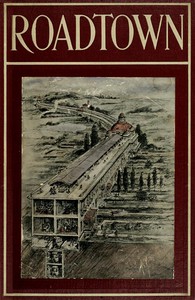
He takes a map and a ruler and draws you a straight line from the Atlantic coast to the Alleghanies, thence on to the Mississippi, so across the prairies to the Rockies, and down to the very sands of the Pacific. What does this line stand for? It stands for the site of the New City; and there may be as many more of them as you can make straight lines from any given point to any other, in any direction along and athwart the continent. A single line of houses, superimposed upon three lines of railway, one on top of the other, underground, two stories of living and working rooms above-ground, a continuous promenade along the roofs, and gardens and country front and back all the way. Concrete “poured” houses (Edison’s patent); smokeless, noiseless, unintermittent, arrow-swift trains, local and express, bearing you at all times, in no time, to your precise destination and back; telephones, telegraphs, teleposts, parcel-carriers, freight service, compact, punctual, prompt, accurate, enabling you to live along the line from part to part and from end to end, and be served with the best at the cheapest at all times, while sitting in your easy chair; house-work done mechanically, and your private trade or profession followed in your own workrooms at minimum expense of time and effort and at greatest profit; rent reduced, taxes minimized, slums exterminated, pure food, fresh air and exercise ad libitum; politics purified, cut-throat competition supplanted by rational coöperation,--in short, the means for erecting mankind to its full stature and rendering everybody free, useful, happy and wise can be secured by Mr. Chambless’s Roadtown, and the moment to begin is Now! Read his book and get together. Have we not waited long enough? He has spent half a lifetime perfecting his plans; they are as practical as they are attractive, and his only opponents are shiftless habits, stupid inertia, and blind prejudice.
But before the first Roadtown has been built out ten miles into the wilderness, it will have become an object-lesson before which all foes will gladly transform themselves into friends, and all critics become eulogists. Aviation has a mighty future: but the grand step forward in Twentieth Century civilization is Roadtown, for not only is it an incomparable benefit in itself, but it affords all other useful inventions their best medium toward perfection.
JULIAN HAWTHORNE.
It was about two years ago that a tall, gaunt, pale young man entered my church study and said, in quite confident terms--“I want a long talk with you, sir, for I’ve got something that I believe will interest you.”
Being not wholly unused to the ways of agents, promoters, inventors and various kinds of visionaries, I felt somewhat impatient at this unhesitating demand for a liberal share of my time; but I told my visitor, as pleasantly as possible, to be seated and to describe the thing which he thought would “interest” me. This was the beginning of my acquaintance with Mr. Edgar Chambless, the author of this book, and the opening words of my introduction to Roadtown.
At that time, Roadtown was nothing but a dream,--a crude and imperfect idea, as compared with the careful and well-tested conception which is here given to the public. To its inventor it appeared even then, in its original form, to contain the solution of most every perplexing problem of modern social life,--to me, to whom it came not as a slowly dawning idea but as an immediate revelation, it appeared to be only one more extravagant and utterly impracticable vision, akin to that invention, once laid before me by a dear old man, whereby light and heat might be endlessly generated without the combustion of any fuel, or to that other wonderful idea, commended to me by a devoted enthusiast, whereby the drama was to be made the oasis of all ethical instruction and the theater the school of morals.
Something in Mr. Chambless’ personality, however, held my attention and won my sympathy. In our first talk together, I was made to believe in him even while I could not find it within reason to believe in the revolutionary possibilities of his conception, and so I asked him to call again. And from that time to this, I have met him and talked with him frequently. I have seen his dream become transformed from an ill-conceived vision into a well-conceived and thoroughly practical idea. I have seen the man himself rise from the position of a visionary dreamer, seeking the ears of any who would listen, to that of a recognized genius, welcomed in the offices of editors and publishers, and received on equal terms by the best known architects and inventors of the nation. I have seen Roadtown subjected by competent men to the most rigid mechanical and economic criticisms, and beheld it emerge triumphant. I have seen Mr. Chambless convert architects, mechanics, charity workers, philanthropists, and cost-of-living experts from scoffing impatience to enthusiastic faith. I have had the privilege, in a word, of watching the triumphant progress of a great and original idea, and the heroic personal victory of a true inventive genius.
During all of this time I have done nothing but “lend my ears” to Mr. Chambless. Unable to help him to work out his ideas in any practical way, I have tried to serve him as a friend and confidant. To me he has unfolded his joys and his sorrows--revealed his feelings of alternating despair and hope--told the tales now of success and now of failure. For two years past, I have watched and listened, and all the while my faith in Mr. Chambless has grown ever stronger and my sympathy with his endeavor ever deeper. Indeed, for some months it has been my feeling that I had no higher duty than that of helping as best I could, by the word of good-will, the handclasp of friendship, and the listening ear of personal faith, one of the few men I have ever met in my experience who was truly laying down his life for the sake of a great and unselfish idea.
Mr. Hawthorne, in his Foreword, has testified to his belief in the idea of Roadtown; I would here testify, in my Foreword, to my belief in Mr. Chambless. He is made of the stuff of heroes--those who have sacrificed home, friends, social positions, money, personal comfort, yea life itself, in the service of humanity. His is the spirit of perfect devotion to an ideal. He represents in his person the type of valiant martyrdom, which I have read about a thousand times in books, but have met not more than a half-dozen times in real life. As to whether his scheme is practicable or not, I cannot say. Experts, not accustomed to being swept off their feet by bursts of enthusiasm over chimerical ideas, have testified that it is. As to whether his conception will solve all the problems of social life which he says it will solve, I again cannot say. Experience teaches that every original idea has revolutionary possibilities.
But as to Mr. Chambless himself, I can say, and say with enthusiasm, that he is a man deserving of the confidence of men. Mr. Hawthorne commends Roadtown to the earnest consideration of all thoughtful persons for itself. I commend Roadtown in a similar way for its inventor. Prove him wrong if you can, but first master his ideas.
Church of the Messiah, June 15th, 1910. Park Ave. and 34th St., New York City.
The book keeps going
Reading is free forever. Sign up and watch scenes appear while you read.



Scenes Storieta drew for other classics.
New illustrated classics
Once or twice a month: the latest books to get full character casts, scene art, and free comic editions. No account needed.