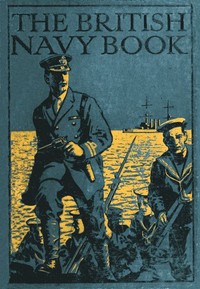
The names of the men-of-war, the stories of which are told here, stand in the forefront among the famous names of the Sea Service for their associations with great and dashing exploits. They are possibly not the most widely known of all, not so familiar to everybody as are certain other names similarly associated with other famous feats of arms of the fighting days,--but that, after all, is perhaps all the more reason that their stories should be told now. 'We are few, but of the right sort,' said Nelson on one of the memorable occasions of his life, and it is hoped that the half-dozen stories within these covers may with justice say the same for themselves. The story of Lord Charles Beresford's little Condor, if not an Old Navy event, has much in keeping with the old order, and is included on its merits as being as gallant a piece of fighting-work in its way as has been done in the British Navy in our time.
My aim throughout has been to interest my readers. That a man-of-war's life-record is not necessarily a dull subject, a mere collection of dry facts, nor its incidents all matters of common knowledge, the following pages, it is hoped, will show. In the main, as far as possible, the accounts and impressions of eye-witnesses of the various events related, as written down while the events were in progress or were still fresh in recollection, old logs and letters, diaries and journals, and the newspapers of the time, have been relied on. Strangely appealing and mutely eloquent at times are some of our old ship logs, with their pages faded and yellow and blurred, often with the stain on them of what was once, more than a century ago, a fleck of fresh sea spray that rested there just as it was whisked in through an open port; now and then indeed with on them a dull rusty brown smear or spot, grimly suggestive of something else. And, too, a terse, blunt note, scrawled painfully down after a day under fire by the hard fist of some rough Old Navy skipper, gone long since to his last reckoning, says more--a good deal more--often, than pages could do of smoother prose, by people who were not on the spot.
Practically all the literature of the subject in book form has been laid under contribution. Among modern writers I am particularly indebted to Captain Mahan and Professor J.K. Laughton, R.N., of King's College, London, and to Mr. David Hannay, to whose brilliant monograph on Rodney I am in a special degree under obligation.
For myself, I am well aware of the pitfalls that beset the path of the landsman who presumes to write of nautical matters. So, indeed, it has ever been since Agur the son of Jakeh, in the days of King Solomon, placed it on record that "the way of a ship in the midst of the sea" was "too wonderful." For any shortcomings of mine in this regard I ask the kindly indulgence of my naval readers.
Throughout the stories, I trust, the amplest justice has been done, and the fullest credit given, to those who were our gallant foes on the several occasions.
In conclusion, I am greatly indebted to Lord Selborne, First Lord of the Admiralty, for allowing me to use information which has proved invaluable for my purposes; to Mr. A.B. Tucker of the Graphic for assistance with my proofs and maps, and suggestions as to certain footnotes; and to Commander C.N. Robinson, R.N., for placing at my disposal his fine collection of old naval prints and drawings.
E.F.
The book keeps going
Keep reading, and see it illustrated
Reading is free forever. Sign up and watch scenes appear while you read.
Scenes Storieta drew for other classics.