Public-domain ebook
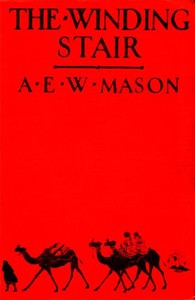
The Winding Stair
English415 downloads on Project GutenbergDownload EPUB
Public-domain ebook sourced from Project Gutenberg #60125.
Public-domain ebook
English415 downloads on Project GutenbergDownload EPUB
Public-domain ebook sourced from Project Gutenberg #60125.
The opening · free to read
“I have finished work for the week. I’ll see no one else were he as terse as Tacitus,” cried Mr. Ferguson, the lawyer.
It was six o’clock on a Friday afternoon and a pleasant rustle of the plane trees in the square came through the open window of the office. Mr. Ferguson thought of his cool garden at Goring, with the river running past, and of the fine long day he would have upon the links to-morrow. Gregory, the head clerk, however, held his ground.
“Perhaps if you would look at this card, Mr. Ferguson.”
Mr. Ferguson looked at the size of it.
“By the Lord, no! It’s a woman. She’ll be as prolix as the devil.”
“It’s not a woman,” the stubborn Gregory insisted.
“Then it’s a foreigner, and that’s worse.”
“It’s not even a real foreigner,” said Gregory. He had been a servant of the firm for thirty years, and knew the ins and outs of its affairs as thoroughly as the principals.
“You are very annoying, Gregory,” said Mr. Ferguson, with a sigh. He took the card regretfully, but when he had read the name printed upon it, he dropped it upon his table as if it had stung his hand.
“Paul Ravenel!” he said in a low voice, with a glance towards the door. “The son.”
“Yes.”
“Is he like the father?”
“Not in the least.”
Mr. Ferguson was distressed. It was nine years since he had finished with that affair, settled it up, locked it away and turned his back on it for good—as he thought. And here was the son knocking on his door.
“I must see him, I suppose. I can do no less,” he said, but as Gregory turned towards the door he stopped him. “Why should Paul Ravenel come to see me?” he asked himself. “And how much does he know? Wait a moment, Gregory. I have got to go warily here.”
He sat down at his desk. Mr. Ferguson was a man, of middle age, with a round, genial face and a thick covering of silver-white hair. He looked like a prosperous country gentleman, which he was, and he had the reputation of the astutest criminal lawyer of his day. He was that, too. His kindly manner concealed him, yet he was not false. For he was at once the best of friends, with his vast experience of the law as a sort of zareeba for their refuge, and the most patient and relentless of antagonists; and he had a special kindliness which showed itself conspicuously in his accounts, for all connected with the arts. It was an old friendship which was troubling him now as he sat at his desk. Paul Ravenel, according to his knowledge, would take this or that line in the interview, Mr. Ferguson must be clear as to how in each case he should answer. Problems were his daily food—at least until six o’clock on Friday evening. Yet this problem he met with discomfort.
“You can show him in now,” he said to Gregory, and a few seconds later the visitor stood within the room, a tall slim youth, brown of face and with hair so golden that the sun seemed to have taken from it the colour which it had tanned upon his cheeks.
“You wish to see me, Mr. Ravenel?” he asked, and a smile suddenly broke upon the boy’s face and made him winning. Mr. Ferguson made a note in his mind of the smile, for he had not as yet its explanation.
“Yes,” answered Paul. “I should have been more correct in approaching so prominent a firm, had I written asking for an appointment. But I only landed in England this morning, and I couldn’t really wait.”
His formal little prepared apology broke down in a laugh and an eager rush of words.
“That’s all right,” said Mr. Ferguson pleasantly. “Take a chair and tell me what I can do for you.”
“You knew my father,” said Paul, when he had laid down his hat and stick and taken his seat. Mr. Ferguson allowed himself a sharp glance at the lad. For his tone was without any embarrassment at all, any shame or embarrassment. He was at his ease.
“I knew Mr. Ravenel—yes,” Mr. Ferguson answered cautiously.
“He died a fortnight ago.”
“I was sorry to notice that you were wearing black.”
“He died in a house which he had built upon an island off the coast of Spain at Aguilas. I lived with him there, during the last eight months, after I left my school at Tours,” Paul continued.
“Yes?” said Mr. Ferguson.
“My father and I were always—how shall I put it?—in a relationship which precluded any confidences and even any cordiality. It wasn’t that we ever quarrelled. We hardly were well enough acquainted for that. But we were uncomfortable in each other’s company and the end of a meal at which we had sat together was to both of us an invariable relief. He had what I think is a special quality of soldiers—he was in the Army, of course, wasn’t he?”
Paul broke off to ask his question in the most casual manner. But Mr. Ferguson did not answer it. It was a neat little trap prepared with more skill than the lawyer had expected. For up till the question was unconcernedly dropped in, Paul had been framing his sentences with a sort of pedantry natural to a man who from the nature of his life must get his English words from books rather than from conversation.
“You say Monsieur Ravenel had some special quality of soldiers,” Mr. Ferguson observed.
“Yes,” Paul explained. “I approached a subject, or I used a phrase, and suddenly it seemed as if an iron door was banged in my face, and he was now behind the door, and not the loudest knocking in the world would ever get it open. So I have come to you.”
“For information your father did not see fit to give you?” said Mr. Ferguson.
“Yes.”
“But Monsieur Ravenel had no doubt a lawyer in Paris and an agent in Casablanca, where he lived for many years, both of whom will be familiar with his affairs. Why come to me?”
“Because it is not about his affairs that I am seeking information,” said Paul, and he took a letter from his pocket-case and handed it to Mr. Ferguson. “This was written by your firm, Mr. Ferguson. It is one of the two clues to my father’s history which he left behind him. It slipped out of a book upon his shelf.”
“Certainly the letter was written by our firm to your father, Mr. Ravenel. But it was the last letter we wrote to him. It closed our connection with him. We never heard from him again; and the letter is as you have seen, nine years old.”
“Exactly,” said Paul. “Just about that time my father and I were in London together for a couple of months, and when I found that letter it seemed to me to explain why. My father was in London to arrange for the transfer of his property to France, for the final annihilation of all his interests and associations with this country.”
It was an assertion rather than a question, but Mr. Ferguson answered it.
“Yes. I suppose that you may put it that way.”
“Before that time, then, you were his advisers.”
The book keeps going
Reading is free forever. Sign up and watch scenes appear while you read.



Scenes Storieta drew for other classics.
New illustrated classics
Once or twice a month: the latest books to get full character casts, scene art, and free comic editions. No account needed.