
Public-domain ebook
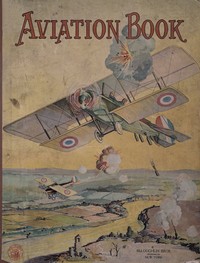
Aviation Book
Language: en320 downloads on Project Gutenberg
Subjects
In: Children & Young Adult Reading·History - Modern (1750+)·History - Warfare
Public-domain ebook sourced from Project Gutenberg #62472.
Public-domain ebook
Language: en320 downloads on Project Gutenberg
Subjects
In: Children & Young Adult Reading·History - Modern (1750+)·History - Warfare
Public-domain ebook sourced from Project Gutenberg #62472.
The opening · free to read
Tom and Jack are brothers and chums. They are Boy Scouts. Jack is first class, but Tom is only a tenderfoot. Like all bright, manly boys they are interested in airships and are anxious for the time to come when they can fly too.
Tom and Jack’s uncle is a famous aviator, and he knows all about flying. His name being Samuel the boys always call him Uncle Sam, and they sometimes jokingly pretend to think that he is the great Uncle Sam who represents the United States.
Tom and Jack knew that the best way to find out about airships was to ask their Uncle Sam. So, as soon as they saw him, they made him consent to tell his wonderful story of aviation.
Tom and Jack were all ears as their uncle started his aviation story.
“First,” he began, “I shall tell you the thrilling tale of Man’s long striving to learn how to rival the birds. In myths and fairy tales there were men and goblins who had wings or who owned winged chariots and animals. But real, everyday people never learned how to go up in the air until 1783.”
“The very year England and the United States made peace after the Revolutionary War!” exclaimed Tom.
“Don’t interrupt Uncle Sam; it is not polite,” advised Jack.
“Well,” continued Uncle Sam, “it was on June 5, 1783 that Stephen and Joseph Montgolfier, two French brothers, sent up the first balloon. You can just imagine the amazement it caused when it arose from the ground.
“Many successful experiments were made with balloons; but they were harder to run than old-time sailboats. A balloon could not fly against the wind. In a storm or a heavy gale it would be wrecked and the passengers killed. A machine was needed that could speed against the wind and not upset in a heavy blow.
“A few inventors tried to solve the flying problem with motor-driven balloons such as the German Zeppelin. But most attention was given to heavier-than-air machines known as aeroplanes. Aeroplanes are called heavier-than-air to distinguish them from balloons, which, being inflated with gas, are lighter than air. There were many discouraging years of hard thought and labor before success came. Finally, in 1905, two American brothers, Wilbur and Orville Wright, invented the first successful flying machine; and in a series of marvelous flights showed that Man had, at last, rivaled the birds.
“Numerous inventions have made man almost the equal of the birds in the air. Flying has been made nearly as safe as riding on horseback or in an automobile. The aeroplane is now a necessity in times of war and peace. Its startling deeds will be the subject of the story I’m about to tell.
“Of course, you want to know something about the man who runs an aeroplane,” said Uncle Sam.
“Indeed, we do,” replied both boys at the same time.
“Now,” continued Uncle Sam, “to become a military aviator a man must, first of all, have a strong, healthy body, a quick, active mind, and iron nerves. There are many good aviators that wouldn’t be good military aviators, because the strain of war would prove too much for them. If a man is just right in body and mind, they send him to an aviation training camp where he is taught to fly.
“At the training camp he is instructed in the care of an aeroplane and its powerful motor. He goes up in the air a number of times with an expert aviator. By constantly watching the expert, he learns to fly. Then he learns many dazzling stunts—to loop-the-loop, make figure eights, fly upside down, and other dangerous maneuvers.
“After the new aviator knows how to care for an aeroplane and fly perfectly, he is taught wireless telegraphy, and shown how to take aerial photographs, fire machine guns and drop bombs. As soon as he learns all these things, he’s a full-fledged aviator, and ready to go into active service for his country.”
Tom and Jack had their eyes wide open in wonder as Uncle Sam continued:
“Ordinary flying, as I told you boys before, is now almost as safe as riding on horseback or in an auto. But, in time of war, running a military aeroplane is the riskiest work in the world. When I tell you of the marvelous, death-defying deeds military aviators have done, I doubt if you will believe me. Yet everything is absolutely true.
“An aviator’s most important duties are to take photographs of the enemy’s location and direct artillery fire. The aviator must seek out the enemy and learn their exact position. He must discover, if he can, about how many men and guns they have; how well they are fortified; how hard or easy it is to attack them. He makes many photographs and sketches which are valuable to his officers in planning an attack.”
“You haven’t told us how the brave aviator directs artillery fire,” broke in Tom.
“I’m getting to that now,” said Uncle Sam. “You know that there was a time when a man who fired a cannon could see his target. But now, a cannon, or the artillery, fires at a range of from six to thirty miles. No matter how big the target, it is impossible to see it from such a distance, especially when trees, mountains or fogs are in the way. Firing artillery is now a matter of calculation. Just where to shoot has to be figured out by means of maps, instruments, and mathematics. Quite often the figuring is not exactly right. The aviator must go up—bombs and shells bursting all around him—and discover if the guns are hitting the mark. When a shot doesn’t strike in the right place, the aviator sends directions by wireless for firing the next shell so that it will hit the enemy’s position and destroy it.
“Not all the excitement is over the battle lines. One of the most thrilling experiences an aviator can have is to fight off enemy aeroplanes and Zeppelins when they come to drop bombs on a city or town. Cities liable to be raided by hostile machines are protected by lookout towers. As soon as the Zeppelins are sighted, the men in the towers toot shrill blasts on loud siren horns. At the signal of the horns every light in the attacked city is put out, and all the people rush into houses and cellars for safety. Big anti-Zeppelin guns are pointed skyward to fire destruction-dealing shells at the enemy overhead.
“The brave aviators, who protect the city, start their machines and go up in the air to drive off the foe—amid the reek of fire and the scream of shot and shell. The battle is usually short. The swift defending aeroplanes, with their machine guns constantly spitting bullets, fight rings around the Zeppelins. The big guns on the ground send deadly missiles through many of the enemy airships. All of a sudden one bursts into flames. With a roar and a bang it hurtles to the earth. In the next moment, still another is hit. One of the doomed men saves himself by dropping off in a huge floating parachute. He is made prisoner the minute he touches ground.
“In a little while the remnant of the once-proud enemy air fleet flees in mortal terror. The day is saved. The heroic aviators, who successfully defended the city, return to earth amid the cheers of the grateful people.
“Usually the damage done is unimportant from a military point of view. Several non-combatants are killed and a few houses and an occasional church are damaged.
“Now, we will go back to the firing line, and see how the aeroplane is used in connection with the land fighting.
“Many German aeroplanes come to grief by trying to battle British tanks.”
“What’s a British tank?” put in Jack.
“I thought everyone was familiar with the tank, but as you evidently are not, I shall explain what it is. A tank is a great big battle car, protected with heavy shot-proof steel and armed with guns. It can travel anywhere—over hills, walls, trenches, through mud, bushes, and trees. Many people call a tank a land-battleship.
“Now that you know what a tank is, I will go on with my story. When the British attack the Germans, they often use tanks, which rumble along, crushing everything before them. The enemy forces are driven back in terror. In reckless despair they try to save the day by pitting their aeroplanes against these unbeatable steel monsters.
“Aeroplanes fighting British tanks are practically helpless and seldom attack them. ‘Zip! Zip! Bang!’ go the machine guns of the hostile aeroplanes. But the rain of shot and shell rattles harmlessly against the huge armored tanks. ‘Boom! Bang!’ roar the tanks’ heavy guns. Down drops one enemy aeroplane, in a horrible wake of flames and exploding gasoline. It strikes the earth—a shattered tangle of wire and wood. The aviator, of course, is dashed to death. Another of the foe’s machines is struck; and still another. All meet the same fate. Nothing can resist the tanks.”
“Such battles must be more exciting than fairy tales and novels,” exclaimed Tom and Jack in breathless wonder.
“There’s one thing our aviators do sometimes that is seldom excelled for courage and daring,” said Uncle Sam, pleased with the way his nephews were enjoying his story. “The enemy soldiers are very strongly entrenched behind earthworks and barbed wire fences. When our infantry find it impossible to make them flee, our bold aviators are assigned to the task.
“With dash and bravery they go up in the air and hover near the hostile positions. Suddenly, like eagles they swoop down over the trenches shooting at the frightened enemy. ‘Zip! Crack! Bang!’ rattle their machine guns. Those who are not killed or seriously wounded flee in terror into the dugouts for safety.
“Then, quick as a flash, our men rush in and capture the trench before enemy reinforcements come up. The courageous aviators are wildly cheered but haven’t time now to listen to the praise; they must go up in the air again to protect their comrades from enemy aeroplanes, which lurk everywhere waiting for a chance to drop bombs.”
“By the way, Uncle Sam,” asked Jack, “why do aviators wear such heavy clothing?”
“It must be very cold up in the air,” thought Tom to himself, not saying anything for the first time.
“It’s frightfully cold up above the clouds,” said Uncle Sam. “The higher you fly the colder it becomes. Up in the sky, I have often felt a temperature below zero, while down on the earth it was comfortable and warm. Later on in school, you boys will learn that the sun’s rays give very little heat until they reach the earth. I would explain the reason myself, but I want to go on with the story.
“Our aviators are flying around in the sky about three miles above the earth when, all at once, the enemy’s machines dash into view. The two hostile air fleets see each other almost at the same time, and quickly prepare for action. A thrilling battle in the air is at hand.
“Our machines are outnumbered, but that does not deter us. ‘Rat-a-tat-tat,’ shrieks one of our machine guns. One of the foe is put out of action. His machine in flames, he falls dizzily to earth. Marvelous flying is now going on. One of our men loops-the-loop to get into position. An enemy aviator backs up his machine in mid-air: then dives down headlong a thousand feet. Swiftly he rights himself and speeds up firing right, left, and straight ahead. We have a hard time dodging that dangerous fellow.
The book keeps going
Reading is free forever. Sign up and watch scenes appear while you read.



Scenes Storieta drew for other classics.
New illustrated classics
Once or twice a month: the latest books to get full character casts, scene art, and free comic editions. No account needed.


![Cover of Peter Pan: [Peter and Wendy]](/covers/16.jpg)