
Public-domain ebook
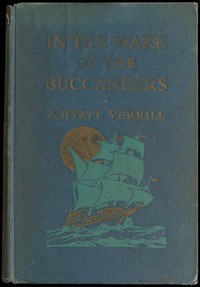
In the wake of the buccaneers
Language: en2,289 downloads on Project Gutenberg
Subjects
In: Adventure·Travel Writing·History - Other
Public-domain ebook sourced from Project Gutenberg #64521.
Public-domain ebook
Language: en2,289 downloads on Project Gutenberg
Subjects
In: Adventure·Travel Writing·History - Other
Public-domain ebook sourced from Project Gutenberg #64521.
The book is a travel‑history that blends vivid description of Caribbean islands with a portrait of the buccaneers who once ruled the Spanish Main. It opens with a sweeping homage to the Caribbean Sea, praising its beauty, climate and “romance” before moving into a spirited defense of the buccaneers as daring, gambling adventurers whose code of honor and contributions to the New World merit admiration. From that opening the author promises a “colorful account” of a cruise aboard a genuine pirate‑style vessel, guided by a West Indian crew that includes descendants of notorious freebooters. The narrative will wander through towns, harbors and ruins, offering sketches of notable sites, St. Thomas, Tortuga, Port Royal, Panama, and interweaving the present‑day scenery with the deeds, laws and legends of the “Brethren of the Main.”
Written in the early twentieth‑century prose of A. Hyatt Verrill, the voice is erudite yet conversational, peppered with anecdote, moral reflection and a touch of romanticism. Its style combines travelogue, historical essay and occasional personal memoir, reflecting the author’s three‑decade familiarity with the region. Readers who relish richly detailed voyages, enjoy the interplay of geography and pirate lore, and appreciate a measured, scholarly tone, rather than sensationalized swash‑buckling, will find this work rewarding.
The opening · free to read
There is no more entrancing body of water in either the Western or the Eastern Hemisphere—than the Caribbean Sea, with a fringe of lovely tropical islands on the one side and on the other the Spanish Main and its picturesque centuries-old towns and fascinating sights. Aside from its beauty, its delightful climate, and its ever-shifting scenes, the Caribbean and its shores are redolent of romance. It was the starting-point of those brave though ruthless adventurers who carved a new world for Castile and Leon. For centuries it was the treasure-house of the world and the battle-ground of the mightiest European powers. Across this sapphire sea sailed the caravels of Columbus, the Golden Hind of Drake, and the stately, plate-laden galleons of Spain.
And across this same sea coursed those fierce sea-rovers the buccaneers.
Of all the dare-devil spirits who sailed the Caribbean and ravaged the Spanish Main, the buccaneers were the most picturesque and romantic. Villains though they were; reddened with the blood of the innocent and helpless though their hands; black-hearted cutthroats beyond denial—yet there is something about them that appeals to all, and that, despite their ill deeds, fills one with admiration.
Perchance it is the fact that we all appreciate bravery—and, notwithstanding their multitude of sins, the buccaneers were brave beyond compare. Again, it may be that in all of us lurks a little of the gambling spirit and we admire those who can take a chance, even though we do not, and no greater gamblers ever lived than the buccaneers. They staked their lives at every turn, they gambled with death, and the greater the odds the more readily did they throw themselves into the game. And it was this gambling spirit, this recklessness that enabled them to defy the world of their day.
We hear much of the bold, wild ways of these adventurers; we have been taught by history and tradition to consider them devoid of redeeming qualities, and few of us realize that the buccaneers were far from being true pirates, that they were not alike, that many were corsairs through force of circumstances rather than by choice, that they had their own laws and code of honor, and that they were a most important factor in shaping the destiny of the New World. To them, incredible as it may seem, we owe an immense debt of gratitude. Had it not been for them the British never would have retained their foothold in the Caribbean, and we, to-day, might be under Spanish rule. Many of them, too, were educated men and left us records which are of incalculable scientific or historic value; for example, Dampier, who was a keenly observant field naturalist and devoted far more of his time to penning descriptions of fauna and flora than to slitting Spanish throats; [1] and Esquemelling, [2] the erstwhile accountant, who left us a classic as a result of his years as a ship’s supercargo among the buccaneers.
Yearly, Americans by the thousands flock southward to tour or to stop for a time in the West Indies or about the shores of the Caribbean, but few of these are aware of the intimate associations with the buccaneers which all these places hold. Yet we may dwell in the very hostelry wherein pirate chieftains reveled and spent their ill-gotten gold; we stroll through little towns which have echoed to the ribald songs and lusty shouts of roistering pirate crews; we sail, in palatial steamships, above the long-forgotten hulks of burned and scuttled galleons, and we haggle with shopkeepers or native boatmen in whose veins may flow the blood of Morgan, Hawkins, or Montbars.
Bereft of the buccaneers, the Caribbean and its shores lose their greatest fascination, and as the most desirable localities are those intimately associated with the sea-rovers and their deeds or misdeeds, it seems fitting to travel about the Spanish Main and the West Indies in the wake of the buccaneers.
It is to point out the romantic associations of these waters and islands and make a visit to them more interesting, to weave a little of the lives and deeds of the buccaneers into the story of the locality, and to give brief sketches of the most noteworthy, while at the same time describing the places, their attractions, and their present condition, that this book has been prepared.
So much of a purely fictional nature has been related of these sea-rovers that many of the statements contained herein will come as a distinct surprise, for time and tales have woven a glamour and a deal of misconception about them. But even stripped of all romance, with their histories before us, the “Brethren of the Main” retain enough and to spare of adventure, deeds of daring, and picturesque villainy, and many of the true stories of these men are more thrilling, more astounding than any the imagination could invent.
When such stories are made more vivid by a setting of actual present-day scenes, or are read in the very places and in the same surroundings in which the buccaneers held forth, their interest is enhanced, while the whole neighborhood is given an added attraction.
The author, who has lived and traveled in the West Indies and about the shores of the Caribbean for nearly thirty years, knows every island and town intimately. Being deeply interested in the history of the vicinity and particularly in the reckless freebooters who frequented it, he has written this narrative of a most novel cruise. A cruise taken in a real pirate ship manned by a native West Indian crew some of whom were lineal descendants of notorious buccaneers; and while not all the Caribbean islands or the lands and towns of the Spanish Main were visited, those places are included which are of particular interest from an historical point of view and their associations with the freebooters.
The volume is not intended as a guide-book, but rather as a colorful account of the places visited on this unusual cruise; a description of many little-known, out-of-the-way corners; with mention of their most interesting features, the customs of the people, a bit of their turbulent past and their somnolent present, and their existing relics of buccaneer days.
Reasons. The romantic isles. The Vigilant. A real pirate ship. The Virgin Islands. Dead Man’s Chest. Sam, the descendant of the pirate chief. The Vigilant’s crew. Trouble comes to the Vigilant. Arguments. My happy family.
First view of St. Thomas. Charlotte Amalie. The people. Shops and commodities. The home of bay-rum. Wet and dry. Odd wares. The ships’ graveyard. Blackbeard’s Castle. The pirates’ haunts.
III The Buccaneers in the Virgin Isles 38
The lairs of the buccaneers. Buccaneers and pirates. Queer conditions. When life was cheap. Interesting characters. A buccaneer poet. Blackbeard and his ways. The end of Blackbeard.
Farewell, St. Thomas. Sail Rock. The joke on the Frenchman. The lure of the Caribbean. A man of peace. St. John. An island gem. At Rendezvous Bay. Relics of the buccaneers. The bloody past. A deserted Eden. The St. John of to-day.
Buccaneer haunts. The pirates’ friends. Hamlin the corsair. The friendly governor. Tales of treasure. Relics of the past. An ancient souvenir. Reminiscences. The concert. A discovery.
VI Anegada and a Bit of Treasure-Trove 94
Tortola, the Isle of the Turtle-dove. The once prosperous port. Onward to Anegada. The Fat Virgin. Norman Island and Kidd’s treasure. The truth about Captain Kidd. The Don Quixote of the Caribbean. The end of Prince Rupert of the Rhine. Anegada, the Drowned Island. Through the guardian reef. Wreckers. Flotsam and jetsam huts. Pirate forts and pirate cannon. The Portuguese derelict. Treasure-trove.
Across the Anegada Passage to St. Martin. Anguilla, the Eel. The island under two flags. St. Martin a charming island. Salt pans and industries. Onward to St. Barts. A poverty-stricken spot. Once Sweden’s colony. The gathering-place of the buccaneers. On the beach. A privateers’ lair. Gustavia’s heyday. Montbars the Exterminator. Statia. Where the Stars and Stripes were first saluted. Orangetown and its treasure. The world’s greatest auction sale. Statia’s knell. Saba the marvelous. The town in the crater. Saba and its people. Strange industries.
VIII St. Kitts and the Gorgeous Isle 136
St. Kitts the beautiful. Basseterre. The island’s golden past. The first settled of the British isles. French and English. Early days. Brimstone Hill and its massive fort. An echo of the past. The Travels of Captain Smith. Caribs and quarrels. The “overgrowne stormes.” Convict slaves. The Gorgeous Isle. Nevis and its past. Where Nelson married and Hamilton was born. The submerged city. A miraculous escape. A moral pirate. Sharp the great adventurer.
IX The “Dangerous Voyage” and the Effect of a Nagging Tongue 152
Bartholomew Sharp and his great adventure. Across Darien. The attack on the Spanish fleet. The Blessed Trinity and its marvelous cruise. Down the west coast. Around the Horn. The log of the Trinity. Mutiny. Religious buccaneers. Homeward through storm-lashed seas. The end of the “dangerous voyage.” The “sea artist” goes home. Stede Bonnet the gentleman pirate. The less of two evils. The effect of a nagging tongue. In evil company. The fate of the major. Over Saba Bank. Sam’s sixth sense. Good hauls. Land ho!
St. Croix or Santa Cruz. An Emerald Isle. Where sugar was king. Christiansted. Ashore. Attractions of the island. A target for hurricanes. How Hamilton attracted attention. Cannibals. A turbulent past. Dreams of a kingdom. Knights of Malta. The home port of the Vigilant. Over the sea to Porto Rico. Porto Rico’s beauties and attractions. A tamed island. Drake’s repulse. The man with the queen’s glove in his hat. How the Earl of Cumberland took San Juan. An enemy he could not conquer. Ogeron’s attempts. The pirate prisoners. Ogeron’s escape. The rescuers. In the chain-gang. Birds of a feather. Mona the forbidding. Hispaniola the mighty. A miniature continent. The most historic spot in America. A land drenched in blood.
Samana Bay and its environs. Where the first blood was spilled. The Bay of the Arrows. Trade Wind Cay. The pirates’ stronghold. A miniature Gibraltar. Legends and superstitions. Ruins on the cay. Treasure. Joseph’s find. Those who frequented the isle. Round and about Samana Bay. Samana and its people. Sanchez. A wild coast. Caverns. The amber beach.
XII The Birthplace of the Buccaneers 210
The rugged island. The Dons in Santo Domingo. First gold in the New World. La Vega la Antigua. Old Weapons. The Cibao. Along the coast to Puerto Plata. The port. The Silver Shoals and Phipps’s treasure. The first European settlement in America. Isabella. Monte Cristi and El Morro. Tortuga the birthplace of the buccaneers. Cayona. The origin of the buccaneers. Strategies. Pirate governors. The buccaneers’ fort. The fate of the West India Company.
The buccaneer island. Early forays. Humane practices. How the pirates got their vessels. Daring assaults. The buccaneers’ ships. A motley lot. Honor among thieves. The inventors of accident insurance. Employees’ indemnities. Division of spoils. Oaths and agreements. Rules. Penalties. Recompense. Temptations. A few of the buccaneers. Rock Brasiliano the German. A degenerate brute. Bravery of Brasiliano. Escape from Campeche. John Davis the Jamaican pirate. A “kind and considerate man.” Lolonais the most cruel of the buccaneers. An ex-slave. A protégé of the governor. A notable feat. A monster in human form. Cannibalistic tendencies. Lolonais shipwrecked. The awful fate of Lolonais. Quarrels among the freebooters. The British buccaneers help take Jamaica. The pirates’ new lair.
The book keeps going
Reading is free forever. Sign up and watch scenes appear while you read.



Scenes Storieta drew for other classics.
New illustrated classics
Once or twice a month: the latest books to get full character casts, scene art, and free comic editions. No account needed.