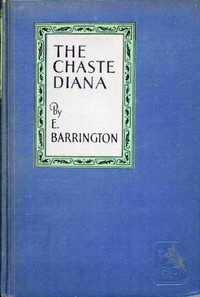
Public-domain ebook
The Chaste Diana
Language: en380 downloads on Project Gutenberg
Subjects
In: Historical Novels·Romance·Novels
Public-domain ebook sourced from Project Gutenberg #65311.
Public-domain ebook
Language: en380 downloads on Project Gutenberg
Subjects
In: Historical Novels·Romance·Novels
Public-domain ebook sourced from Project Gutenberg #65311.
The opening · free to read
IT was the winter season of the year 1727 and the great Mr. Rich, patentee and manager of the playhouse in Portugal Street, Lincoln’s Inn Fields; was seated in his own parlour where he received the budding players of both sexes and made and marred careers like a very Fate. To Portugal Street come trembling beauties whose voices die in their throats as that piercing eye falls on them appraising every feature with no thought but how many guineas are like to be made on the strength of it. To Portugal Street, Lincoln’s Inn Fields, come also the anxious dramatists from Grub Street, some with a cheap swagger that Mr. Rich quells on the instant, some with lank cheeks and threadbare cuffs and an entreaty for a hearing which is apt to provoke the great man’s ire and contempt as he sits to receive his courtiers in a velvet coat and breeches, sober enough, but with a good bit of lace at the throat, and a wig handsomely curled about his shoulders. For whatever may be the standing of player-folk, and God knows it is none too high, Mr. Rich is minded that their manager shall win respect. What! hath not Mrs. Oldfield been received at Court in spite of blots on the scutcheon in the shape of two gentlemen—Mr. Mainwaring and his successor General Churchill, setting aside certain passages with Captain Farquhar, the gay dramatist, which might or might not be censurable? Yet, notwithstanding, the lady went where she would, and the Princess of Wales (willing to oblige this charming person) informing her that she had heard she was the wife of General Churchill, Mrs. Oldfield did but sweep the prettiest curtsey and reply, “So it is said, please your Royal Highness, but we have not owned it yet.”
An example of coolness, thinks Mr. Rich, for all who would exalt the profession to follow. So there he sits, a gobbling turkey-cock of a man when crossed, kindly when humoured, his eyes very shrewd and keen between their layers of flesh. A choleric, genial, short-nosed man, himself the unrivalled Harlequin and a player after a fashion, he falls a little on the side of rudeness to inferiors lest he slip into that of servility to superiors, an uneasy matter but always to be kept in view.
On this evening he had done his day’s work and routed not a few miserable pretenders to parts in the new raree-show shortly to be produced to the public. He had two companions—fine, careless easy gentlemen both, and almost as much at home behind the scenes as himself.
The one, lounging in an armed-chair was a young man of almost effeminate beauty. Disguise him in paint, powder and hoop, and you had a charming Lady Easy, with the absolute manner of bon ton, and should The Careless Husband be needed to play up to her Ladyship, as in the comedy of that name, the other young man dangling a pair of handsome legs from Mr. Rich’s table was your very fit! None better! and in real life as careless a husband as any that ever trod the boards, perhaps not altogether by his own choice.
Permit me to present the first—fair, blue-eyed, and slender, a pretty man indeed, though with not too many inches to spare. Prodigious fine in velvet and embroidery, yet steel and fire under the graceful mask of languor. ’Tis the American Prince as they call him about town—my Lord Baltimore, a potentate after a fashion, since he holds by due succession the patent of Maryland in the New World, paying yearly as fee two Indian arrows at Windsor Castle every Easter Tuesday, and the more substantial rent of a fifth part of the gold and silver ore therein found. A very great gentleman with his American principality, and the most fascinating bachelor in London, an arrant rake and favourite in all the boudoirs. Scarce a fine lady but aspired to be the American Princess.—But this tale will show his Lordship as he was and more words are not now needed.
The more masculine looking beau—a handsome grave brown man, is his Grace the Duke of Bolton, unwilling husband to my Lord Carberry’s daughter and heiress, a lady as homely and sour as a withered crab-apple, and indeed ’tis more than rumoured that the ill-matcht pair parted after the wedding feast and a few ceremonies to mislead the public. It follows that his Grace is a mighty patron of the playhouse, whether at Lincoln’s Inn Fields or in the Haymarket, and there is scarce a man in town whose judgment Mr. Rich would more willingly accept of the promise of a new tragedy or comedy Queen. Indeed he seeks that judgment at this moment.
And so my story begins.
“You will observe, your Grace,” said Mr. Rich, with an anxious brow, “that I stake not only my reputation but a vast deal of money on this venture. Stap my vitals, if I know whether I do well!”
“’Tis certain, Rich, you’ve done so ill of late,” says the American Prince, yawning over his gold snuff-box—“that you can scarce do worse. The farces you have gave us of late were more funereal than a dirge, witness ‘The Capricious Lovers’ that only Mrs. Mincemode saved from damnation the first night, and when you followed with ‘The Female Fortune Teller’ and capped it all with ‘Money the Mistress’—Lord save us, man, you left not a leg to stand on to your warmest friends.”
“’Tis very true,” interrupted his Grace of Bolton, “and were it not that Drury Lane was as dull as a Friends’ ranting house and so no rival, you had sunk altogether. But tell us, Richie, what like is this new stuff you have in hand? Has it ever a laugh in it or is it all snuffle?”
Mr. Rich, wincing somewhat at the “Richie,” pulled out a roll from his scrutoire and laid his hand upon it.
“Why, your Grace and your Lordship, there’s the point. I would to God I knew. ’Tis a case of triumph or calamity—no halfway house, for ’tis so damned unlike anything yet seen, that I can’t for my life tell whether I’m a fool or a wise man to have to do with it.”
“The author?” enquired my Lord Baltimore, scarce raising his eyelashes, long and golden as a girl’s.
“Why the author is Gay, my Lord, and ’tis writ under the influence of spite and disdain, a sharp enough pair of spurs to knock out what mettle is in a man.”
“Aha! I know the inmost of that business,” his American Highness laughed musically. “I’ll tell you the story, Rich. ’Tis worth a laugh. ’Twas his seeking preferment at Court and getting only the office of nurse-tender, bear-leader, call it what you will! to the youngest royal children, that put him out of love with the nobility and gentry. What hath he done for vengeance?”
“Why, my Lord, ’tis hard to describe. He hath writ a very droll—what shall I call it?—a farce, no!—a comedy? Yes, but ’tis more of a kind of an opera, so full of songs, only that the hero is a highwayman, and the ladies—why, the less said about the ladies and their honesty the better. Newgate wenches at best. ’Tis at least very original.”
The Duke sat bolt upright.
“Original? Why that was Swift’s notion,” he cried, “Why, Richie, you must remember that Dr. Swift said the town was sick of Amorets and Bellarmines and all those brocaded perfumed cattle, and that if a manager had luck and courage and would stage a Newgate pastoral, the world and all that therein it would be a rabble at his heels applauding and pouring gold into his fists. Didn’t he say that, and didn’t I hear it with my own ears? And d’ye mean to tell me Gay has cribbed the notion?”
“Not a doubt of it, your Grace. But the fellow—stap my vitals if I can help laughing at the rogue! hath done it so arch—so comical—I don’t know what I would say!—that I dare swear Swift himself will forgive him, and then rather that it would ill become his gown to set some of the jests on the stage, though he is not too retiring in his writings.”
Lord Baltimore raised his fine-drawn eyebrows:
“Smutty, then, Rich?”
“Well, as to that,— So-so, and yet not too much, so, your Lordship. You are aware that the public demands a certain license and His Majesty rebuked his players for what he termed emasculating a comedy not so long since. ’Tis very hard to steer between Scylla and Charybdis, my Lord. But I think there’s enough to please his Majesty and the public without disgusting the prudes.”
“Have you the words handy?” demanded his Grace, “I’m not of those that believes smut takes the pas of wit. I know not how it is but there’s something in these brutalities sickens my stomach especially when a pretty woman’s called upon to speak them.”
“We don’t find they rebel, my Lord Duke. In fact I’ve known one or two ask a little more pepper and mustard to season her part.”
“Poor devils, they rant for their living—what can you expect?” says his Dukeship with easy contempt.
“Not altogether—as I think your Grace knows as well as most,” says Mr. Rich with a somewhat gross twinkle in his eye, then hastened on as the Duke stiffened a little. “Be that as it may, we can’t do without ’em, and God knows I’d sooner manage fifty men than one haughty slut like Mrs. Oldfield or Mrs. Cibber. But I think there to be little question that if my cast is what I desire, this venture of Gay’s may take the town. Can either of your Lordships oblige me with a seductive Polly?”
“Pretty Polly!” mocked the American Prince, “Why I know a brace of pretty Pollys, Rich,—but they don’t warble, no more than their namesakes. I take it your Polly must be tuneful?”
“Lord, Yes! your Lordship. She must have a voice like a thrush and the face of an innocent angel new strayed from Eden, and the heart of a little devil (“That should not be hard to find!” interpolated his Grace), and the abandonment of ‘The Country Wife,’ and the archness of Millamant, and the demureness of a cat after cream, and——”
“And in short the paragon doesn’t exist.” Lord Baltimore was yawning again, and flicking imaginary dust off his smoke coloured velvet. “Can’t you dispense with her, Richie?”
“Why, I have sent a hue and cry through the provinces, and even through the purlieus of Drury Lane and St. Giles’s.”
“Faugh!” says his Lordship, “Well, I was ever obliging, Richie, and if I hear tell of a Venus with the appearance of Dian and the voice of Polyhymnia you shan’t lack for information. Are you for Lady Lansdowne’s drum, Bolton? There’s a fair widow there— Ah, Richie,—if beauty and rank and every elegant accomplishment would take the boards, you might find your heroine yet.”
“They take ’em at second-hand, your Lordship, running after our handsome players. But if you will deprive me of your company will you look in tomorrow about this time to know if I have trapped my quarry? If not, we must hang up the play for a better season.”
“What does Gay call his stuff?” asked the Duke, leisurely descending from the table.
“Why, ‘The Beggar’s Opera,’ your Grace. The name’s original too, if it do but take. There’s much in a title. If I can better it, I will.”
“You can’t better it,” says his Grace. “’Tis saucy, provocative, and runs off the tongue. What would you have more? What’s the heroine’s mellifluous name? Lindamira? Amoret?”
“Why no, your Grace—Polly Peachum. It hath a common or village sound to my ear. I doubt it takes!”
“You’re an old fool, Richie,” said the Duke. “Its commonness is its recommendation. Don’t all the fine world s’encanailler nowadays? There are as vulgar trollops at Court as any——”
The book keeps going
Reading is free forever. Sign up and watch scenes appear while you read.



Scenes Storieta drew for other classics.
New illustrated classics
Once or twice a month: the latest books to get full character casts, scene art, and free comic editions. No account needed.