Public-domain ebook
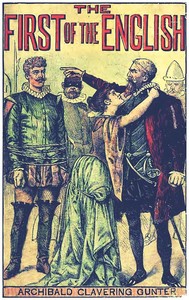
The First of the English: A Novel
Language: en4,658 downloads on Project Gutenberg
Subjects
In: Historical Novels·Romance·Adventure
Public-domain ebook sourced from Project Gutenberg #67804.
Public-domain ebook
Language: en4,658 downloads on Project Gutenberg
Subjects
In: Historical Novels·Romance·Adventure
Public-domain ebook sourced from Project Gutenberg #67804.
The novel is a sprawling historical adventure set against the brutal flood‑swept night of early spring 1572, when the Dutch coast is battered by a relentless gale that tears dykes and drives desperate peasants into the sea. The opening plunges the reader into that chaos, following the English captain Chester, dubbed “the First of the English”, as he battles a storm‑tossed vessel, captures a Dutch boat, and negotiates with the notorious sea‑beggar Dirk Duyvel. The narrative immediately establishes the larger backdrop of the Eighty Years’ War, mentioning the oppression of Philip II and the covert support of Queen Elizabeth, while the immediate action revolves around frantic ship‑handling, the capture of a prize, and the grim barter over prisoners and loot.
Written in a richly descriptive, late‑Victorian prose style, the book combines vivid nautical detail with the melodramatic dialogue of its period. Its language is dense and formal, echoing the historical‑fiction conventions of the 19th century, and it assumes a reader who enjoys immersive, dialogue‑driven storytelling that interweaves military intrigue with personal bravado. Fans of maritime sagas, readers fascinated by the Dutch revolt, and those who appreciate elaborate period diction will find this opening compelling and the promise of a gritty, politically charged tale worth following.
The opening · free to read
And it is an awful night; one of those nights that impresses itself upon the memory of suffering mankind by the widows it makes and the orphans it leaves; a night in which the sea drowns the land; a night in which the dykes go down before the dash of the ocean, which, tearing huge sluices in them, rushes through to make the unprotected meadows and growing orchards the beds of roaring torrents and deep salt seas that drown awakened farmers and affrighted peasants with their flying wives and children, in Flanders, Brabant, Zeeland, Friesland, and the islands and polders of both the Hollands; a night that brought up another wail from the Netherlanders, rich and poor, noble and bourgeoisie, who had been undergoing the tortures and burnings and flayings of Philip II. and Alva, his viceroy, for five long years; a night when the long-continued northwest gale blowing in from the German Ocean upon the unprotected dykes of Holland, supported by a tide of wondrous strength and height, sweeps in upon the defenseless Netherlands to remind them of that great flood shuddered at for centuries—that of the first of November, All Saints’ night, of 1570—though this one is nearly two years afterwards, in the early spring of 1572. Evidences of the misery of the land soon come out of the darkness of the night. Lights move about hurriedly on the South Beveland shore, and the cries of a hundred drowning peasants come shrieking on the gale.
“By Saint George, there’s a dyke gone!” cries Chester to his lieutenant, then he mutters: “God help the poor wretches, we can’t!” as the ship speeds by, the gale now a little upon her starboard quarter.
A minute later he commands hurriedly: “Call two quartermasters and heave the log.”
This being done, he suddenly mutters: “Ten knots—and the tide four more! Two hours! We must be abeam of the Krom Vliet; the Drowned Lands are on our lee bow,” then cries hurriedly to his lieutenant: “Go forward and see both the anchors are ready. We must bring up under the lee of South Beveland, in the slack water where the tide coming up the East Schelde meets the current of the main channel. If we get into the main river with this wind and tide our anchors will hardly hold us this side the Fort of Lillo, and that means capture and death to every man, Alva’s death—you know what that is!”
To this the lieutenant shortly mutters, “I know!” and goes hurriedly forward, where he can be seen directing the men who have been summoned by the boatswain’s call. Chester, standing beside the tiller, cons the vessel himself, giving his orders to the two helmsmen.
Half a minute later Martin Corker, the boatswain, comes staggering aft over the ship’s slippery deck and hoarsely whispers: “Boats ahead!”
“How do you know? you couldn’t see them to-night.”
“Lights!”
“Ah! the lights of Sandvliet.”
“No, boats! pistols firing—arquebuses! I saw the flashes of their guns three points on the lee bow, in the slack water under the shore of Beveland!”
“Then I can catch these boats,” whispers the captain.
With this the nature of the man comes suddenly out; his wonderful rapidity of thought and action. He cries: “Order all hands to stand by to wear ship. Send twenty men aft to handle the lateen sail! See the two anchors stoppered at thirty fathoms! Tell the starboard division to arm themselves with pikes, cutlasses and axes—only steel. I want no noise about this business! Order three men to stand on the weather bow with grappling hooks.”
A minute later he sees the flashes of firearms a cable’s length ahead broad upon his larboard bow.
“Helm a starboard!” he cries to the men at the tiller. “That’s enough; steer small, I tell you. Set the spanker!”
A minute after they are just passing the boats, and nicely calculating for the drift, which is tremendous, he suddenly wears his ship, giving his orders by speaking trumpet. “Hard a starboard—slack away the lee braces. Haul taut the weather fore and main braces!” And as soon as the vessel comes round bracing his fore yards very sharply and jibbing his lateen sail, which, though nearly blown from its bolt ropes, drives the vessel hurriedly into the slack water formed by the current of the East Schelde meeting that rushing in by the main estuary.
The next minute he has ranged up alongside two boats, and his starboard division, taking tow lines in their hands, have sprung into the boats, boarding them and capturing them.
These are soon swinging alongside of his lee quarter, protected from the sea and the wind, while he is dropping anchor in the slack water formed by the South Beveland flats and marshes.
There has apparently been no contest in the boats, as his men have taken their occupants too much by surprise.
A minute later the boatswain clambers back on board the Dover Lass and reports: “We’ve got ’em both!”
“What are they?”
“One’s an enemy and one’s a friend.”
“Who’s the friend?”
“Dirk Duyvel and his band of Sea Beggars; and Dirk’s thunderin’ mad and swears he is being badly treated.”
“Who’s the enemy?”
“A Spanish pleasure galley or State barge, judgin’ by the fol-de-rols and awnings.”
“Who are on board her?”
“Rowers, who are begging for their lives, and two or three women, all of ’em fainted but one. There was an Italian, Spaniard or something, but Duyvel and his band when they captured the boat tied a rope round him, threw him overboard and towed him, and I guess he’s drowned by this time.”
“Very well, pull the Italian up and bring him on board. Also send Dirk to me.”
A minute later a stalwart-looking Dutch sea-dog comes over the side, stamping his heavy boots and uttering a curse with every stamp.
“Come here, Dirk, what are you growling about?” laughs the young captain.
“What am I growling about? Donder en Bliksem! I’m growling about YOU! What have you come between me and my prize for? Who are you, anyway?”
“You don’t recognize me, Dirk? Come this way.”
The captain throws open the door of his cabin and motions the Dutch seaman in. There is a flickering candle or two and a swinging lamp hanging from the skylight transom that give a subdued and melancholy glow to the scene, though the darkness of the night has been so intense that both the Dutchman and Englishman blink their eyes as they enter.
A second later Dirk cries: “Bij den hemel! I didn’t recognize the voice. It’s Captain Chester, the First of the English!”
This nickname that he gives to Guy is one the Hollanders had bestowed on him upon his first making his appearance among them as secret scout, envoy and general agent of Queen Elizabeth; though England, being nominally at peace with Spain, his sovereign has publicly disavowed the acts of this man who has been risking his life for her interests day by day, and night by night, off the coasts of the Hollands, watching the unequal fight the Netherlanders are making against the power of Philip of Spain, and the frightful cruelties, ravages, burnings, flayings, killings and torturings of Alva, his viceroy. This soubriquet, De Eersteling der Engelschen, the First of the English, has apparently been given in the faint hope of his not being the last of the English; that others will come over after him and help them fight for freedom of thought, and that they will be, if not openly protected, at least secretly supported, by the power of the daughter of Henry VIII., whom Philip has sworn to crush, as well as them, in the interests of his religion. For, utterly defeated at Jemmingen, and out-generaled and dispersed at Friesland, their Staatholder and Prince now in exile in Germany, the adherents of William the Silent have no hope, save in the active intervention, or at least covert assistance, of England.
On recognizing the Saxon the face of Dirk Duyvel assumes a sleepy smile, though he mutters savagely: “Captain Chester, your act is not the act of a Beggar of the Sea.”
“Odds, herrings and turbots! You know I am one of you just the same,” laughs the young man, exhibiting a medal which is strung about his neck, from which hang two or three Beggars’ cups in metal, and on which is inscribed: “En tout fidelles au Roy!” and an armed bust of Philip II. of Spain.
“It’s a curious emblem for an English subject to wear,” continues Guy, “but since I joined and became one of you, for the purposes of the one who—who sent me here,” he hesitates a little over his words, “I have acted to you as a brother Gueux, and abided by the principles of the Beggars of the Sea—if they have any. Have they, Dirk?” he jeers. “Answer me, you sea robber. Didn’t you steal your own brother’s vessel last year?”
“Well, there’s two sides to that story, captain,” guffaws the Dutchman. Then he goes on anxiously: “But you’re not going to steal my prize?”
“No, only to help you take care of it. And you need my aid to-night; for in this wind, without me, you would never get back to your vessels. Where are they?”
The book keeps going
Reading is free forever. Sign up and watch scenes appear while you read.



Scenes Storieta drew for other classics.
New illustrated classics
Once or twice a month: the latest books to get full character casts, scene art, and free comic editions. No account needed.