Storieta
English
Save & sign up

About this book

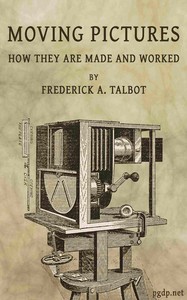
Frederick A. Talbot’s Moving Pictures: How They Are Made and Worked is a comprehensive survey of early cinematography, written for a general audience but grounded in the technical and historical details of the medium’s birth. The opening pages explain that the author has drawn on a network of collaborators, from the Marey Institute in Paris to Thomas Edison’s company and the editors of L’Illustration, so that the narrative is enriched with photographs and first‑hand accounts. Talbot makes clear that the book is not a step‑by‑step manual; instead, it presents the principles of film production, the evolution of cameras and projectors, and the scientific uses of motion pictures, all organized into a long, detailed table of contents that ranges from the chemistry of celluloid to the art of trick effects.

The voice is that of an early‑20th‑century popular science writer, earnest and descriptive, peppered with the era’s reverence for invention. Its style blends straightforward exposition with vivid anecdotes about pioneers such as Marey, Edison, and the Lumière brothers, making the material accessible without sacrificing depth. Readers who enjoy the history of technology, the mechanics of early film equipment, or the cultural impact of moving images, especially those with an appetite for richly illustrated, period‑specific accounts, will find Talbot’s work both informative and engaging.

Who appears in Moving Pictures

  • M. WeissMiddle‑aged European gentleman, spectacles, neat moustache, dark frock coat, scholarly expression
  • BullOlder French scientist, bald head, thin beard, white lab coat, thoughtful gaze
  • Frank L. DyerDistinguished early‑1900s businessman, waistcoat and tie, trimmed moustache, confident posture

The opening · free to read

I have endeavoured to deal with the whole subject in a popular and comprehensive manner. I have been assisted by several friends, who have enabled me to throw considerable light upon the early history of motion photography and the many problems that had to be mastered before it met with public appreciation:--MM. Weiss and Bull, the Director and Assistant-Director respectively of the Marey Institute in Paris; M. Georges Demeny; Messrs. Frank L. Dyer, the President of Thomas A. Edison, Incorporated; W. F. Greene, Robert W. Paul, James Williamson, Lumière & Sons, Richard G. Hollaman, the Eastman Kodak Company, Dr. J. Comandon, F. Percy Smith, Albert Smith, and the numerous firms engaged in one or other of the various branches of the industry.

I am indebted especially to the editor of L’Illustration, the well-known Parisian illustrated weekly newspaper, in conjunction with the Société des Établissements Gaumont, for permission to publish the photographs illustrating Chapters XIX., XX., and XXI., as well as the frontispiece; also to Mr. A. A. Hopkins, the author of “Magic,” and to Messrs. Munn & Co., the proprietors of The Scientific American, of New York, U.S.A.

The book makes no claim to being a practical manual, because thereby intricate technicalities would have been unavoidable. The information respecting the various mechanical aspects of cinematography are set forth in a readable manner, so that the broad principles may be understood.

While the most popular features of motion photography are described fully, I have not omitted to introduce the reader to the educational and scientific developments, which are more wonderful and fascinating. Indeed, the cinematograph will probably achieve greater triumphs in these fields than it has accomplished already as a source of amusement.

FREDERICK A. TALBOT.

The book keeps going

Keep reading, and see it illustrated

Reading is free forever. Sign up and watch scenes appear while you read.

Illustrated scene from The Great GatsbyIllustrated scene from Pride and PrejudiceIllustrated scene from Alice's Adventures in Wonderland

Scenes Storieta drew for other classics.

New illustrated classics

A new classic, drawn, in your inbox.

Once or twice a month: the latest books to get full character casts, scene art, and free comic editions. No account needed.