Public-domain ebook
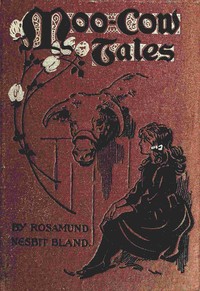
Moo cow tales
Language: en312 downloads on Project Gutenberg
Subjects
In: Short Stories·Children & Young Adult Reading
Public-domain ebook sourced from Project Gutenberg #70341.
Public-domain ebook
Language: en312 downloads on Project Gutenberg
Subjects
In: Short Stories·Children & Young Adult Reading
Public-domain ebook sourced from Project Gutenberg #70341.
The opening · free to read
BY ROSAMUND NESBIT BLAND.
ILLUSTRATED BY E. STUART HARDY.
LONDON: ERNEST NISTER.
NEW YORK: E. P. DUTTON & CO.
1860.
Moo Cow Tales.
THE LITTLE BULL-CALF AND THE POPPY.
There was once a little calf who was always unhappy. He had a dear mother and two nice little white cousins, with brown ears, and a beautiful field to live in, quite full of buttercups and daisies, and cow-parsley, which little calves mustn’t eat because it makes them ill, and yet he wasn’t happy. It was really because all the other cows and calves could not understand him. And this was why: this little calf loved everything that was red, and, of course, you know that cows and bulls generally hate red things.
Now the field next to the cows’ field was a cornfield, and among the corn there were a great many scarlet poppies. The little calf thought that he had never seen anything so beautiful as these red flowers, and he always longed to get into the cornfield and kiss the poppies and tell them how much he loved them. All day long he used to stand with his little face pressed against the hedge, looking into the cornfield, and when the farmer’s boy brought a bucket of food for the little calves, this little calf let his cousins eat it all up and stood gazing at his darling poppies.
One day he found a gap in the hedge, just big enough for a little calf to squeeze through, and in a twinkling he was through the hole and among his dear flowers. He rolled about in the corn and kissed the poppies and said: “Dear little bright flowers, I wish you would come into my field and live there with me,” but the flowers did not speak to him. Then he got up and wandered all over the field, talking to all the poppies, until at last he stopped before the largest and reddest poppy of all.
“How beautiful you are!” he said. “Can’t you speak to me?” and the tears came into his brown eyes because none of the poppies seemed to love him.
“Yes,” said the poppy, “I can speak to you. What do you want me to say, and why are you crying? Be careful not to drop your tears on me, because they are warm and would wither my petals.”
“I only wanted to tell you that I love you and want you to come and live with me in my field,” said the little bull-calf.
“Is it a nice field?” said the poppy.
“Yes,” he said, “it’s a beautiful field—full of buttercups and daisies, and Mother lives there, and my cousins, and all Mother’s friends.”
“I don’t like buttercups and daisies and all your Mother’s friends,” said the poppy, “you must go away, little calf. And look!” she suddenly screamed, “you have trodden down all our dear friends, the corn-ears. Be off with you, at once, you wicked, wicked creature!” and she waved her leaves and shook so much with anger that the little calf was quite frightened and stumbled through the corn to his old hedge. But just as he was going to get through the hole he heard a gentle little voice at his feet, and looking down, saw another poppy. She was smaller than the other poppies, but she looked at him with her beautiful black eye and said, “Dear little calf, I have watched you looking through the hedge every day, and I love you and will come and live in your field. Take me gently in your mouth and pull me up.”
But just as he was going to do it the poppy cried out: “Quick, little calf, quick! I hear the farmer’s footsteps. If he finds you here he will beat you. You must go back without me.” And the little calf scrambled back through the hole in the hedge just as the farmer came up. Of course the farmer was terribly angry when he saw all his corn trampled down, and he sent some men to fill up the hole in the hedge at once, so that our little calf couldn’t get his dear poppy.
Now time went on and our little calf began to grow up, and he did all sorts of dreadful things, because he still loved everything that was red. He chased an old lady all down the lane because she was wearing a red shawl and he wanted to rub his head against it.
He ate up the paint-rag belonging to a man, who came to paint the cows in the cornfield, because it was covered with red paint. I don’t know why it was covered with bright red, because cows are not bright red, or buttercups and daisies either, are they? But still it was. And one day he even went into the farmer’s wife’s red sitting-room and sat on the floor with his head among the scarlet cushions on the sofa. After this everyone thought he must be mad, and the farmer’s sons called him “the crazy bull-calf.”
But all this time he never once forgot his dear poppy, and every evening he went down to the hole in the hedge and talked through it to her, until the autumn came and she went to seed. But when the next summer came, and he was almost a full-grown bull, he went down to his hole in the hedge, and there in his own field was a little red poppy, and he knew at once that it had grown up from one of the seeds of his own poppy, which the kind wind had carried and dropped in the cow-field. So all the summer he talked to his poppy and loved her, and she loved him and they were very happy. But when the autumn came the poppy knew she must die, and they were both very sad.
One day, when the young bull was lying down watching his dear poppy’s petals beginning to shrivel, and as he was trying to shield her from the sun, the Green Witch of the Fields came along. She stopped when she saw the two friends and the tears came into her eyes, because she was sorry for them. But she quickly dashed her tears away, because if a green witch ever drops her tears she loses all her power and becomes a sort of green stuff, which the wind carries away and drops on to the ponds. You must often have seen it there. Perhaps your nurse told you it was duckweed, but now you will know better, won’t you? And you must never try to walk on it because, you see, the witches have lost their power and cannot hold you up. Well, when the witch found that the two friends could nearly make her cry she was very frightened, and she said to herself: “I must do something for the poppy so that she can always be with her friend, because if I pass by when the poppy is dead, I shall certainly drop my tears, and that would never do.”
So she waved her green wand over the poppy and changed her into a little red fairy.
“Now,” she said, “you can live for ever with your friend. Goodbye, dear children,” and she slipped away on the wings of the wind.
So now the bull had his poppy fairy always with him, and in the summer she rode upon his horns, and in the cold weather she sat inside his ear, just where the velvety soft hairs are. And in all the world there is not a more merry beautiful fairy than she, or a happier bull than he.
THE SACRED BULL.
Buttercup and Daisy stood at the edge of the pond in the cow-field. It was very hot and Daisy was cross—the flies worried her so. She stood with her two fore-feet in the water—her mother had told her not to—but as I said before, Daisy was cross, and when little calves are cross, and the weather is warm and the water is cold, they don’t always do as they are told.
Buttercup didn’t put her feet in the water. You see Buttercup was not cross.
“Oh, those flies!” said Daisy, whisking her tail round and putting it into Buttercup’s eye by mistake. Buttercup began to cry and gave her sister a little shove with her new horns, which were just growing, and Daisy fell on her knees in the mud.
“You nasty little thing!” she said, “I don’t like you any more. Oh yes, you can tell Mother if you like, but I shan’t get into trouble. I’m going away from this horrid old field.”
Buttercup ran off to her Mother and Daisy got up and tried to wash her knees.
Presently she heard all the others calling her.
“I shan’t go,” she said to herself, but when she turned her head a tiny bit and looked out of the corner of her eye so that the others should not see that she was looking, she saw that they were all running as hard as they could towards the gate that led into the road.
“I’ll just go and see what it is,” she said, “and then I can run away afterwards, but I won’t speak to any of them.” She hurried across the field, and when she got to the gate some of the kind cows made room for her, and she looked into the road. There she saw every sort and kind of animal! There was going to be a circus in the town, and all the animals were walking down the road in a procession. First came the elephants, four of them—walking two and two—with their keepers beside them. Then came two camels, then a large cage of lions—drawn by horses—then another cage with tigers, and another with wolves in it. Oh, it was going to be a fine circus!
Then there were a great many horses ridden by people in beautiful dresses, and, last of all, came the most wonderful thing of all. It was a bull led by a man dressed like an Indian in gold-embroidered satin, who carried a trumpet in his hand, which he blew now and then after shouting, “Honour to my lord, the Sacred Bull of Burma!”
“Good gracious!” said Daisy’s Mother, “is that a bull? Poor thing, he does look ill and worn-like; a run in our field for a month or two would set him up for ever.”
Indeed the bull did look rather strange. All his hair had been carefully shaved, leaving him just in his pink skin, and then he had been tattooed, which means that he was covered with a pattern, drawn in blue. His horns had been gilded. He gave one look at the cows looking over the gate, as the procession turned the corner, and that was the last they saw of him. Daisy had quite forgotten her quarrel with Buttercup, and they both walked away from the gate, talking of the wonderful things they had just seen, and especially of the bull.
“Don’t you think, Butty,” said Daisy, “that we could do something for the bull? He must be dreadfully cold without his proper coat. I feel so sorry for him.”
“So do I,” said Buttercup, “but I don’t know what we could do.”
“I shall try and find out where he lives,” said Daisy, “and then perhaps we could get him away from those people and he could stop here and live with us. I’m sure he could tell us lovely tales.”
“Yes,” said Buttercup, “but how will you do it?”
The book keeps going
Reading is free forever. Sign up and watch scenes appear while you read.



Scenes Storieta drew for other classics.
New illustrated classics
Once or twice a month: the latest books to get full character casts, scene art, and free comic editions. No account needed.