Public-domain ebook
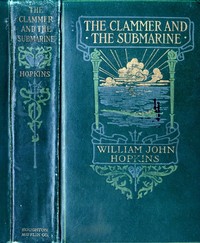
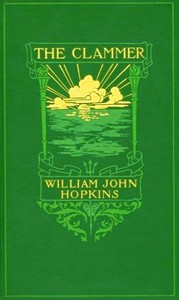
The clammer
Language: en340 downloads on Project Gutenberg
Subjects
In: Romance·Novels·American Literature
Public-domain ebook sourced from Project Gutenberg #70399.
Public-domain ebook
Language: en340 downloads on Project Gutenberg
Subjects
In: Romance·Novels·American Literature
Public-domain ebook sourced from Project Gutenberg #70399.
The opening · free to read
Many of my friends--and probably all my neighbors--think me erratic and peculiar, I do not doubt. My friends remonstrate with me mildly, and I usually listen and accept and make no reply. For how can they know? And, they being what they are, how can I help them to a knowledge of things which must be born in a man? My neighbors do not remonstrate, for my neighbors are not of necessity my friends, and I am queer enough not to care to cultivate a man’s acquaintance merely because he lives next me.
There is Goodwin the Rich, who has the palace on the hill, above my favorite clam beds. It is not likely that I shall ever know him, although his automobiles flash past my front gate, covering my hedge with dust, and enveloping my house in nauseous smells. I do not like automobiles. It is not to be imagined that Goodwin finds me peculiar, for he is probably unaware of my existence; but I have some humbler neighbors who stare at me and shake their heads. And I smile and pass on; for I know what I know, and it passeth their understanding. And all this shaking of heads, and all the protesting of my friends, is because I choose to go clamming.
Some of my friends may, at first, have had the idea that my interest in clams was biological; for I received some training in that branch of science, and even taught it--or was supposed to teach it, with other branches--in a school. But I look back upon that school with horror, as, no doubt, my victims regard me, in retrospect. And my neighbors may, very naturally, have assumed that my interest in clams was gastronomic, which is, indeed, nearer the truth. But the evidence on that point was inconclusive. They were not asked to my feasts of steamed clams, if I had any, and they came to look upon me as simply queer.
As an occupation for leisure hours, I commend the pursuit of the clam. Your true clammer is of another age, born after his time. He values not at all the improvements of this age. He reads by candle light or goes to bed at dark. He loves the wandering along the bare shores, hoe in hand, the wading through shallows, the mud pies he may make in the incidental pursuit of his prey, and the sights he sees. For the capture of the clams is less than the search for them, even as the sport of the true fisherman lies as much in fishing as in catching fish.
So it befell that I wandered, one afternoon, toward my chosen hunting ground over the oozy flats. The sun was low in the west, and he spread the still water and the shining mud with all manner of reds and purples and shimmering greens. If I might regulate the matter, low tide should always fall at sunset or at dawn. Either is a fitting time, with the old earth at peace and its waters stilled or just waking. And at either time I may satisfy my soul with the unapproachable coloring of the Great Painter. The hot noon is no time for clamming. Then the water glares in your eyes, the sun beats down upon your back. The mud is just mud that stinketh in the nostrils. But when I have the happiness to go clamming at sunset, I am wont to stand and gaze and muse, forgetting my errand until I am sunken to my ankles in the mud. Then is my regret for my scientific training the keenest, and I know, within my soul, that in the making of a mediocre scientist a good painter has been lost to the world. Strive against it as I may, I cannot see a sunset without converting it into its elements of refraction, with a question of polarization; nor the colors on the muddy puddle under my feet without thoughts of interference. But I am improving, and I hope, in time, to have shaken off all the dry dust of science I was at such pains to acquire. So, that afternoon, I wended on with joy in my heart. For I would dig, or gaze, as the fancy seized me, until the sun was gone and the night was fallen.
Now, that particular piece of flat, to which incline alike my heart and my feet, is my own. I bought the few feet of shore to which the clam beds are attached because I loved it and feared lest, otherwise, the march of progress should take it from me. For Goodwin the Rich lives here, and he is improving the shore--his Water Front. But he shall not improve away my clams. He may dig here and fill there and build his walls, but he shall leave mine untouched. For it is mine, as witnesseth a certain deed recorded with the Register. And as I thought these thoughts, walking over my sand,--there is more sand than mud here, which is perhaps why I like it,--as I thought on these things, anger surged within me and I stamped my foot. And, behold, a little jet of water spurted up beside it.
“Oho,” said I, “so there you are.”
And straightway I stopped and set down my basket and began to dig; but leisurely, and with my face to the west, for I would bid the sun good-night. And that clam was found, and his fellows, and my basket was half full, and I rose to see the sun. And as I stood and saw him, his red disk was half down behind the hill, and I could see it sink. So I raised my hand to salute him, and there came a sweet voice behind me.
“Man,” said the sweet voice, “why are you digging there?”
Now I was surprised to hear that voice, but most surprised at its sweetness. But yet I would not turn nor answer until the red sun had winked his last. For, I thought, here is one of the maids from the house of Goodwin the Rich--or perhaps the governess; yes, surely, the governess. The truly Rich may insist upon sweet voices in their governesses. And at last I turned and saw the governess sitting upon the bank, just where the sod broke off to the sand. And the light from the western sky shone upon her, the light from the sky that was all yellows and reds and would soon be turned to violet and green. And as she sat there, in her plain black dress, with that light shining upon her, she seemed very beautiful. Truly, thought I, the Rich may have what they will. But I could not have told what was the color of her hair. In that light it was red and gold. And I stammered in my speech.
“Your pardon, madam,” I said. “I was saying good-night to the old sun.”
She smiled, a smile as sweet as her voice, but with a touch of sadness in it. The life of a governess to the Rich is not all a path of roses.
“Yes,” she said. “I came down to see the sun set, too. But why are you digging?”
“I was digging clams,” I answered gently. For I felt a sorrow for her sadness.
“Oh,” she said, “do you dig clams? Have you some clams in your basket? I should like to see some clams.”
Now, truly, that was an easy matter, that she should see some clams, for there they were in the basket. And the sun was gone, so I lost none of his company if I would please the governess. It did, indeed, strike me as strange that a governess should know so little of clams, but probably she did not teach biology. Governesses to the Rich deal more in appearance and in manners. Still, I hold that in some respects the manners of a clam are worthy of imitation. He is quiet and unobtrusive. I waded out into the water and soused my basket well. Then I brought it to the governess sitting on the bank.
“Now,” she said, a trifle of petulance showing in the sweet voice, “you have got them all wet.”
“Better all wet than all muddy,” I replied, standing before her, and watching the play of light upon her hair. When I see her hair in the plain light of day, I think I shall find it red,--a brilliant red. But it was wonderful. Her head was bent as she looked into my basket, and my opportunity for observation was excellent. One thing my scientific training has done for me is to make me a good observer.
“Oh,” cried the governess, “what is that funny-looking thing they are sticking out? Is it the head?”
“It is called the head,” I answered, “but it is not. Isn’t it strange how often a thing is not what it is called? But I suppose you do not have to teach anything about clams.”
“Teach about clams!” she said, puzzled for an instant. Then she seemed to be amused. “No, I don’t. It’s lucky, isn’t it? For I don’t know anything about them. May I take one of them?”
“It will drip on your dress and spot it,” I said warningly.
“It doesn’t matter,” she replied. And she took a clam in her hand, and the water dripped upon her dress, as I had said, and it made a spot. She could not see it then, but I knew how it would look in the morning. She was a most careless, heedless governess.
“Of course it matters,” I said, reproving. “You will see. Surely they don’t give you all the gowns you want, to spot with salt water.”
She was puzzled again. “All the gowns I want?” she asked, wondering. “What do you mean?”
“Up at the great house,” I said, “at Good--Mr. Goodwin’s.”
The governess smiled, a merry smile that filled her eyes with light. For she was looking up at me then. And I looked deep into those eyes until her face was the color of her hair.
“Oh, yes,” she said, looking down,--and I was sorry, for on a sudden it seemed dark,--“oh, yes, they are very good to me--in the matter of gowns. But I will be careful if you think I ought.”
“I know you ought,” I said. “Waste is wicked.”
“Yes,” she answered, musing, “I suppose it is. But I am afraid I haven’t thought about it as much as I might.”
She was looking at me, up and down, from my mud-covered rubber boots to my old battered hat. I was clad as a clammer should be clad, and I was not ashamed.
“You are not wicked, are you?” asked the governess. “You are not wasteful?”
“Not of my clothes,” I answered. “I cannot be. And do you suppose my wife would drip salt water upon her best dress?”
I thought I saw a shadow steal across her face. But the sun had left many shadows behind him.
“It isn’t my”-- She hesitated and stopped. “Have you a wife?”
“No,” I answered shamelessly. And she laughed aloud, a sweet laugh and low, like--like nothing else in the wide world.
“Are you a fisherman?” she asked.
I had forgotten how the garb of a clammer would be regarded by a governess to the Rich.
“Sometimes,” I said. “I am but a passable fisherman. I can catch enough for myself, or, if need were, for two.”
“And do you use the clams to catch the fish?”
The book keeps going
Reading is free forever. Sign up and watch scenes appear while you read.



Scenes Storieta drew for other classics.
New illustrated classics
Once or twice a month: the latest books to get full character casts, scene art, and free comic editions. No account needed.