About this book
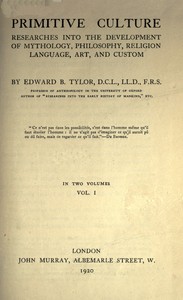
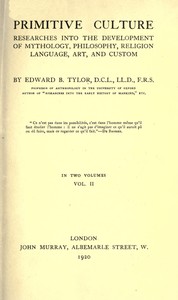
Edward Burnett Tylor’s *Primitive Culture* is a scholarly survey that expands the scope of his earlier “Researches into the Early History of Mankind.” Opening with a detailed preface, Tylor explains that the work gathers fresh ethnographic evidence gathered over a decade, then arranges it into a systematic argument about the laws governing culture, myth, language, art and religion. He emphasizes the “survival” of ancient customs in modern rites, the development of numeracy from finger‑counting, and the animistic philosophy that underlies early religious thought. The book is organized into extensive chapters that move from a general theory of culture to specific topics such as magical practices, emotional language, and the origins of myth, each supported by foot‑noted citations to contemporary scholars and field reports.
Written in the formal, exhaustive style of late‑Victorian scholarship, the text reflects the scientific optimism of the 1870s while engaging with debates on evolution, anthropology and philosophy. Readers who relish dense, evidence‑driven argumentation, students of the history of ideas, comparative religion, or the foundations of anthropology, will find Tylor’s meticulous synthesis rewarding. Those preferring narrative histories or light introductions to mythology may find the volume’s exhaustive detail and nineteenth‑century prose demanding.