Storieta
Sign up

About this book

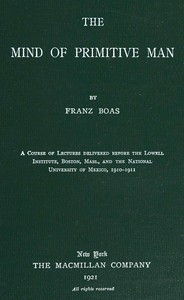
Franz Boas’s work is a series of public‑lecture notes originally delivered at the Lowell Institute and the National University of Mexico in 1910‑1911. The opening passage frames the book as a systematic inquiry into the assumptions that link “civilized” achievement with racial superiority. Boas questions the prevailing view that the white race represents the highest type of human development, urging readers to examine the untested premises that equate social status with innate aptitude. He sets the stage for a detailed analysis of how historical chance, diffusion of ideas, and unequal conditions, not inherent biological differences, have shaped the varied trajectories of peoples around the world.

The tone is scholarly yet polemical, reflecting early‑20th‑century anthropological debates. Boas writes in a dense, argumentative style, employing extensive historical examples and comparative reasoning. Readers interested in the history of anthropology, the intellectual origins of cultural relativism, or the critique of racial hierarchies will find this text rewarding, while those seeking a light narrative should look elsewhere.

Opening lines

PROUD of his wonderful achievements, civilized man looks down upon the humbler members of mankind. He has conquered the forces of nature and compelled them to serve him. He has transformed inhospitable forests into fertile fields. The mountain fastnesses are yielding their treasures to his demands. The fierce animals which are obstructing his progress are being exterminated, while others which are useful to him are made to increase a thousand-fold. The waves of the ocean carry him from land to land, and towering mountain-ranges set him no bounds. His genius has moulded inert matter into powerful machines which await a touch of his hand to serve his manifold demands.

Keep reading free · chapter 1 needs no account