Public-domain ebook
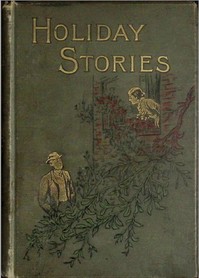
Holiday stories
by Ruth Lamb
English455 downloads on Project GutenbergDownload EPUB
Public-domain ebook sourced from Project Gutenberg #71661.
Public-domain ebook
by Ruth Lamb
English455 downloads on Project GutenbergDownload EPUB
Public-domain ebook sourced from Project Gutenberg #71661.
The opening · free to read
"THORLEY; go and tell Miss Margaretta to make less noise. How can I get my afternoon nap with that girl screeching and screaming loud enough to be heard beyond the park? I suppose she thinks I cannot be disturbed by her noise when she is out of doors, though I have told her twenty times already that she has a voice like a railway-whistle, and that it travels as far as one. It seems to me I cannot get out of reach of it. Thorley, why don't you go? What are you waiting for?"
The last questions were uttered in such a shrill tone, and with such evident irritation, that the pale face of the listener flushed, and she answered in a frightened voice—
"I thought your ladyship was speaking to me, and I waited for you to finish."
"I was doing nothing of the kind. I gave you an order which might have been attended to by this time. Then I went on thinking aloud, and you stood staring there, and listening in place of going about your business. Go now. Wait! I cannot hear the girl's voice. She has stopped, but she will begin again, so go all the same."
The person addressed as "Thorley" did not wait for the speaker to change her mind again, but hastened to do her mistress's bidding.
"Poor young thing!" she murmured, as she went in search of the offender. "It is well she can sing. Only one that has not been long at Northbrook Hall would be likely to lift up a cheerful voice in my mistress's hearing. I believe she would silence the very birds if she could, but she cannot do that, thank God." And the woman listened with gladness to a flood of melody that was being poured from scores of bird-throats, and rejoiced again that a message from her mistress could not stop it.
Thorley was old Lady Longridge's personal attendant, and had been such for twenty-five years. She was a staid spinster of fifty or thereabouts. Not that she ever told her age, or that any member of the household would have ventured to ask it; but there were older retainers at the Hall than herself, who could put two and two together.
There was old Jakes, for instance, who had spent sixty out of his seventy years of life in and about the gardens. He was morally certain that Susan Thorley would never see fifty again.
"Why, it's five-and-twenty years last May since Susan were promoted to be maid to our old lady, and she was no chicken in those days. I should have said she was nigh upon, if not all out thirty, though I do not suppose she would have owned to it, any more than she would say straight out, 'I am fifty-five to-day.' You don't catch these staid women folks telling their age." And the old man wagged his grey pate knowingly.
Thorley was accustomed to say of herself, "I have aged dreadfully since I came here, and I look older than I am. Five-and-twenty years in the service of Lady Longridge would equal forty, for wear and tear, under a reasonable mistress."
If someone suggested that Thorley was not compelled to endure the aggravations of the tyrannical old lady, she would reply, "If I thought only of myself, or studied my own comfort, I should have turned my back on the Hall many a year ago. But look at her age. She is turned eighty-one, and her mind is as clear as ever. I may have had a deal to put up with, and seen my hair turn grey before its time through her worrying, but I feel proud of my mistress, who is a wonderful old lady. Conscience reproaches me whenever I think of leaving her, and seems to say, 'What will you be at eighty-one? You will want someone to put up with your tempers then.' So I bear as well as I can, and if I have an uneasy time of it, conscience tells me I am right."
Some of Thorley's acquaintances credited her with at least one other motive for remaining at Northbrook. Lady Longridge was reputed wealthy, though she professed to be poor and unable to spare money for much-needed repairs and renewals within and around her home. She was always quarrelling with her relatives, and altering her will, or adding codicils to disinherit one and reinstate another.
At one time she would declare that none of her own kindred should ever possess a penny that she could bequeath to an outsider; at another she would quote the old proverb about blood being thicker than water, and rail against those who left their own families out in the cold when disposing of their wealth.
That quarter of a century of service had not been without its disturbing elements. Lady Longridge's temper often got the better of her, and Thorley usually had to bear the brunt of these outbreaks.
The woman was wonderfully patient, but this fact often had a different effect on her mistress from what might have been expected. It only made her more provoking, and on several occasions Thorley had received notice to quit. At first these breaches between mistress and maid had been patched up by mutual concessions, but by degrees Thorley became less placable. Then the old lady found that all advances for a renewal of the former relations must come from herself.
Thorley performed all her duties during the month she was under notice with the greatest exactitude, but she only spoke when spoken to and said no needless word, but packed her boxes and made ready to go to another situation. With such a character for long service, fidelity, patience, and trustworthiness, there were plenty of doors ready to open for Thorley's admission, plenty of places where her duties would be of a pleasanter character, and where, as she indignantly put it, "One might expect to have peace, a kind word sometimes, and get a bit of credit for trying with all one's heart to do right."
So Lady Longridge became convinced that Thorley could do better than stay at Northbrook, but that she would herself find it very difficult to replace Thorley.
The squabble always ended in the same way. The old lady would offer her hand to her departing maid and wish her well in a new place. Then she would break down and say that she was a miserable old woman for whom nobody cared, and that she was being left to die in her loneliness and helplessness by the one creature in whom she could trust.
The maid's tears would then accompany the mistress's; Thorley's boxes would be unpacked, and Lady Longridge promptly paid any expenses that might have been incurred in arranging for the new situation.
It was noticed that after each of these quarrels, Thorley had a day out accorded her without a murmur, and that as invariably she paid a visit to the savings bank. She would have wages to deposit there, no doubt, but it was whispered that Thorley found these little scenes very profitable, each reconciliation being sealed with a present. At any rate, she stayed at the Hall and bore a great deal of ill-temper and many hard words from Lady Longridge with more patience than any servant not inured thereto by many years of experience could have been expected to manifest.
The old lady had been more than usually provoking on that fair spring day, when the birds and her granddaughter, Margaretta, were carolling in company, and Thorley was on her way to silence the girl.
The errand was very distasteful to Thorley. If there was a creature on earth that the woman loved with a true, unselfish affection, it was Margaretta, who had spent the last few months of her life in that dull house, once the home of her dead father. Now it was the home of the girl herself, or the best substitute for one that she could claim.
Not that it was the first time Margaretta Longridge had been an inmate of Northbrook Hall. She had lived there off and on from the time of her birth until she was twelve years old, and now after an absence of nearly three, it was settled that she should remain permanently with her grandmother.
This was perhaps the best arrangement that could be made under the circumstances. But there were plenty of people who said that to condemn the fair young girl of fifteen to live in that gloomy, tumble-down house, and under the guardianship of that terrible old lady, was only a shade better than burying her alive.
The circumstances were these. Lady Longridge had been left a widow at twenty-eight, with one son and three daughters. By her husband's will, she was appointed their sole guardian, and she ruled them with enough of firmness and a scant expenditure of tenderness until each was emancipated by attaining the age of twenty-one, and receiving a handsome sum from the estate.
The daughters, being well dowered, soon married, and without exception resided far-away from Northbrook, which they seldom visited, and then only for a few days at a time.
Philip, the one son, seemed likely to remain a bachelor. His home was nominally with his mother, but he was fond of travelling, and ever on the look-out for new countries to explore, consequently he never stayed long at the Hall. The brevity of his visits rather than the fact of his being her only son, probably conduced to the good understanding between him and his mother. She had really no time to begin fault-finding before the packing process was in full operation, and Philip was preparing for a new journey. Even Lady Longridge did not like to quarrel with her son when he was about to leave her for an indefinite period.
She rejoiced in his bachelor estate, for, so long as Sir Philip remained unmarried, her rule at Northbrook would be undisturbed.
As to her daughters, she would say, when someone suggested that it was a pity they were not nearer, "Nearer! They are better where they are. If we met oftener we should quarrel. As it is, we have a week of each other's society now and then, and we can be happy and love one another for that time. But we never get beyond the week. We know the length of our affections' tether, and we keep within bounds."
"But mother and daughters, Lady Longridge!" the old clergyman would say, with uplifted hands and eyes.
"What of that? We get enough of each other in a week, and we part friends. If we had a fortnight we should not part at all, or at any rate we should go through no formal farewells. We should have ceased to speak to each other six days earlier, the previous one having been spent in mutual recrimination. We know our little failings, and we strive to keep out of the way of temptation."
"At your age, I should have thought the young ladies would bear anything from you without retorting, and that they would be unhappy if they did not see you often."
"No fear of that," was the earnest response. "They will not lose an hour's rest owing to anxiety on my account. And to be frank with you, I think it is very good of them to come at all. The journey costs something, and takes time. They count the hours whilst they are here, and long for the last to come. They know they have nothing to gain, for, lest they should forget, I remind them every time that they have had their fortunes; also, that I have nothing to leave, and if I had, they would not get a penny of it. Frankness promotes a good understanding. I take care to prevent false hopes."
The rector, Dr. Darley, was going to reply, but one of Lady Longridge's peculiarities was a liking for saying her own say at great length, and then calmly ending an interview.
The book keeps going
Reading is free forever. Sign up and watch scenes appear while you read.



Scenes Storieta drew for other classics.
New illustrated classics
Once or twice a month: the latest books to get full character casts, scene art, and free comic editions. No account needed.